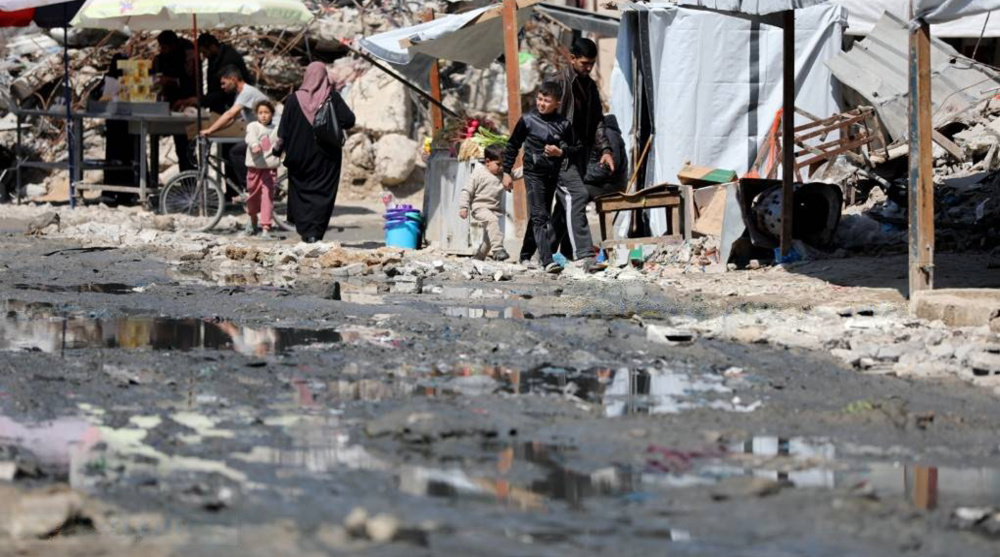
Israel destruction of Gaza’s sewage system has contributed to an enormous algal bloom that has disrupted Israel’s own desalination network, forcing five of its six plants offline.
The five desalination plants, which provide more than 80 percent of regime’s drinking water, were shut down after microscopic algae clogged their intake systems, forcing authorities to impose restrictions on water use, according to a report by Haaretz on Thursday.
Israeli environmental experts warned that untreated sewage flowing from Gaza into the Mediterranean is providing nutrients that can intensify the growth of the algae.
The crisis has forced Israel to increase pumping from reservoirs and the Sea of Galilee while restricting water use for agriculture.
“An event of this kind has never occurred before … it is an extremely rare event,” said Lior Gutman, a spokesperson for Mekorot, Israel’s water company.
Since October 2023, When Israel began its genocidal assault on Gaza, the regime has devastated Gaza’s water and sanitation infrastructure, with nearly 90 percent of the system damaged or destroyed and all six wastewater treatment plants out of service.
Israel’s blockade on fuel, spare parts and equipment it classifies as “dual-use” has effectively strangled efforts to repair Gaza’s devastated water and sewage systems, leaving vital facilities unable to operate and millions of Palestinians exposed to worsening contamination and disease.
Around 40,000 cubic meters of untreated wastewater is discharged into the sea every day, while another 15,000 cubic meters seeps into the ground through damaged sewage networks and cesspits, according to Palestinian authorities.
The United Nations International Children’s Emergency Fund (UNICEF) said in its July 17, 2026 update that 70 percent of Gaza’s sewage pumping stations were out of service, leaving 82 percent of families water insecure and putting millions at greater risk of disease.
On September 1, 2026, the World Health Organization (WHO) warned that Gaza’s water crisis was rapidly worsening, with microbiological contamination rising from below 6 percent of tested samples in January to more than 18 percent in August, while cases of acute watery diarrhea nearly doubled.
WHO representative Reinhilde Van de Weerdt warned that the approaching rains could spread sewage and contaminated water into the overcrowded places where Palestinians sleep, cook and care for their children, further increasing the risk of disease.
A joint World Bank, UN and EU assessment published on April 20, 2026, estimated that Gaza will require $71.4 billion over the next decade for recovery and reconstruction, including $26.3 billion in the first 18 months to restore essential services and critical infrastructure.
Since Israel began its genocide in Gaza, its forces has killed more than 73,000 Palestinians, and wounded 173,000 others, most of them women and children.