By Press TV Strategic Analysis Desk
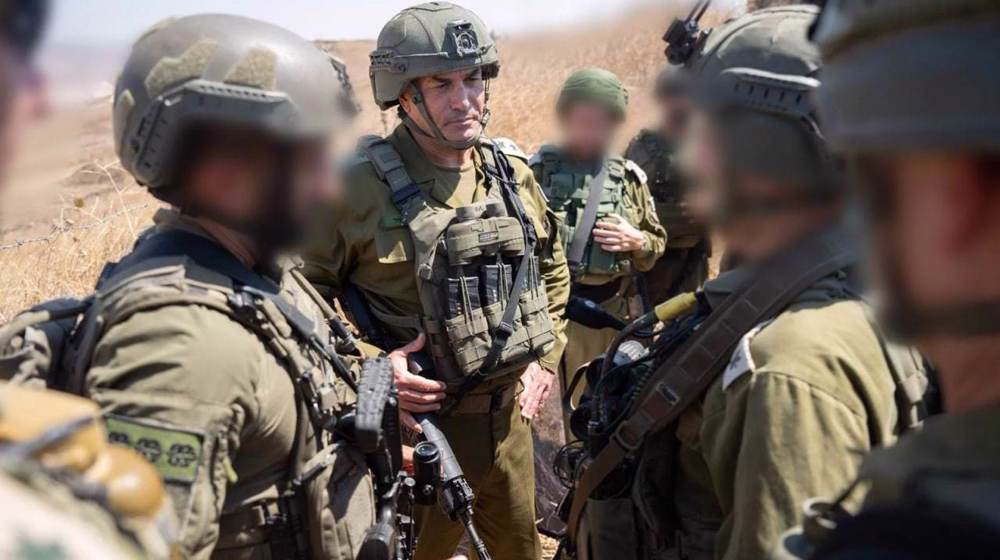
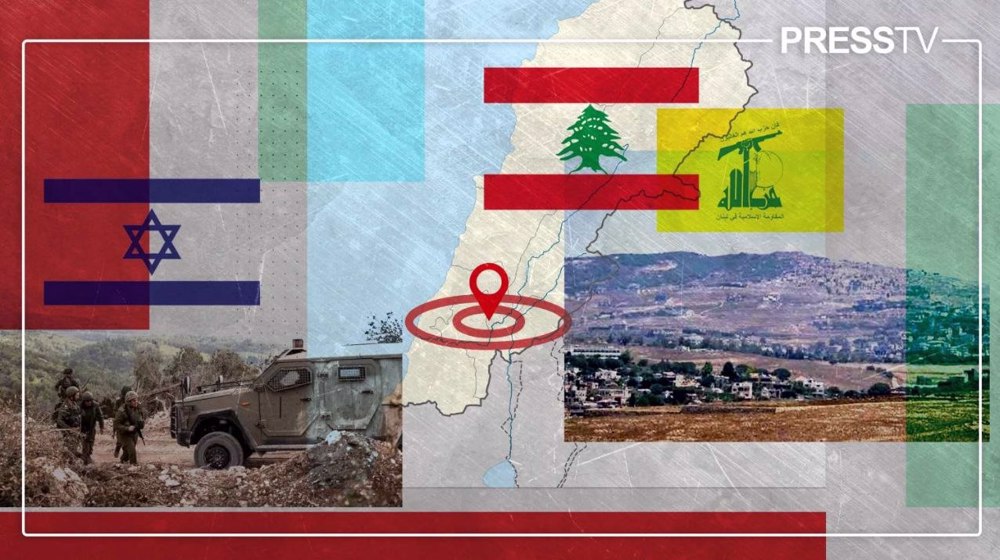
When the Israeli military boastfully announced on Thursday that it had secured “operational control” over the Ali al-Taher highlands in southern Lebanon, the claim was understandably met with skepticism that speaks volumes about the credibility of the claim.
For months, this strategic ridge overlooking Nabatieh and the Litani corridor has been the focus of intense Israeli military aggression. Yet the regime’s carefully crafted narrative of triumph reveals more gaps than substance, raising fundamental questions about what exactly was achieved, and more importantly, why the announcement came precisely when it did.
The first and most telling weakness in the Israeli narrative lies in its own terminology.
“Operational control” is a deliberately elastic phrase, one that suggests presence without permanence and activity without possession. The distinction matters because Israel’s own military statement undermines the grand narrative it sought to project.
Speaking of “operational control” does not necessarily mean complete, comprehensive, and permanent control over the Ali al-Taher Hill. The term itself demands precise examination.
When an army claims “operational control,” it typically means it can move forces through an area, establish fire superiority, and conduct operations, but it does not necessarily mean tunnels have been cleared, facilities have been secured, or fighters there eliminated.
The Israeli military’s own phrasing left ample room for interpretation, suggesting that what was being described was not what was intended and there is more to it than meets the eye.
The regime’s army acknowledged that its offensives to neutralize underground facilities were underway and that after completion, it would redeploy according to the situation assessment.
This language suggests a tactical incursion – perhaps damaging some infrastructure and withdrawing – rather than the decisive capture being advertised. If control means ongoing operations followed by redeployment and withdrawal, what exactly has been permanently achieved? The question answers itself.
This interpretation is reinforced by statements from the Israeli army itself – “Depending on the circumstances, we will redeploy on the Ali al-Taher heights.”
This statement leaves open the question of the nature of Israel’s illegal presence in this area and the extent to which it can remain there, particularly since talk of redeployment came after the declaration of “operational control.”
If Israel had achieved genuine, lasting control, why would redeployment depend on circumstances? Why would the occupation army need to qualify its presence with such conditional language? These questions remain unanswered.
The Resistance’s strategic silence
Perhaps the most revealing element of this episode is what has not been said. For the past three months during this confrontation, the Lebanese Resistance has adopted a policy of “constructive ambiguity” and has issued no statement regarding clashes with the Israeli military, despite the fact that the regime has continuously reported its own casualties and strikes, using them as a pretext for expanding its attacks in various areas of the south.
It appears that the Resistance continues to insist on this approach.
Israel has interpreted this silence as confirmation of its narrative. But silence is not consent, it is strategy. The Resistance’s refusal to engage in a propaganda battle does not validate the Israeli version of events. It reflects a different logic, one that understands that field realities are ultimately determined by what happens on the ground, not in press releases. The absence of a narrative issued by the Resistance does not mean acceptance of the Israeli narrative.
This strategic silence serves multiple purposes. It denies the enemy the satisfaction of a propaganda victory. It preserves operational security by not confirming or denying Israeli claims. And it maintains the initiative by forcing the regime to operate in an information vacuum where its own claims cannot be independently verified.
The Resistance has understood that the longer Israel talks about its achievements without being able to demonstrate them conclusively, the more the credibility of those claims erodes.
The consequences of this approach are now evident. Without independent verification, which remains impossible given the military cordon imposed around the hills, neither the Lebanese army nor any other party can confirm what has actually occurred. This information vacuum has been filled entirely by bombastic Israeli claims, precisely as intended.
Yet the Resistance has calculated that this temporary advantage for Israel is outweighed by the long-term damage to Israeli credibility when the full picture eventually emerges.
The forgotten context of three years of bombardment
It is important to recall that the Ali al-Taher Hill has been continuously targeted by heavy bombardment and attacks for three years by the Israeli apartheid regime. This is a point that should not be overlooked.
The hill has absorbed thousands of tons of explosives over this period, with Israel systematically attempting to degrade whatever infrastructure it believed to exist beneath the surface.
This sustained campaign of bombardment raises important questions about what exactly Israel achieved with its most recent military offensive. If the hill had already been subjected to three years of continuous strikes, what new capability was Israel demonstrating by announcing “operational control” now?
The timing of the announcement, coming after such a prolonged period of attacks, suggests that Israel had not been able to achieve its objectives through bombardment alone and was now attempting to claim victory through narrative rather than through battlefield reality.
The three-year timeline also provides important context for understanding the Resistance’s strategic patience. Having absorbed years of bombardment, the Resistance has demonstrated remarkable resilience. Infrastructure that survives three years of continuous attack is unlikely to be eliminated by a single operation, however intensive.
The very fact that Israel felt compelled to announce “operational control” after three years of bombardment suggests that its earlier attempts had failed to achieve the desired results.
The fundamental question about Israel’s control
The wording of the Israeli military statement itself raises a fundamental question about the nature of what Israel calls “operational control.”
If the occupation army is going to continue its aggressive operations to neutralize and destroy the facilities and then redeploy in a defensive posture, this means that the declaration of control is probably related to a specific military operation, which may involve destroying parts of the facilities and then withdrawing or redeploying, and does not necessarily mean a permanent presence on the ground or the ability to maintain indefinite control of the hill.
This is the central contradiction in the Israeli narrative. On one hand, it presents the operation as a significant achievement, a breakthrough that demonstrates its military superiority. On the other hand, its own statements describe a limited operation followed by withdrawal.
These two depictions cannot both be fully accurate. Either Israel achieved lasting control, or it conducted a raid and left. The language of “operational control” attempts to bridge this contradiction, but it does so through ambiguity rather than clarity.
If the army is going to continue its offensives and then redeploy defensively, the announcement of “control” appears premature at best and misleading at worst. Control over a territory is not established by conducting operations and then leaving. It is established by maintaining a presence and exercising authority.
The characterization that serves Israel
It is the Israeli regime itself that has assigned such importance to the Ali al-Taher Hill and described it as a large, important, and strategic facility, while the Resistance has provided no narrative whatsoever about these facilities, their nature, or their specifications.
Therefore, this characterization is, first and foremost, an Israeli characterization.
This asymmetry is instructive. Israel’s characterization exists first and foremost to serve its own agendas and purposes. By inflating the importance of the site, the Israeli regime leadership can claim a victory that justifies the military offensive and provides political capital.
The Resistance, by contrast, has no interest in validating Israeli claims by confirming or denying the nature of the facilities. Its silence on this matter is itself a form of resistance, denying the enemy the satisfaction of knowing whether its intelligence assessments are accurate.
The fact that Israel has described the site as “one of Hezbollah’s most significant strategic assets” does not make it so. Without independent verification or confirmation from the Resistance, this characterization remains part of the Israeli narrative, not an established fact.
This distinction is crucial for understanding the nature of the information war being waged alongside the relentless military aggression.
Tunnel entrances and facilities: A crucial distinction
Likewise, the fact that the Israeli army says it “targeted the entrances to the tunnels in the Ali al-Taher heights” does not, in itself, mean control over the facilities. Targeting tunnel entrances is one matter, while controlling the facilities or the area is another.
An army can target an entrance without ever entering the facility behind it. It can destroy a tunnel entrance and still have no idea what lies beneath. The conflation of targeting tunnel entrances with controlling the underground infrastructure is a logical leap that the Israeli narrative attempts to make without justification.
The Resistance has every incentive to make tunnel entrances obvious targets while keeping the actual facilities hidden and protected. Destroying an entrance may be tactically significant, but it is not strategically decisive. It means little from the operational perspective.
Even if there are said to be two tunnel routes, a distinction must be made between the tunnels and the facilities themselves. The existence of a tunnel or the targeting of its entrances, by itself, does not prove control over the facilities or field control of the hill.
Tunnels are merely access points. The facilities they lead to may remain entirely intact and operational even if some entrances have been destroyed. The Israeli narrative’s conflation of these distinct elements is a fundamental weakness that should be highlighted.
The Iranian question: What did Israel really know?
Israel’s claim that “there are no Iranians in the facilities” itself raises a question: How did it know that there was no Iranian there? Did it have precise information about the individuals inside the facilities that allowed it to state with certainty that no Iranian was present?
Therefore, this statement should be regarded as part of the Israeli narrative, intended to convey the impression that it has achieved a significant accomplishment.
If the claim reflects intelligence, it suggests Israel possessed detailed information about the individuals inside the facilities, enough to state with certainty that no Iranian personnel were present. If it does not, the statement serves another purpose entirely. The denial of an Iranian presence carries profound political implications.
By insisting no Iranians were found, Israel is not merely making a military statement; it is preemptively disarming one of Tehran’s most potent justifications for escalation. Killing Hezbollah resistance fighters keeps the confrontation within the Lebanese theater. Killing Iranian military officers would transform it into something entirely different.
This suggests a calculated attempt by the Tel Aviv regime to manage escalation by controlling the narrative – a recognition that the military offensive is only half the battle.
The claim about Iranians is therefore less a factual statement than a political one, designed to limit the potential for Iranian retaliation, which the regime know will be painful. Whether it accurately reflects the situation on the ground is secondary to its strategic function.
The question of single facility or multiple facilities
We should also reflect on the description of Ali al-Taher as “a facility,” because there is evidence indicating that several facilities are located in that area.
Israel had previously also announced that it had targeted one of the facilities associated with Ali al-Taher. This raises the question of whether Israel is repeating the same previous scenario, particularly now that it is speaking of “operational control” without providing conclusive and clear facts to establish that.
If there are multiple facilities in the area, Israel’s claim to have controlled “the facility” is inherently ambiguous. Which facility? How many were targeted? How many remain operational? The singular reference obscures more than it reveals. It suggests a desire to present a unified achievement rather than a more complex and less impressive reality.
The absence of detail about which facilities were controlled and which were not is itself telling. If Israel had achieved comprehensive control over all facilities in the area, it would likely say so explicitly. The use of the singular “facility” suggests a more limited achievement.
The regime had previously announced that it targeted one of the facilities associated with Ali al-Taher. Now it speaks of “operational control” without providing evidence. The repetition of the scenario – first targeting a facility, then claiming control – raises questions about whether the latest announcement represents genuine progress or simply the recycling of an earlier claim.
The political timing and Netanyahu’s calculation
The political timing of Israel’s announcement also warrants consideration. On the very day that the release of the prisoners was announced, Israel publicized this claim in the evening.
This raises the question of whether Netanyahu is using a series of actions and labels to improve his political and electoral standing ahead of elections. From this perspective, it can be understood why the Ali al-Taher facilities have been given such importance in Israeli political, media and military discourse and why they have been invoked in this context.
The coincidence of timing is striking. A major prisoner release would naturally dominate the news cycle. By coupling it with a military announcement, Netanyahu ensures that the narrative of Israeli strength and achievement is reinforced on multiple fronts.
The timing and framing of the announcement reflect political calculations as much as military calculations. The importance assigned to the Ali al-Taher facilities in Israeli discourse should be understood partly as a function of Netanyahu’s domestic political needs in order to woo voters and stay in power. By inflating the significance of the offensive and making lofty claims, Netanyahu creates a narrative of achievement that he can use to bolster his political position.
Having said that, the Israeli claim regarding Ali al-Taher is a masterclass in strategic ambiguity, but strategic ambiguity is not strategic victory. When a military achievement requires careful linguistic framing, political timing, and a denial of Iranian presence that preempts major escalation, the “achievement” itself must be questioned.
When the enemy imposes a military cordon that prevents independent verification, the announcement serves more to shape perceptions than to reflect reality. And when the Resistance maintains its silence, it reserves the right to define the outcome on its own terms.
What Israel has presented as a definitive achievement will prove to be another chapter in a longer confrontation, one in which claims of control are easier to announce than to sustain. In the meantime, the gaps and contradictions in the Israeli narrative stand as a reminder that in war, the first casualty is not truth – it is the credibility of those who claim to possess it.