A field visit near Shahikaman in Keesaragutta has identified a veeragallu as a sati stone, believed to date to the 14th–15th centuries. Nandi-carved pillars and a Banalinga found nearby point to medieval Shaivite traditions and memorial practices
Published Date – 4 September 2026, 02:52 PM
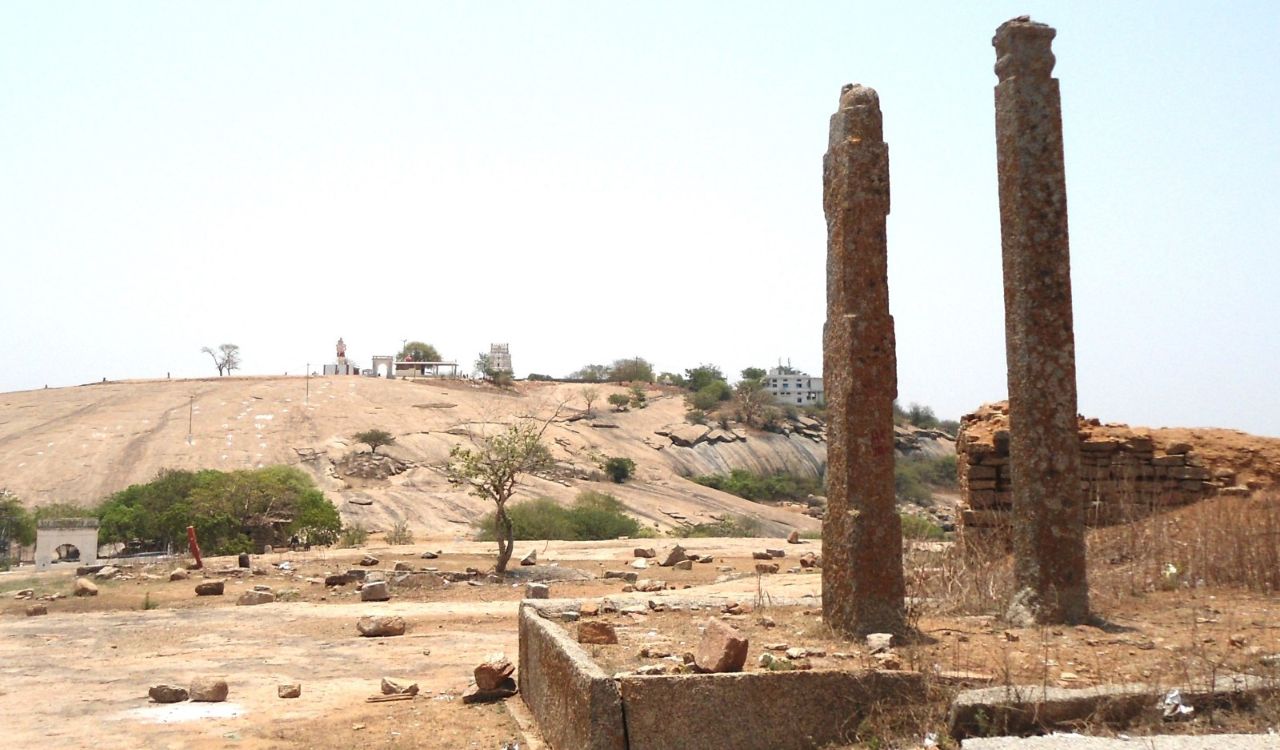
Hyderabad: In Keesaragutta of Medchal–Malkajgiri district, near Shahikaman, two pairs of pillars can be seen at two places, each pair having two platforms constructed for them.
Near one pair of pillars there is a veeragallu (hero stone) and an examination found it to be a sati stone, according to Sriramoju Haragopal, president of Kotha Telangana Charitra Brundam. A warrior is shown standing facing north, holding a sword and shield and behind him are two women, one of whom holding a kamandal in her hand, he explained.
When this warrior died in battle, the two women who followed him in self-sacrifice were his wives. Based on their dress and attire, this sculpture can be dated to the 14th–15th centuries.
One pillar has a form resembling a temple vimana at top, while the second has a Nandi carved. These rests on a rectangular platform built with stone slabs and must have been the burial place of that immortal warrior and his wives. On the upper parts of the second pair of pillars, Nandis are carved.
This is also another sati stone where the Shaivite husband and wife were buried, and Nandi pillars were erected as their memorial. Between these two pillars, a Banalinga has been installed. Among Shaivites, the honour of Nandi stones is accorded to teachers (acharyas) or rulers (prabhus).
The field visit carried out by Sriramoju Haragopal along with Tribhuvana Vikramaditya, Nalla Madhusudan Reddy, Ramakrishna, Ramesh and Sai.