The US House of Representatives has passed a controversial Republican-backed bill that would strip federal funding from universities that take part in boycotts of Israel, a move that is meant to crush campus solidarity with Palestine and shield the Tel Aviv regime from accountability over its genocidal war on the besieged Gaza Strip.
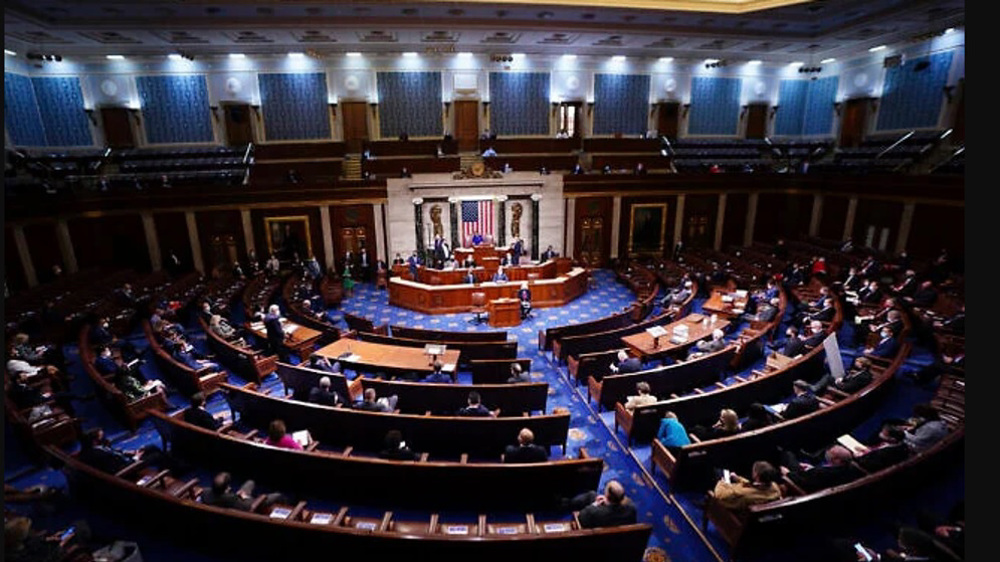
The so-called Protect Economic and Academic Freedom Act of 2026 passed on Thursday by a 237-169 vote. Only two Republicans opposed the measure, while 33 Democrats broke ranks to support it. The bill now goes to the Senate.
The legislation, H.R. 4795, would bar colleges and universities that participate in federal student aid programs from engaging in what it calls a “nonexpressive commercial boycott” of Israel. Institutions receiving Title VI funds for international study and foreign language programs would also have to certify that they do not restrict students or faculty from taking part in academic programs in the occupied territories, or block Israeli students and academics from their own campuses.
Republican Representative Virginia Foxx of North Carolina and Democrat Josh Gottheimer of New Jersey sponsored the bill. House Education Committee Chairman Tim Walberg claimed taxpayer money should never go to institutions that “discriminate against Israel.” Gottheimer, a staunch defender of the occupying regime, called the BDS movement a campaign that “targets one country and one religion.”
Opponents said the bill is a solution in search of a problem and an attack on constitutionally protected speech. Ranking Democrat Bobby Scott noted that no US college or university has actually joined the global Boycott, Divestment and Sanctions movement. Student and faculty bodies have voiced support for BDS, he said, but administrators have refused to adopt it.
“We should combat antisemitism wherever it occurs, but we should not do so by punishing protected speech or conflating a student’s view with university policies,” Scott said.
New York Democrat Jerrold Nadler, who opposes BDS, also voted no. He said the only way to protect speech he agrees with is to protect speech he does not.
Liberal Jewish group J Street likewise opposed the measure, warning that it would treat boycotts of the Israeli regime and companies tied to illegal settlements in the occupied West Bank as the same thing. The group said the bill exceptionalizes Israel, does nothing to keep Jewish students safe, and risks inflaming antisemitism rather than confronting it. AIPAC backed the legislation.
The vote comes after nearly three years of student and faculty mobilization against Israel’s war on Gaza. Since the October 7, 2023 operation and the occupying regime’s subsequent assault, Israeli attacks have killed more than 73,000 Palestinians, according to Gaza’s health ministry, while flattening universities, schools and much of the enclave’s civilian infrastructure. Campus encampments demanded an end to the slaughter and university divestment from companies profiting from the occupation and the war.
Washington and its allies have repeatedly recast that protest as antisemitism. The Trump administration has already targeted universities with investigations and threats to freeze federal funds.
House Republicans, eyeing the November midterms and control of Congress for the final two years of Trump’s term, have used the issue to split Democrats, many of whom have grown more critical of Israel as evidence of mass killing in Gaza mounted. In July, more than 100 House Democrats backed a measure to cut some military aid to the US ally amid accusations that its campaign in Gaza amounts to genocide.
Critics say the latest bill continues a long campaign of anti-BDS laws already enacted in more than 30 US states, forcing contractors and public institutions to pledge not to boycott Israel. Free speech groups have long argued those statutes collide with the First Amendment. Thursday’s House vote extends that pressure to the entire federal student-aid system.
No university has formally adopted BDS. The legislation nonetheless treats even limited commercial or academic distancing from the occupying regime, including entities operating in occupied Palestinian territory, as grounds to cut off federal support.