
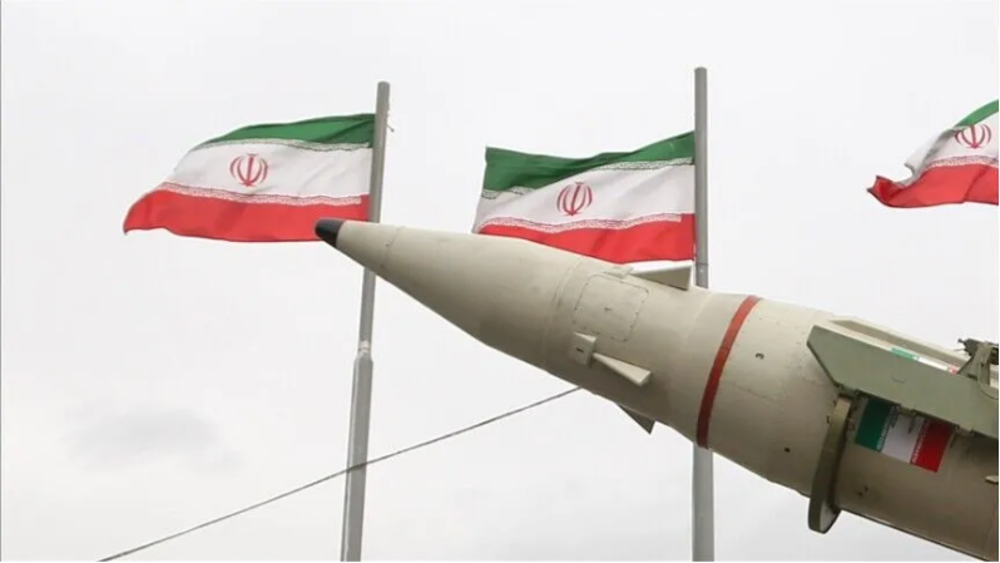
The United States has reportedly shifted part of its military deployment farther from the Strait of Hormuz after its bases in the Persian Gulf became increasingly vulnerable, but Iran’s missile strike on Camp Titin on the shores of the Gulf of Aqaba showed that geographical distance cannot necessarily put US military positions beyond Iran’s reach.
The Islamic Revolution Guards Corps (IRGC) said its Aerospace Force carried out a heavy ballistic-missile strike on the US Marine base known as Camp Titin in Jordan as part of the second wave of “Punishment of the Aggressor” operation.
According to the IRGC, the strike was conducted in response to “savage US aggression” including bombing a wedding in Kouhestak Tuesday night and killed a large number of US personnel while destroying several key facilities and attack helicopters.
Observers say the targeting of Camp Titin could have strategic significance in the broader military confrontation involving the United States, Israel and Iran, particularly because of the camp’s geographical location.
Camp Titin is located near Aqaba, at the northern end of the Red Sea, relatively close to Eilat port in occupied Palestine and the Saudi Arabian border.
Its location makes it suitable for US Marine exercises, maritime infrastructure protection, amphibious operations and the rapid deployment of military equipment and personnel.
US Navy sources have also documented FASTCENT, a rapid-response Marine unit, conducting exercises at the camp, underscoring its role in supporting Marine Corps operations and rapid force deployment.
The camp’s reported role has gained additional significance amid disruptions to US military logistics in the Persian Gulf following tensions surrounding the Strait of Hormuz.
According to reports, the United States sought to position part of its forces at Camp Titin, apparently assuming that Iran either lacked detailed intelligence on the deployment or would be unable to strike the location.
The IRGC’s announcement, however, stated that Iran possesses extensive intelligence capabilities regarding US military movements and has the ability to strike US positions well beyond the immediate vicinity of the Persian Gulf.
Meanwhile, according to reports, a Medevac helicopter has been seen at US base in Jordan picking up injured soldiers/staff after Iranian attack.
The IRGC retaliation followed a fresh series of US acts of aggression, which hit the counties of Chabahar and Konarak in Sistan and Baluchestan, among other areas.
The terrorist US Central Command (CENTCOM) claimed in a statement that it launched airstrikes in retaliation for what it termed attempts by Iran’s Islamic Revolution Guards Corps to deploy sea mines in the Strait of Hormuz and a missile barrage directed at a US military base in Jordan – a claim rejected by Iran’s military sources.
This latest flare-up comes just days after the US conducted strikes on the Iranian island of Larak in the Strait of Hormuz, which Washington claimed was aimed at preventing Tehran from planting mines.
In response, Iran launched missile and drone attacks targeting US forces stationed in Jordan and the United Arab Emirates.
Iran’s armed forces have vowed to deliver “crushing and devastating” blows to the United States following the new wave of American airstrikes targeting military positions in the southern Iranian provinces.