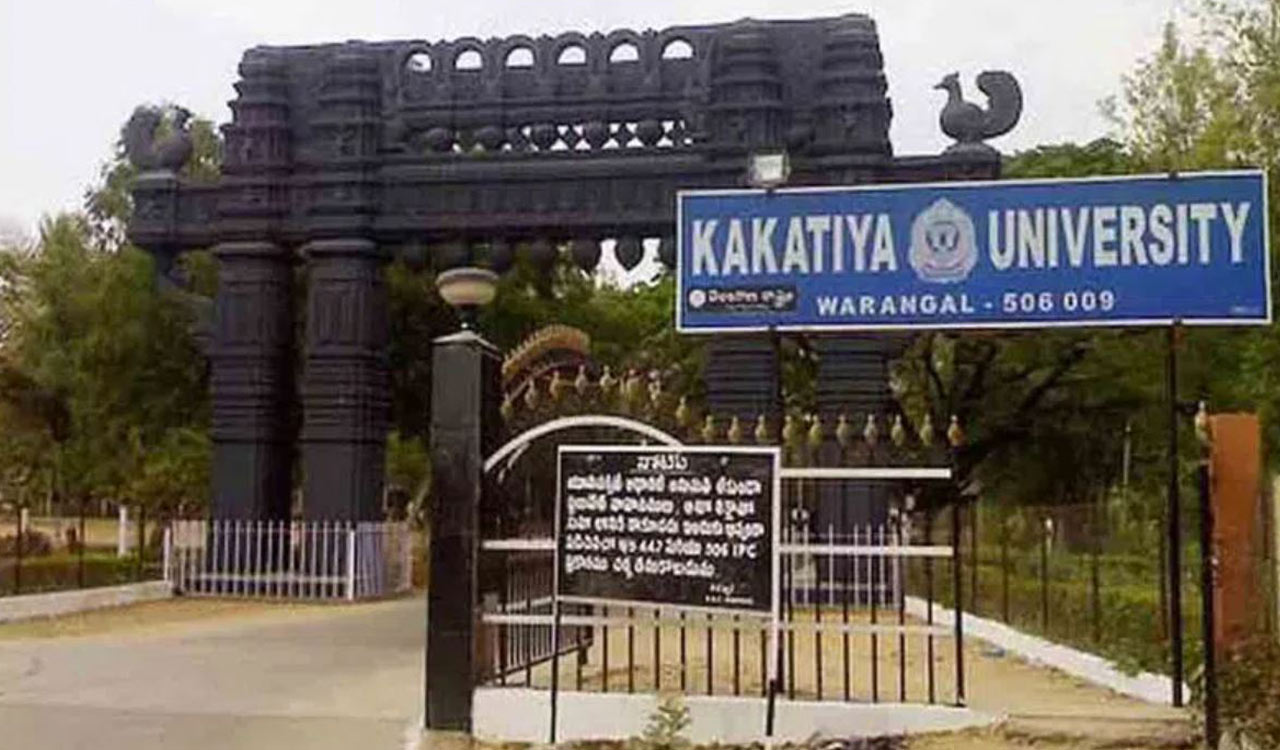
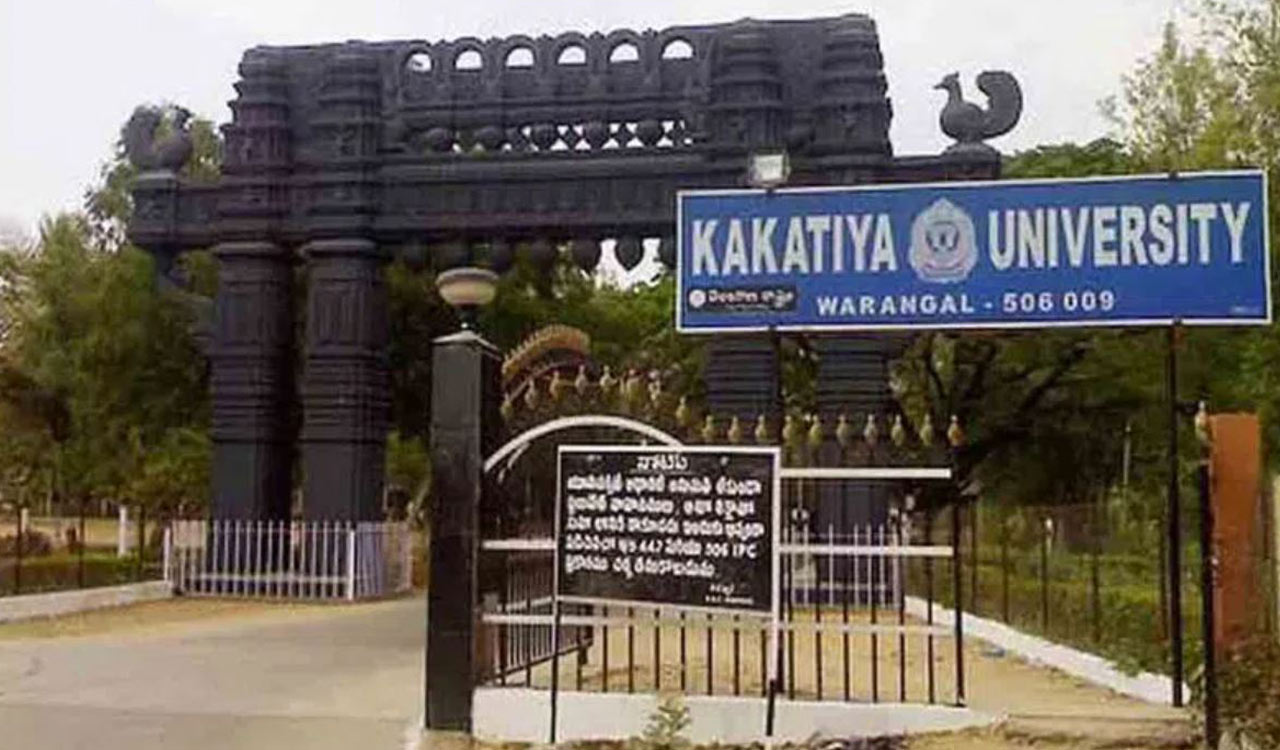
Established on August 19, 1976, Kakatiya University completes 50 years of advancing higher education, research and regional development in North Telangana. From its beginnings as an Osmania University postgraduate centre, it has evolved into a multidisciplinary institution shaping generations.
Updated On – 19 August 2026, 12:24 PM
By
Professor Sunkari Jyothi
Recipient of the President’s Award
Principal, University Arts College
Dr. Rakkireddy Adi Reddy
Public Relations Officer
Hyderabad: August 19, 1976. It was a historic day that marked the beginning of a new chapter in the history of higher education in North Telangana. At a time when there was a growing need for a strong centre of higher education in the Telangana region after Osmania University in Hyderabad, Kakatiya University was established in Warangal. With the objective of fulfilling the aspirations of the people of Telangana for higher education, the Warangal Postgraduate Centre, which had been established under the aegis of Osmania University in 1968, was upgraded into a university and established as Kakatiya University. This development cannot be viewed merely as the establishment of another educational institution. The emergence of Kakatiya University should be understood as a historic turning point that influenced the social, economic, cultural and educational transformation of North Telangana.
Five decades is not a small period in the life of an educational institution. From educating a single generation of students to educating several generations, from promoting research and producing teachers to supplying human resources to administration, Kakatiya University has built a distinctive history by shaping scientists, lawyers, journalists, educationists, public representatives, government officials, industrialists and social workers. The journey of Kakatiya University clearly demonstrates how powerful a university can be as an engine of regional development.
Before the establishment of Kakatiya University, opportunities for higher education in the Warangal region were limited. Many students had to travel to cities such as Hyderabad for higher education. This was a major challenge, particularly for students from rural, middle-class and economically disadvantaged families. In this context, the strengthening of higher education in Warangal became a great opportunity for students of North Telangana. The academic journey that began with a few departments gradually expanded into Arts, Sciences, Commerce, Social Sciences, Engineering, Law, Pharmacy, Education, Physical Education, Technical Education and Information Technology. According to the official history of the university, the journey initially began with departments such as Telugu, English, Chemistry and Mathematics, and later expanded to include Physics, Botany, Zoology, Commerce, Public Administration, Economics and several other disciplines.
This expansion should not be viewed merely as an increase in the number of departments. It should be understood as the transformation of an educational system in response to the changing needs of society. Educational requirements change as society changes. As the economy evolved from an agriculture-based system towards industry, services, information technology, biotechnology, environmental sciences and communication, the university also expanded its academic programmes. This adaptability is one of the defining strengths of Kakatiya University.
When the university was established, its primary objective was to make higher education accessible to the people of North Telangana. Over time, however, this objective expanded. University education was no longer viewed merely as a means of awarding degrees. It increasingly became a process of developing citizens with knowledge, research orientation, social responsibility, skills, technological awareness and the ability to analyse problems. The university continues to emphasise quality, accessibility, equality and values while giving importance to the dissemination of knowledge, creativity, modern research, skill development and extension programmes aligned with social needs.
Kakatiya University also occupies a distinctive geographical and historical position. It was established in the historic city of Warangal, on the land that represents the glory of the Kakatiya dynasty. The university campus is known as Vidyaranyapuri. According to current official information, the main campus covers approximately 672 acres. Older official documents have also referred to it as covering 640 acres. Therefore, although there are differences in the recorded figures depending on the period, the university’s extensive green campus remains one of its important distinguishing features.
This vast campus is not merely a collection of buildings. Classrooms, laboratories, libraries, research centres, hostels, sports facilities, administrative departments and various academic institutions together create an integrated educational environment. The university has maintained a distinctive atmosphere in which nature, education, research, youth and social awareness coexist within the same campus.
When the history of Kakatiya University is examined, its strength cannot be measured merely by the number of students or departments. It is also reflected in the importance accorded to research alongside teaching. What makes a university great is not simply the number of students who pass examinations, but the research that creates new knowledge, the scientific approach that seeks solutions to social problems and the intellectual environment that provides direction to future generations. Kakatiya University has, at various stages of its journey, given importance to research in this direction.
According to official university documents, at one stage several departments undertook various research projects. Memoranda of Understanding were also established with research institutions, universities and national organisations. The university’s objectives clearly reflect the vision of developing research in ways that enable knowledge to serve society.
Kakatiya University occupies a significant position in scientific research. Along with Geology, Biochemistry, Biotechnology, Chemistry, Physics, Botany, Zoology and Microbiology, academic and research activities are also being pursued in Computer Science, Information Technology and Engineering. For example, the Department of Geology conducts teaching and research in contemporary areas such as groundwater, economic geology, environmental geology, remote sensing and geographic information systems.
The university has also played an important role in the Social Sciences. Departments such as History, Economics, Political Science, Public Administration, Sociology, Social Work and Tourism Management have contributed significantly to understanding Telangana society. Analysing the history of a region not merely through textbooks but through research, scientifically studying social transformations and exploring solutions to economic problems have helped transform the university into a comprehensive centre of knowledge.
Similarly, Kakatiya University has made its mark in Journalism and Mass Communication. As the role of the media in society expanded, the demand for trained journalists, communication professionals and researchers also increased. From the era of print newspapers to electronic media, digital media and social media, the transformation of media has been reflected in academic education, giving media education new forms and dimensions.
The role of the various Vice-Chancellors in the evolution of the university deserves special recognition. At different points in time, successive Vice-Chancellors attempted to move the university forward in accordance with the challenges of their respective periods. Some focused on infrastructure. Some gave priority to research. Others emphasised academic standards, administrative reforms, student welfare and the development of affiliated colleges. A university cannot survive for five decades through the efforts of a single individual. Its strength is the collective legacy built by generations of teachers, administrators, employees, students, alumni, governing bodies and governments.
At the present stage, under the leadership of Vice-Chancellor Professor Karnati Pratap Reddy, there is a need to further strengthen the university’s academic system. According to official university information, Professor Pratap Reddy is an academic and researcher in the field of Zoology with more than three decades of teaching and research experience.
The challenges before the Vice-Chancellor today are different from those of the past. Once, the primary challenge was to make higher education accessible. Today, the major challenge is to connect quality higher education with global standards. Artificial Intelligence, Information Technology, Biotechnology, space research, environmental changes, digital communication and automation are rapidly transforming the nature of education. In this context, it is essential to integrate modern technology effectively without completely abandoning traditional educational methods.
The future strength of a university does not lie only in classrooms. Research laboratories, digital libraries, access to international research journals, industry partnerships, collaboration with international universities, student skill development, employment opportunities and creative innovation are equally important. To compete with leading universities of the world, greater attention must be given not only to teaching but also to the quality of research outputs, international publications, patents, industry linkages and social impact.
Kakatiya University has already achieved several important milestones in quality assessment. According to the university’s official digital directory, it received recognition from the University Grants Commission in 1978. In 2003, it received a B+ Grade from the National Assessment and Accreditation Council. In 2009, it achieved an A Grade. In the third cycle in 2017, it retained the A Grade with a Cumulative Grade Point Average of 3.36. At the same time, the university was also granted the second level of autonomy.
These achievements should not be viewed merely as statistics. Maintaining the quality of a university continuously means coordinating academic standards, research, infrastructure, administration, student services, teaching practices and social responsibility. The university continues its journey in that direction.
The scope of Kakatiya University has also expanded over time. Numerous affiliated colleges, constituent colleges, postgraduate colleges in different regions and professional educational institutions have become part of its academic system. According to official university information, educational institutions in Engineering, Pharmacy, Law, Education, Physical Education, Commerce, Arts, Sciences and Social Sciences operate within its broader academic structure.
As a result, Kakatiya University has evolved from being an institution confined to a single campus into a large higher education system spread across North Telangana. Its academic connections with educational institutions in Warangal, Hanamkonda, Bhupalapally, Mahabubabad, Jangaon, Khammam, Nirmal and other areas have further increased its influence on the educational and social structure of North Telangana.
The success of a university should be measured not by how many buildings it has constructed, but by how many lives it has transformed. In this regard, Kakatiya University has emerged as a great social institution. It has enabled a student from a rural background to pursue postgraduate education. It has given a student from a poor family an opportunity to pursue research. It has shown a young person from an ordinary family the path to becoming a teacher. It has shaped another person into a scientist, another into a government employee, lawyer, journalist, public representative, administrative officer or social worker. The sum of these transformations constitutes the true social capital of Kakatiya University.
Alumni of the university are demonstrating their abilities not only in different parts of the country but also in many countries around the world. Their achievements bring recognition to the university. Strengthening a robust alumni system to bring their experiences to current students would be highly beneficial in the future. Platforms that bring together industries, research institutions, government organisations, alumni, current students and faculty should be expanded further.
At the same time, there is a need to reflect the social realities of North Telangana in university research. Agriculture, rain-fed regions, water management, groundwater, migration, rural employment, tribal communities, forest resources, urbanisation, industrialisation, environmental change and educational inequalities are among the issues on which Kakatiya University can undertake broader interdisciplinary research. By studying regional problems and providing scientific solutions to governments and society, the university can further strengthen its social responsibility.
The world is rapidly moving towards a knowledge-based economy. Knowledge is not merely a product; it is also the foundation of economic power, social power, cultural influence and political impact. Therefore, Kakatiya University has the potential to become a central pillar of the knowledge economy of North Telangana. If it advances further in research, innovation, skill development, technology, industry linkages, social research and international collaboration, it can strengthen its position at the national level.
The role of the teaching faculty is extremely important in this process. A university needs buildings. It needs laboratories. It needs libraries and technological equipment. But more important than all these is a quality teaching faculty. A teacher who develops curiosity among students, a mentor who guides them towards research and an educator who enables students to understand society constitute the real wealth of a university. Therefore, continuous attention must be given to faculty recruitment, training, research incentives, opportunities to participate in international conferences and research funding.
At the same time, the role of non-teaching staff cannot be ignored. Administrative staff, technical staff, library personnel, laboratory staff, maintenance staff and student service personnel play crucial roles in running a large university. Teaching and administration must function in coordination like two wheels of the same vehicle for the university to operate effectively.
Student welfare is another major component of university development. Classroom education alone is not sufficient for a student. Sports, cultural programmes, the National Service Scheme, research, discussions, debates, social service, career guidance and programmes that strengthen mental resilience are also essential. The ultimate objective of higher education should be holistic personality development.
Regional universities such as Kakatiya University have another special responsibility. They must promote social equality in higher education. Systems should be strengthened to ensure equal educational opportunities for economically disadvantaged students, rural students, women and socially disadvantaged communities. A university fulfils its true purpose when it functions as a social elevator that enables individuals and communities to move upward.
Kakatiya University has witnessed numerous transformations during its five-decade journey. The educational world has moved from textbook-centred learning to computer-based education, from classrooms to digital classrooms, from printed research publications to globally accessible digital research platforms and from local education to international collaboration. Artificial Intelligence, machine learning, big data, biotechnology and robotics are now shaping the future of education. Kakatiya University must remain at the forefront of these transformations.
However, it would also be dangerous to lose traditional knowledge in the name of modernisation. The history of the Kakatiyas, Telangana’s linguistic and cultural traditions, folk traditions, rural knowledge, traditional occupations, water-management practices, literature and arts provide unique opportunities for contemporary research. By studying these subjects through modern research methodologies, the university can preserve and reinterpret local knowledge. While embracing global science, introducing Telangana’s indigenous knowledge to the world can further strengthen Kakatiya University’s unique intellectual identity.
When the history of Kakatiya University is examined, one fact becomes clear. This is not merely an educational institution belonging to Warangal city. It is part of the social history of North Telangana. It is an important chapter in the movement for higher education in Telangana. It is an educational institution that has become a centre of hope for thousands of families. It has transformed the lives of generations of students and served as a platform for research, knowledge, democratic consciousness and social change.
The journey that began in 1976 has now reached the milestone of five decades. On this occasion, respecting the past is as important as building the future. It is time not only to remember the services of former Vice-Chancellors, recognise the contributions of faculty members, honour the services of non-teaching staff and celebrate the achievements of alumni, but also to prepare a clear educational, research, technological and social vision document for the next 25 years.
If India is to emerge as a developed nation by 2047, its universities must become centres of knowledge production. The development of North Telangana is no exception. Kakatiya University must strengthen itself as a research centre capable of finding local solutions to the economic, social, environmental and cultural problems of the region. Industry linkages must increase. A comprehensive chain must be created from research to innovation, from innovation to employment and from employment to regional economic development.
At the international level, Kakatiya University must strengthen its position by expanding academic and research partnerships with leading universities across the world. Special programmes to attract international students, international research centres, joint research projects, dual-degree programmes and international faculty-exchange programmes can provide a new direction to the university.
At the same time, rankings, recognitions and grades alone cannot be the ultimate measures of a university’s greatness. Its impact on society is the real measure. Providing a farmer’s son with access to higher education is a success. Enabling a rural young woman to become a researcher is a success. Finding a scientific solution to a regional environmental problem is a success. Developing a questioning mind in a student is a success. Helping society move towards greater scientific awareness, democracy and equality is the true success of a university.
Kakatiya University has shaped generations of students during its five-decade history. It has transferred the knowledge of successive generations of teachers from one generation to another. It has laid a strong foundation for higher education in North Telangana. The responsibility of taking this legacy to a higher level now rests with the present generation. Under the leadership of Professor Karnati Pratap Reddy, strengthening the academic system, giving greater priority to research, developing infrastructure, integrating technology with education, increasing employment opportunities for students and expanding international collaborations will be crucial to the future journey. The official university website also currently identifies Professor Karnati Pratap Reddy as the Vice-Chancellor.
Therefore, the educational lamp that was lit on August 19, 1976, must now shine even more brightly after five decades. The past is Kakatiya University’s pride. The present is its responsibility. The future is its challenge. The aspirations of North Telangana students, the hopes of parents, the needs of society and the future of the nation are all connected with this university.
Kakatiya University is no longer merely a university; it is a symbol of the knowledge history of North Telangana. It is a symbol of educational self-reliance in the region. It is a platform for the dreams of generations of students. It is a laboratory for research. It is an instrument of social transformation. It is a bridge connecting Telangana’s historical and cultural heritage with modern knowledge. Five decades of its journey are not an ending — they are the beginning of another great chapter.
Kakatiya University must preserve its past, strengthen its present and continue to grow as a great centre of knowledge capable of providing world-class education to future generations. The institution that once illuminated North Telangana as a beacon of higher education must, in the coming decades, secure an even higher position on India’s educational map through the integration of knowledge, research, technology, equality and social responsibility. That would be the true tribute to the five-decade legacy of Kakatiya University and its great responsibility towards future generations.
2.Reading Kakatiya University’s five-decade journey merely as the history of an educational institution would be to limit its broader role. The establishment of the university on August 19, 1976, was rooted in the aspirations of the people of Telangana for higher education. The Warangal Postgraduate Centre, established in 1968 under the aegis of Osmania University, subsequently evolved into Kakatiya University and became a major turning point in the history of higher education in North Telangana. The academic journey that initially began with four departments — Telugu, English, Chemistry and Mathematics — later expanded into Physics, Botany, Zoology, Commerce, Public Administration, Economics and several other disciplines.
It is important to understand the social background behind this transformation. Higher education was once an opportunity available primarily to a limited number of families in urban centres. For students from rural areas of North Telangana, travelling to cities such as Hyderabad for higher education was a major economic and social challenge. The establishment of a strong university in Warangal created an opportunity for thousands of students from rural areas to pursue higher education closer to home. This transformation should therefore be understood as a development that went beyond the boundaries of an educational institution and contributed to social mobility.
When a first-generation student from a family enters a university, it is not merely an individual’s educational journey; it marks the beginning of a transformation in the social history of that family. A student from a farming family becoming a teacher after pursuing higher education, a student from a middle-class family becoming a researcher, a rural youth entering government service or a young woman completing higher education and becoming a teacher — behind thousands of such transformations, Kakatiya University has stood as a platform. That is why the university must be viewed as an important institution in the social transformation of North Telangana.
Another distinctive feature of Kakatiya University is its extensive academic structure. According to the official Self-Study Report, the university extends across approximately 670 acres and has 28 departments and 19 constituent colleges, along with hundreds of affiliated colleges. Various educational fields including Arts, Commerce, Education, Engineering, Law, Pharmacy, Sciences and Social Sciences are part of this system.
One important point should be noted here. Older official documents have referred to the university’s geographical area as 640 acres. The 2017 Self-Study Report recorded the main campus as approximately 640 acres, while the current university profile refers to approximately 672 acres. This may indicate expansion over time or a redefinition of official figures. However, one fact remains clear: Kakatiya University is a major higher education centre with a vast campus.
The name of the campus itself reflects the university’s historical and cultural background. The name “Vidyaranyapuri” symbolises knowledge, education and culture. Established on the historic soil of the Kakatiya dynasty, the university has created a connection between Telangana’s history and the modern educational system through its identity. Inspired by the importance given by the Kakatiya rulers to arts, literature, architecture, water management and culture, the university also has a responsibility to build modern knowledge.
The strength of Kakatiya University cannot be measured merely by the number of students. Research is one of its fundamental strengths. Once a higher education institution reaches a certain level, its responsibility goes beyond teaching the prescribed curriculum. Analysing social problems scientifically, generating new knowledge, exploring innovative solutions and delivering that knowledge to society become its principal responsibilities. Kakatiya University has given importance to research in this direction.
The 2017 official report stated that laboratories in the university departments had been developed with equipment required for research and that the university was encouraging individual and collaborative research by faculty members and scholars. This demonstrates that the university regarded research, along with teaching, as one of its fundamental responsibilities.
Kakatiya University has enormous potential to promote scientific research on issues specifically relevant to North Telangana. Interdisciplinary research can be undertaken on groundwater, agricultural soil quality, changing rainfall patterns, biodiversity, forest resources, environmental pollution, water management, medicinal plants, biotechnology and rural technologies. The region in which the university is located itself constitutes an extensive field laboratory for research.
Agriculture continues to be the livelihood of many families in North Telangana. Climate change, uncertain rainfall, pressure on groundwater, rising cultivation costs, market problems and instability in farm incomes are affecting society. These problems need not be studied only by the Department of Economics. If departments of Agricultural Sciences, Geology, Sociology, Economics, Political Science, Public Administration and Environmental Sciences work together, there is greater potential for developing comprehensive solutions.
The culture of tanks and water management traditions in Telangana is another important field of research. The tank systems developed during the Kakatiya period can be studied in connection with modern water management. Restoration of traditional water bodies, groundwater recharge, rainwater conservation and urban water management are areas where the university can contribute to regional policymaking.
Research in the Social Sciences is equally important. Long-term studies are needed on land relations, rural social structures, migration, women’s education, youth employment, the living conditions of tribal communities, urbanisation, social inequalities and disparities in educational opportunities in North Telangana. The university can also evolve into a reliable centre for social data relating to the region.
Kakatiya University also has a special responsibility in Journalism and Mass Communication. The flow of information in society has changed more rapidly than ever before. The media world has evolved from newspapers to radio, television, digital media, social media and Artificial Intelligence-based information systems. There is a need not only to study these transformations but also to undertake research into the role of media in democracy, the spread of misinformation, digital literacy, media ethics and the formation of public opinion.
This represents a major opportunity for Kakatiya University. Warangal is a natural research field for media studies that reflect the social realities of North Telangana. Continuous research can be conducted on rural journalism, local media, news coverage of public issues, digital journalism, the influence of social media, political communication and the role of the media during elections.
Distance education has also been an important chapter in the development of Kakatiya University. The Directorate of Distance Education, established in 1988, later grew into a system providing higher education to thousands of people as an alternative to conventional education. According to current official information, the distance and online education centre serves approximately 40,000 students through 30 programmes.
This can be regarded as a social educational revolution. Working professionals, people with family responsibilities, those living in remote areas and those unable to enter conventional education systems gained opportunities to pursue higher education through distance learning. In the future, distance education is likely to expand further through digital technology. However, merely providing online learning materials is not sufficient. Digital libraries, live classes, research guidance, skill training and career guidance must also be integrated.
Kakatiya University has also travelled a long path in terms of quality standards. Official documents state that the university received a B+ Grade from the National Assessment and Accreditation Council in 2003, an A Grade in 2009 and an A Grade with a Cumulative Grade Point Average of 3.36 in 2017. A subsequent official document states that the university received an A+ Grade with a Cumulative Grade Point Average of 3.27 in 2023.
This is where the key question concerning the future of the university begins. How can existing recognition be transformed into even higher academic quality? A grade is only one stage. The university must move further in areas such as international research, new innovations, world-class faculty, international students, industry partnerships, patents, technology transfer and social impact.
In today’s world, competition among universities is not merely about student numbers. How many high-quality research papers has a university published? How many patents has it secured? What partnerships has it developed with industries? How many international collaborative research projects has it undertaken? How many solutions has it provided to social problems? How much employment has it generated for its students? These questions are becoming increasingly important.
In this context, internationalisation should become an important future objective for Kakatiya University. According to official information, the university already has collaborative relationships with universities and research institutions in countries including Australia, Germany, the United States, the United Kingdom, Hungary, China, the Netherlands, Brazil and Italy.
These relationships need to be taken to a deeper level. Instead of merely signing Memoranda of Understanding, the university should expand joint research projects, joint doctoral programmes, faculty exchanges, student exchanges, joint laboratories, international conferences and joint proposals for research funding. Greater global connectivity will expand the international reach of research at Kakatiya University.
Under the leadership of the present Vice-Chancellor, Professor Karnati Pratap Reddy, the responsibility of moving in this direction has increased further. According to official university information, he is an academic and researcher in Zoology with more than three decades of teaching and research experience.
A Vice-Chancellor with a research background has an opportunity to transform research into an institutional culture. Greater importance can be given to departmental research objectives, interdisciplinary research teams, mobilisation of research funds, systems for delivering research findings to society and research partnerships with industries.
However, the development of a university is not the responsibility of the Vice-Chancellor alone. The success of a university depends on collective effort. The Vice-Chancellor, Registrar, Deans, Principals, Heads of Departments, faculty, non-teaching staff, students, researchers and alumni must all work together for institutional progress.
Every Vice-Chancellor of the university has left a distinctive mark according to the needs of his or her period. The history should record whose tenure saw infrastructure expansion, whose period witnessed the introduction of new courses, whose leadership strengthened research and whose administration expanded affiliated colleges. The history of a university is not merely the history of buildings; it is the history of the intellectuals who built it, the faculty who served it, student movements, research achievements and social transformations.
The role of students in the history of Kakatiya University also deserves special study. University campuses are not merely spaces filled with textbooks. They are platforms for ideas. Universities become centres for discussion, debate, social awareness and the development of democratic values. The student community of North Telangana has played its own role in social and political consciousness at different stages.
Therefore, freedom of thought among students, the right to question, a culture of discussion and a democratic environment that respects differences of opinion are extremely important. Knowledge does not mean merely learning answers; it also means asking the right questions. A university must be a place that encourages such questions.
At the same time, student employment must be viewed as a central component of university development. If students are unable to obtain employment or self-employment after completing higher education, questions naturally arise about the educational system. Therefore, the curriculum of every programme needs to be redesigned according to the requirements of industries, government services, the service sector, research and entrepreneurship.
This is even more critical in the age of Artificial Intelligence. Some jobs are changing while new jobs are emerging. A degree alone is no longer sufficient for future students. Skills such as data analysis, communication, problem-solving, digital competence, creative thinking, teamwork and research ability are essential. Kakatiya University must accept the responsibility of equipping its students with the capabilities required for this new world.
Women’s education is another area where the university can play a broader role. As women’s participation in higher education increases, its impact on families, society and the economy also grows. Providing greater opportunities for women in research, leadership, teaching, administration and technology can enable the university to establish a strong foundation for social equality.
Providing higher education to socially disadvantaged communities is also closely connected with the objectives behind the establishment of Kakatiya University. If equal access to quality education is not ensured, social inequalities in higher education will continue. Therefore, student facilities, scholarships, hostels, mentoring, competitive examination coaching and research opportunities need to be strengthened.
The role of alumni must also expand in the future of the university. Those who once studied in the classrooms of Kakatiya University are now working in different fields across India and abroad. Instead of merely inviting them to annual gatherings, they can be engaged as mentors for students, research partners, industry connectors and career guides. A strong alumni network can become a great asset to the university.
Similarly, university-industry linkages must be strengthened further. Curricula should be designed after understanding the skills required by industries. Industry experts should be brought into classrooms. Students should be provided with internship opportunities. Research problems should be connected with industrial needs. An idea born in a research laboratory acquires greater social and economic value when it reaches the market.
Kakatiya University must embrace internationalisation without losing its local identity. It must connect global knowledge with the Telangana region. It must use world-class technology to find solutions to local problems. It must undertake globally relevant research on Telangana’s history, culture, language, agriculture, environment and society while following international research standards. The idea of “thinking globally and working locally” can be highly suitable for the future of Kakatiya University.
After five decades, Kakatiya University stands at a critical turning point. In the first phase, the goal was to provide higher education to North Telangana. In the second phase, the focus was educational expansion. In the third phase, the emphasis was on research and quality. The objective of the coming phase should be to become a global knowledge centre. The force connecting all four phases is the same — quality education.
Therefore, while proudly remembering the journey from 1976 to the present, a clear direction must be determined for the next 25 years. By 2047, Kakatiya University should aspire to become one of India’s leading public universities, not merely one of the prominent universities in North Telangana. Research excellence, international collaborations, student employability, technological innovation, social research, environmental protection, preservation of local knowledge and digital education should all become part of its future plan.
Conclusion
Looking back at the five-decade history of Kakatiya University, it is not merely a count of years; it is a story of the transformation of thousands of lives. It is not a count of classrooms; it is a legacy of knowledge passed down through generations. It is not a measurement of buildings and campus area; it is the intellectual influence that has spread throughout society. It is not merely an institution that has awarded degrees; it is an educational movement that has created thinking citizens.
Kakatiya University, which began as an aspiration in 1976, has today become a major pillar of higher education in North Telangana. Its past is glorious. Its present is responsible. Its future is filled with immense possibilities. The present generation must take the great legacy built by former Vice-Chancellors, faculty members, non-teaching staff, students and alumni to an even higher level.
Under the leadership of the present Vice-Chancellor, Professor Karnati Pratap Reddy, if the university moves forward with greater coordination in education, research, technology, infrastructure, student welfare and international collaboration, Kakatiya University can transform its five-decade legacy into an even greater future. This is not the responsibility of the administration alone; it is the collective responsibility of the entire university community.
The Kakatiya University that once reduced the need for students of North Telangana to travel far away for higher education must now not only bring global knowledge to North Telangana but also take the knowledge generated in North Telangana to the world. That would give a new meaning to the original vision behind the establishment of the university.
Kakatiya University is not merely a university belonging to a particular region — it is the memory of North Telangana, a milestone in the history of higher education in Telangana, a reflection of the aspirations of generations, a platform for research, an instrument of social transformation and a beacon of knowledge for future generations. The lamp lit in 1976 must continue to shine more brightly in the coming decades and leave its distinctive mark on the global map of knowledge from North Telangana. That is the true success story of five decades of Kakatiya University.