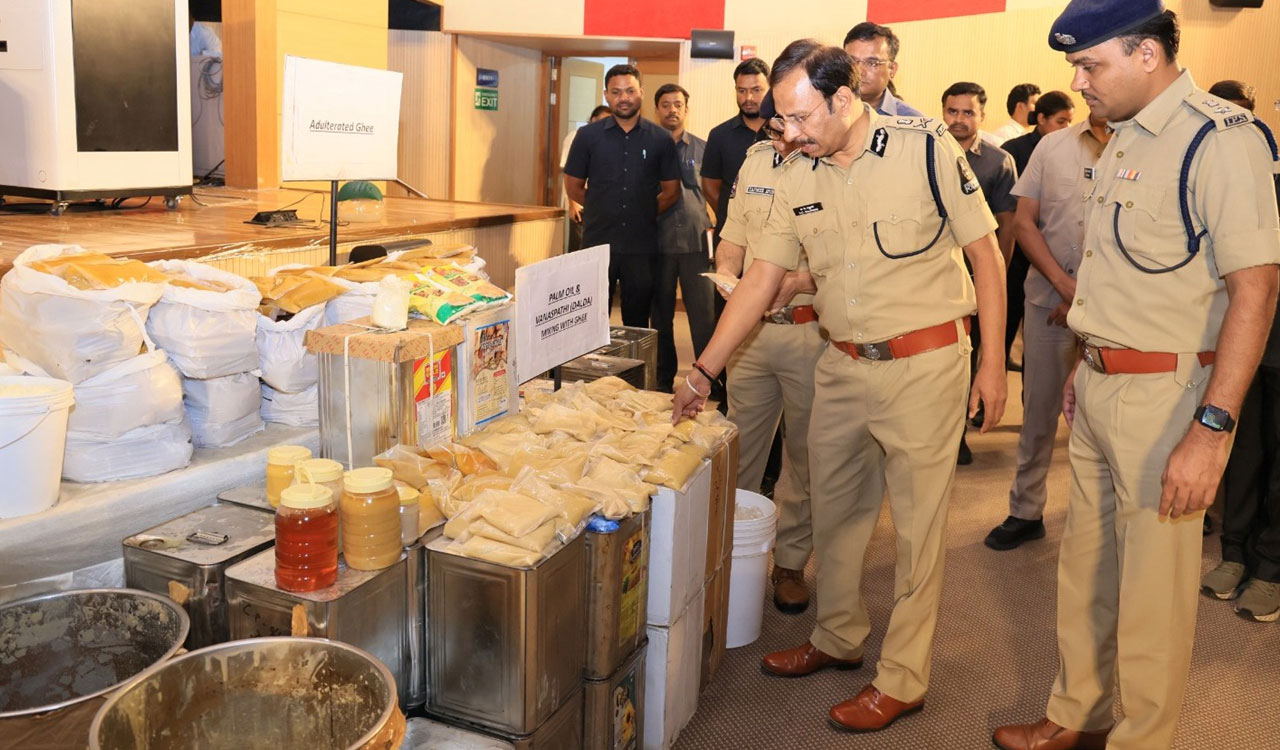
Hyderabad food safety teams inspected 130 establishments and seized about 36 tonnes of suspected adulterated ghee and raw materials. Officials said cheaper oils, vanaspati and artificial flavours were used in products sold as genuine ghee and urged consumers to remain cautious.
Published Date – 18 August 2026, 05:30 PM
Hyderabad: The Hyderabad Food Adulteration Surveillance Team (H-FAST), in coordination with the Food Safety Department, in a crackdown on establishments allegedly involved in manufacturing and selling adulterated ghee across the city, inspected 130 establishments, including 39 manufacturing units and 91 ghee-selling outlets.
The inspections uncovered large-scale production of synthetic ghee using cheaper substitutes, including palm oil, Vanaspati, skimmed milk powder, and artificial ghee flavours, and packaged and sold as genuine ghee under labels such as “100% Pure Ghee,” “Premium Ghee,” “Farm Fresh Ghee” and “Natural Ghee.”
The teams seized approximately 36 tonnes of adulterated ghee and raw materials, including 25.5 tonnes of adulterated ghee, 8.7 tonnes of cream, 1,200 litres of palm oil, 600 litres of vanaspati, and artificial ghee flavour bottles.
Samples were collected for laboratory analysis, and the seized material was handed over to the Food Safety Authorities for further legal action.
City Police Commissioner VC Sajjanar said manufacturers were mixing milk solids with palm oil, vanaspati and artificial flavours to replicate the taste, aroma and appearance of genuine ghee. “In another method, skimmed milk powder containing no milk fat was blended with palm oil, vanaspati, starch and artificial flavour to produce a product resembling ghee,” he said.
Several packs lacked mandatory information such as batch or lot numbers, FSSAI licence details, certificates of analysis, manufacturing or packing dates and expiry dates.
Sajjanar said the adulteration ranged between 10 per cent and 40 per cent, with the products being diverted to different markets depending on their quality. “The synthetic ghee was supplied for use as deepam or pooja ghee and to restaurants, tiffin centres, sweet manufacturers and Ayurveda stores,” he added.
Further, the cream used in the manufacturing process was allegedly sourced from suppliers in Maharashtra, Uttar Pradesh, Madhya Pradesh, Gujarat, Karnataka and Tamil Nadu, and finished products distributed across Telangana and neighbouring States.
Officials warned that the use of refined palm oil, palm kernel oil, palmolein and chemical additives in adulterated ghee could increase health risks, including cardiovascular and metabolic problems, digestive issues and strain on the liver and kidneys.
They urged consumers to purchase ghee and other dairy products only from reputed and licensed vendors and to check for intact seals, manufacturer details and valid FSSAI licence information.
Citizens can report suspected food adulteration or unhygienic food preparation on Dial 112 or the H-FAST helpline at 8712661212.