By Prof. Abdullahi Danladi
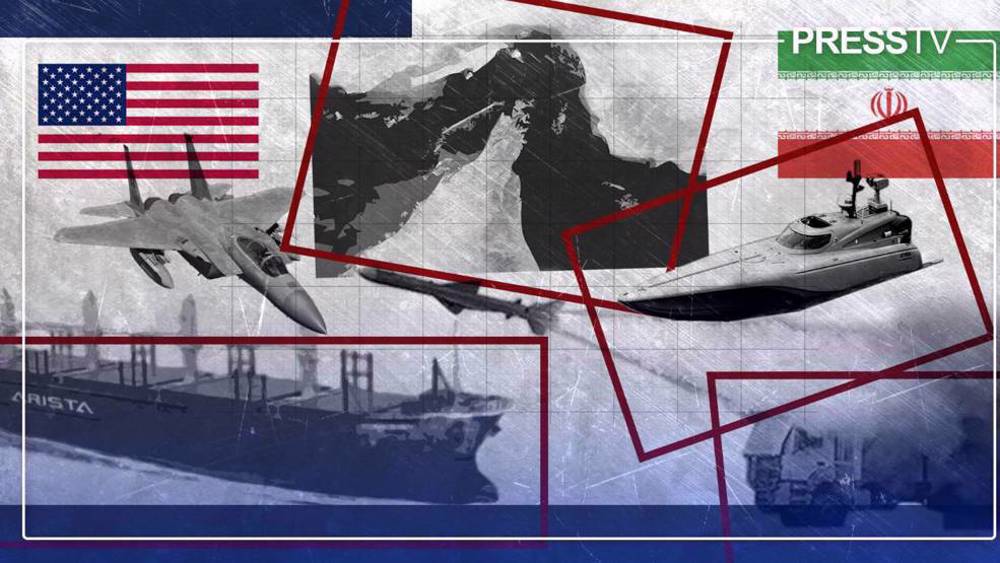
The ongoing US war against the Islamic Republic of Iran, and the resulting disruption around the Strait of Hormuz, provides a useful opportunity to understand one of the most important but often poorly understood realities of modern economics.
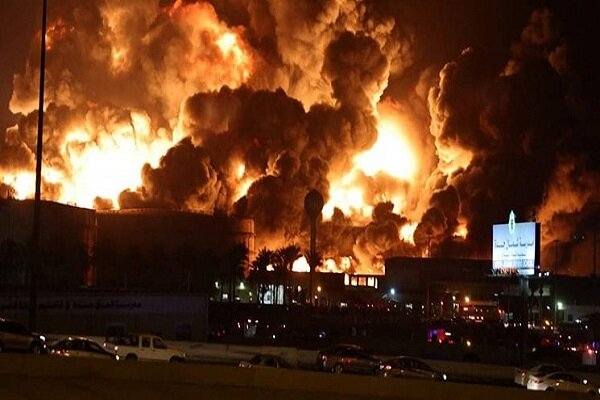
War does not remain confined to the battlefield. It travels through markets, supply chains, currencies, factories and ultimately into the pockets and dining tables of ordinary people. One does not need to be an economist to understand this phenomenon. At its heart, it is simply a story about scarcity, fear, expectations and the interconnectedness of the modern world.
The Strait of Hormuz is particularly important because it is one of the world’s major gateways for petroleum. A substantial proportion of globally traded oil normally passes through this relatively narrow waterway. Consequently, when aggression threatens the free movement of tankers through the Strait, the immediate economic question is not necessarily whether the world has suddenly run out of oil.
There may still be enormous quantities of oil beneath the ground across the region. The problem is that oil which cannot be transported efficiently to the international market is, for practical economic purposes, temporarily unavailable to those who need it.
An ordinary analogy makes this easier to understand. Imagine a large city supplied with food through one major bridge. The farms outside the city continue producing food, and the warehouses remain full, but the bridge suddenly becomes inaccessible. The food has not disappeared. Nevertheless, the people inside the city begin to worry about shortages.
Traders begin buying whatever supplies they can find, consumers begin purchasing more than they normally would, and sellers begin raising their prices. The economic problem is therefore not simply the physical absence of the commodity; it is the disruption of its movement from producer to consumer.
This is essentially what happens in an oil crisis. Oil is a globally traded commodity, and its price is determined not only by how much oil exists but by how much is expected to be available, where it is located, how safely it can be transported and how much it will cost to replace.
When the Strait of Hormuz is threatened or closed, the international oil market immediately begins asking a frightening question: How much oil might become unavailable, and for how long? The answer does not have to be known with certainty before prices react. Markets are driven not only by facts but also by expectations about future facts.
This is why fear itself has an economic value. If traders believe that the disruption will last for only a few days, the price reaction may be relatively limited. But if they begin to believe that the disruption could continue for weeks or months, they start pricing the possibility of a much larger shortage into today’s market.
An oil trader does not purchase crude merely according to today’s circumstances; he is also thinking about what the price and availability of crude will be tomorrow. Thus, expectation can produce an economic effect before the expected event actually occurs.
This principle explains why oil prices can rise dramatically even when petrol stations are still selling fuel and oil-producing countries are still pumping crude. The market is not simply asking, “How much oil is available today?” It is asking, “How secure is the supply tomorrow?” If the answer becomes uncertain, the price rises. In this sense, the oil market is not merely a marketplace of physical commodities; it is also a marketplace of risk and confidence.
The consequences become much more serious when we understand that petroleum is not merely a product used to power automobiles. It is one of the fundamental inputs into modern economic life. Fuel is required to transport agricultural products, operate machinery, move raw materials, distribute manufactured goods and connect producers with consumers.
Consequently, an increase in the price of crude oil can generate a chain reaction throughout the global economy. The crude oil becomes more expensive; refined petroleum products become more expensive; transportation becomes more expensive; production and distribution costs rise; businesses increase their prices; and eventually the consumer discovers that the same amount of money buys fewer goods and services than before.
Exclusive: Iran-Oman Strait of Hormuz corridor talks enter new phase despite US obstruction, informed source tells Press TVhttps://t.co/SJKBcCV0Cv
— Press TV 🔻 (@PressTV) August 4, 2026
Consider something as simple as a loaf of bread. There may be no petrol visibly contained in the bread, yet petroleum has almost certainly influenced its price. Fuel was required to transport agricultural inputs to the farm. Machinery may have required fuel to cultivate or harvest the crop. The agricultural produce had to be transported to a processing facility. The processed material had to be transported to the bakery. The bakery itself requires energy, and the finished bread must eventually be transported to the market or shop.
At every stage, energy and transportation costs enter into the final price. Thus, when fuel prices rise, the price of bread may rise even though the quantity of wheat, flour or yeast has not changed. This is the deeper meaning of cost-push inflation. Inflation does not always arise because people suddenly want to buy more goods. Sometimes it arises because the cost of producing and delivering those goods increases.
An oil shock is one of the classic mechanisms through which such inflation can occur. The higher cost of energy becomes embedded in the cost structure of the economy and gradually passes from producers to wholesalers, retailers and, ultimately, consumers.
The impact can be particularly severe in developing economies, where transportation costs constitute a significant component of the price of everyday commodities. When the cost of moving food from the farm to the city rises, the consumer in the city pays more. When the cost of moving raw materials to factories rises, manufactured products become more expensive.
When businesses face higher operating costs, they may reduce production, increase prices or lay off workers. Consequently, an external geopolitical crisis can become an internal social and economic problem.
There is also an apparent paradox here for oil-producing countries. One might reasonably ask: If Nigeria produces oil, why should Nigerians suffer when the international price of oil rises? The answer lies in the structure of the global petroleum economy. Crude oil is an internationally traded commodity, and its price is influenced by global market conditions.
An oil-producing country can therefore benefit from higher crude export revenues while its citizens simultaneously suffer from higher domestic energy and transportation costs. The government may earn more from its petroleum exports, while households experience a reduction in their purchasing power. The same oil shock can therefore be a financial opportunity for the state and an economic burden for the citizen.
There is an even more profound dimension to this phenomenon. The economics of war demonstrates that modern economies are extraordinarily interconnected. The world is no longer composed of isolated national economic systems. A disruption in one strategic geographical location can affect production, transportation, inflation, exchange rates and consumer prices thousands of kilometres away.
This interconnectedness has brought enormous economic benefits to humanity, but it has also created vulnerabilities. The same globalisation that enables countries to obtain goods cheaply from distant parts of the world also means that a crisis in one region can transmit economic pain across continents.
The Strait of Hormuz therefore represents more than a geographical passage between the Persian Gulf and the wider ocean. Economically, it is a critical artery of the global energy system. To understand its importance, one can imagine a major highway carrying a huge proportion of the world’s commercial traffic. If that highway is suddenly blocked, alternative roads may exist, but they may not have the capacity to accommodate the same volume of traffic.
The result is congestion, delays, higher transportation costs and scarcity. In the petroleum market, alternative pipelines and routes can absorb some displaced supplies, but they cannot necessarily substitute immediately for the enormous volume normally transported through Hormuz.
“We act responsibly in the Strait of Hormuz”
Senior advisor to the Leader of the Islamic Revolution says Iran acts responsibly in the Strait of Hormuz and values global maritime security, emphasizing that US actions create instability that delays reopening the waterway. pic.twitter.com/49SqzsL1RD
— Press TV 🔻 (@PressTV) August 3, 2026
This is also why strategic petroleum reserves become important during a crisis. Governments maintain emergency stocks partly to cushion the economy against temporary disruptions. They function much like a household storing food in anticipation of a possible shortage. If normal supplies are interrupted, the stored reserves can temporarily compensate for the missing supply. But reserves are finite. They can buy time; they cannot permanently abolish scarcity. If a major disruption continues for a sufficiently long period, the underlying problem eventually returns.
The ordinary consumer may therefore wonder why the price of petrol increases when there is still petrol in the filling station. The answer is that today’s price is influenced by the anticipated cost of replacing today’s supply tomorrow. A petrol station operator who sells fuel today must eventually replenish his stock. If the expected replacement cost has increased substantially, maintaining yesterday’s price may mean selling today’s product below the cost of acquiring tomorrow’s supply. Thus, the price mechanism begins responding to future expectations before physical shortages become visible to the consumer.
This illustrates one of the most important principles of economics: prices are signals. A rising price tells producers that a commodity has become relatively scarce or risky to obtain, while simultaneously telling consumers that they should economise on its use.
In theory, this mechanism encourages producers to search for alternative supplies and consumers to reduce consumption. In practice, however, adjustment can be painful, particularly for poor households that cannot easily reduce their consumption of essential goods. A wealthy household may be able to absorb a higher transport cost; a poor family that already spends most of its income on food and transportation has very little room to adjust.
This is where the economics of war becomes a matter of social justice. The burden of an unprovoked and illegal war across oceans is rarely distributed equally. Those with wealth, savings and diversified sources of income are generally better positioned to withstand inflationary shocks. Poor households, wage earners and small businesses often suffer disproportionately because necessities such as food, transportation and energy consume a larger proportion of their income. Inflation is therefore not merely an economic statistic; it can become a mechanism through which the social consequences of war are transferred from the battlefield to vulnerable populations.
There is also the danger of a vicious cycle. Higher oil prices raise transportation and production costs. Higher production costs increase prices. Rising prices reduce consumers’ purchasing power. Workers then demand higher wages to compensate for the increased cost of living.
Businesses facing higher wages and energy costs may increase prices again or reduce production and employment. Economic activity can consequently weaken at precisely the moment when prices are rising. When high inflation begins to coexist with weak economic growth and unemployment, economists describe the situation as stagflation, one of the most difficult combinations for policymakers to manage.
The deeper lesson, therefore, is that the economics of war is not confined to military expenditure, destroyed infrastructure or the cost of weapons. War is also an economic shock. It disrupts supply, increases uncertainty, raises the cost of transportation and energy, distorts investment decisions and weakens consumer purchasing power.
The missiles may fall in one country, but their economic consequences can travel through international markets until they eventually appear as a higher transport fare in African countries, a more expensive loaf of bread, a higher electricity bill or a smaller quantity of food in a household’s shopping basket.
The crisis surrounding the Strait of Hormuz, stemming from the US acts of aggression and maritime banditry, provides a powerful illustration of the hidden architecture of the modern economy. Beneath the seemingly simple act of buying a loaf of bread, boarding a bus or filling a vehicle with petrol lies a vast international network involving crude oil, refineries, shipping routes, insurance, currencies, transportation, factories, farmers, traders and consumers.
When one important link in that chain is severely disrupted, the consequences can travel through the entire system. This is why the economics of war can be understood in one simple sentence: when war interrupts the movement of essential resources, scarcity and uncertainty increase; when scarcity and uncertainty increase, prices rise; and when prices rise, the economic consequences eventually reach ordinary people.
The tragedy is that those who pay the economic price are often not the people who made the decision to go to war. A missile may be fired by warmongers in Washington, but its economic echo can eventually be heard in the marketplace of an ordinary African or Asian town.
Professor Abdullahi Danladi is a member of the Islamic Movement in Nigeria.
(The views expressed in this article do not necessarily reflect those of Press TV.)