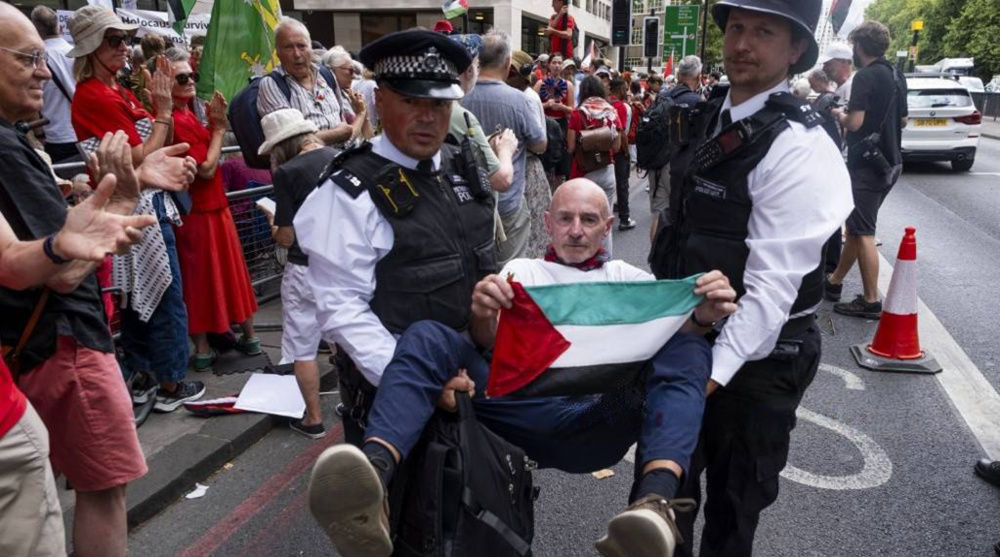
The UK seeks to manipulate the outcome of Palestine Action trials by threatening defendants with terrorism-related sentences if they explain their motives to jurors, while imposing restrictions that prevent jurors and the public from fully understanding the cases, a report says.
The Grayzone reported on Saturday that UK authorities are using measures across three separate trials, where activists facing ordinary criminal charges could later receive far harsher sentences through the application of a “terrorism connection.”
The most recent case involves the so-called Teledyne Three, whose trial is scheduled to begin on August 17 over damage to the clean room of a northern England factory producing components for F-35 fighter jets supplied to Israel.
The Israeli regime has extensively used F-35 warplanes during its genocidal war on Gaza, which has killed more than 73,000 Palestinians and wounded 173,000 others.
Presiding Judge Kay Driver has warned the defendants that explaining to jurors why they disrupted the factory could result in a “terrorism connection” being applied at sentencing, effectively placing their political motives beyond the defense.
British media have also been barred from reporting on the pre-trial hearings, while jurors have been prevented from hearing that terrorism-related sentencing could potentially follow convictions on lesser criminal charges.
According to hearing transcripts obtained by the report, Driver described the possible terrorism sentencing as “not an issue” and “not part” of the case, while preventing the defendants from raising it before the jury.
The prosecution is likewise barred from mentioning the “terrorism connection” without first obtaining court permission, creating what the report described as a coercive Catch-22 that restricts defendants, jurors and the press simultaneously.
The proceedings follow the Filton Six trial, where defendants were similarly restricted from explaining their motives and jurors were not told that terrorism-related sentences could follow convictions for lesser offenses.
Four of the Filton defendants were convicted in June and sentenced to between five and eight years in prison as “terrorists.”
A separate July trial involving three activists who targeted the same Teledyne facility was also overseen by Driver, who rejected attempts to present political and moral arguments about the purpose of their action.
The report said prosecutors were nevertheless permitted to portray the defendants as an “organized criminal operation” engaged in a “campaign of violence,” while the defense was prevented from explaining why the factory had been targeted.
Five other Palestine Action activists convicted over damage to a Barclays branch face a similar threat after prosecutors sought a “terrorism connected” designation only after their trial had ended.
A hearing on August 21 will determine whether that designation is imposed, leaving the defendants facing terrorism-related punishment after the jury had already convicted them only of criminal damage.
The cases come as the UK’s proscription of Palestine Action remains subject to legal challenges after the High Court ruled in February that the government’s designation of the group was unlawful.