Iranian Foreign Ministry spokesman Esmaeil Baghaei says a possible agreement with Oman on a new shipping route through the Strait of Hormuz will not, by itself, mean the strategic waterway will reopen, stressing that its reopening depends on separate security and sovereignty considerations.
Speaking to the national broadcaster on Thursday, Baghaei said Iran and Oman are working on a new Traffic Separation Scheme (TSS) that would establish a route acceptable to both sides while safeguarding their sovereign rights and national interests.
“We are now going to reach an understanding on the route that both sides agree on, neither the northern route nor the southern route, but a route that determines the sovereign rights of both sides and ensures our national interests and security, in the form of a new Traffic Separation Scheme (TSS),” he said.
He described the negotiations as forward-moving and praised Oman’s cooperation.
But he stressed that an Iran-Oman understanding on the route should not be confused with a decision to reopen Hormuz.
“I should also say that the understanding between Iran and Oman regarding the new route has nothing to do with the reopening of the Strait of Hormuz; this understanding is a necessary condition, but not a sufficient one,” he said.
Baghaei said the restrictions on the waterway were not imposed because of Oman but because of US aggression and its illegal maritime blockade and other hostile measures against Iran.
“Therefore, the reopening of the Strait of Hormuz is a completely different equation,” he added.
Baghaei also ruled out any return to the conditions that existed before February 28, when the US and the Israeli regime launched their unprovoked aggression against Iran.
“There is absolutely no intention for the situation in the Strait of Hormuz to return to the conditions before February 28,” he said.
“We had a very difficult experience over these past few months; therefore, we must ensure that Hormuz is not exploited by the aggressor parties against us.”
He said this requires a mechanism that fully respects Iran’s sovereign rights.
“Our talks with Oman are bilateral talks and have nothing to do with anyone else,” Baghaei stressed.
Exclusive: Iran-Oman Strait of Hormuz corridor talks enter new phase despite US obstruction, informed source tells Press TVhttps://t.co/SJKBcCV0Cv
— Press TV 🔻 (@PressTV) August 4, 2026
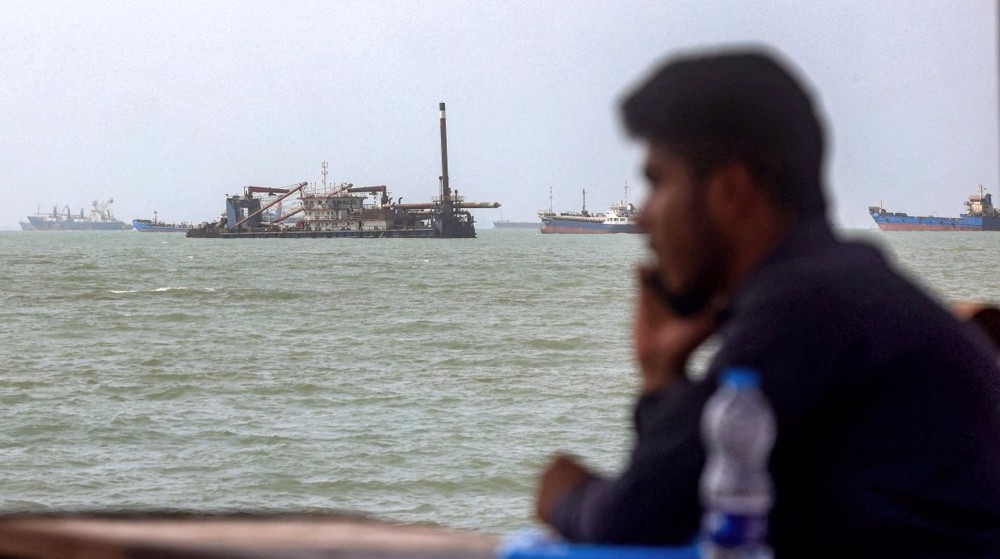
His remarks came as Iran restricted transit through the Strait of Hormuz, through which roughly one-fifth of global oil demand passes, following the start of the US-Israeli aggression in late February.
On June 17, the presidents of Iran and the US signed a Pakistan-brokered Memorandum of Understanding remotely, intended to end the war. Article 5 of the understanding places responsibility for reopening and managing the strait with Iran. However, subsequent US measures, including the establishment of an unsafe corridor near Omani shores and renewed US aerial attacks, violated the commitments and prompted Iran to reimpose restrictions.
Baghaei rejected suggestions that Iran’s decisions may be affected by US threats or statements from foreign officials.
“Iran is in no way influenced by the harsh rhetoric of others, and the interests and expediency of the country are not going to be affected by threats from US officials,” he said.
“What is important is that the power and authority of the Islamic Republic of Iran are such that the other side knows that if they engage in adventurism, they will certainly receive an appropriate response from us,” Baghaei said.
He also said US intervention has repeatedly disrupted negotiations rather than facilitating them.
“Whenever the United States has intervened or threatened, it has actually caused disruption in the negotiations; US intervention and threats have never played a facilitating role in these negotiations,” he said.
Baghaei added that Iran has become accustomed to external pressure and remains focused on protecting its national interests.
“The Islamic Republic of Iran has become hardened by all these threats, intimidations and pressures. We are focused on our national interests and certainly we are not going to make Iran’s national interests and national security a bargaining chip for the rhetoric and harsh words of others,” he said.