Iran’s parliament is reviewing a preliminary 11-article bill aimed at establishing a strategic framework for managing security, navigation and economic activity in the Strait of Hormuz and the Persian Gulf.
The preliminary text of the bill, titled the “Strategic Action for Ensuring Security and Sustainable Development of the Strait of Hormuz and the Persian Gulf,” is currently under consideration by the parliament’s National Security and Foreign Policy Committee.
Alireza Salimi, a member of the parliament’s presiding board, said Thursday the document is still a preliminary proposal and has not been given final approval.
“This is an initial proposal that has been discussed in the committee and is not yet the committee’s final report,” Salimi said.
According to Salimi, the proposed legislation would task the Iranian government, in cooperation with the Armed Forces, with ensuring maritime security, navigational safety and environmental protection in the Persian Gulf.
Under the preliminary draft, Iran would also provide services including navigational guidance, inspection of maritime passages, environmental documentation, assessment of whether vessels are permitted to transit, and the determination of the coordinates of vessels designated by Iran, Salimi added.
He highlighted that the draft proposes a blanket ban on vessels owned or flagged by the United States, the Israeli regime or other hostile states or entities linked to them.
“It would also prohibit the entry and exit of military or warships, as well as vessels involved in espionage, spying, or actions deemed contrary to Iran’s national security,” Salimi noted.
According to Salimi, the proposed legislation would also bar any military or non-military cargo destined for or originating from Israeli-occupied territories from transiting the Strait of Hormuz and the Persian Gulf.
Vessels or cargoes deemed to have played a role in hostile actions against Iran’s regional allies, including Hezbollah, Ansarullah and Iraq’s Popular Mobilization Forces, would also be subject to restrictions under the draft, he added.
“The bill further envisages Iran collecting fees for navigation, supervision, management and security services, with priority given to payments in the Iranian national currency.”
It also states that countries, organizations, regimes, companies or other entities that have caused damage to Iran would be required to compensate Tehran, Salimi said.
“Until such compensation is made, they would not be granted permission to transit the Strait of Hormuz or the Persian Gulf.”
He also stated that countries that have imposed sanctions on Iran or frozen Iranian assets would likewise be subject to transit restrictions under the proposal.
The draft also calls for Iran, in cooperation with the private sector, to provide warehousing services and proposes heavy penalties for those violating the legislation, including financial fines of up to 20 percent of the value of the cargo and the vessel involved, he noted.
Salimi stressed that the provisions remain subject to review and could be amended before any final decision is made.
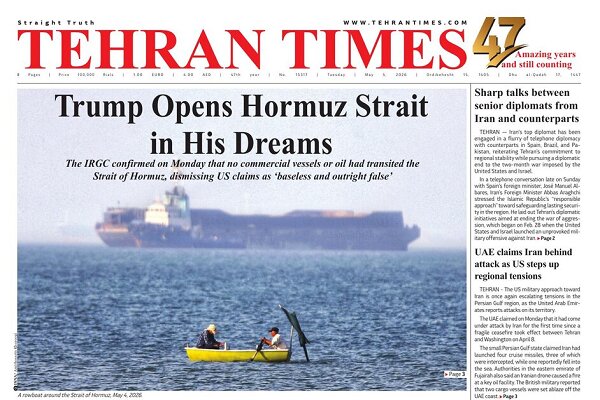
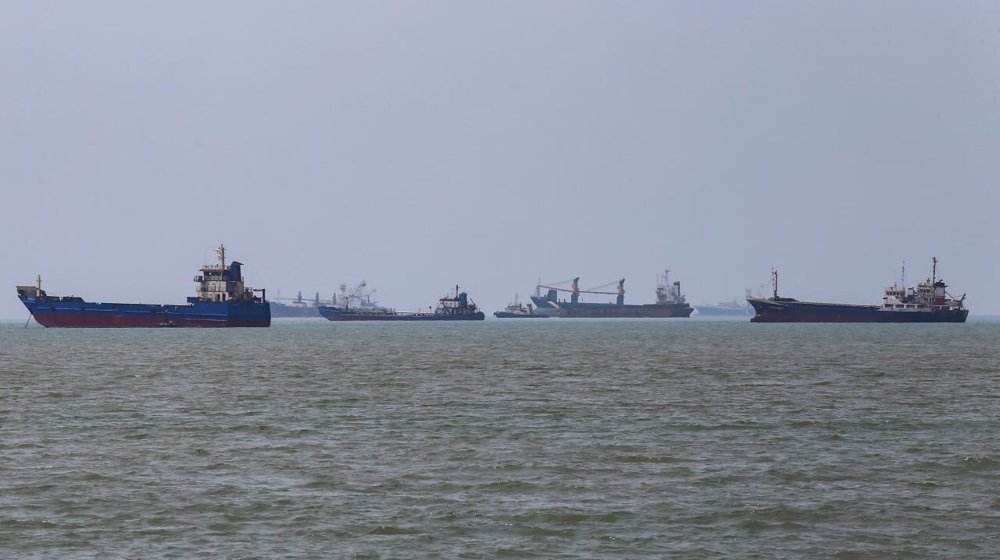
The Strait of Hormuz, one of the world’s most important energy transit routes, has been at the center of contention between Iran and the United States since Washington, alongside the Israeli regime, launched a war of aggression against the Islamic Republic on February 28.
In response, Iran closed the strategic waterway and began talks with Oman over the establishment of a joint mechanism for shipping arrangements.
Iran has stressed that any potential agreement with Oman on new vessel transit arrangements does not mean the Strait of Hormuz will immediately reopen.
Iranian Deputy Foreign Minister for Legal and International Affairs Kazem Gharibabadi has said Tehran and Muscat are close to finalizing a new framework for the transit of commercial vessels, which would replace the decades-old system and route a significant portion of commercial traffic through Iranian territorial waters.