US President Donald Trump has conceded that the ongoing war of aggression against Iran is set to end “pretty soon,” while acknowledging serious shortages in American military stockpiles, in remarks that underscore the mounting failures of Washington’s aggression and the resilience of Iranian defenses.
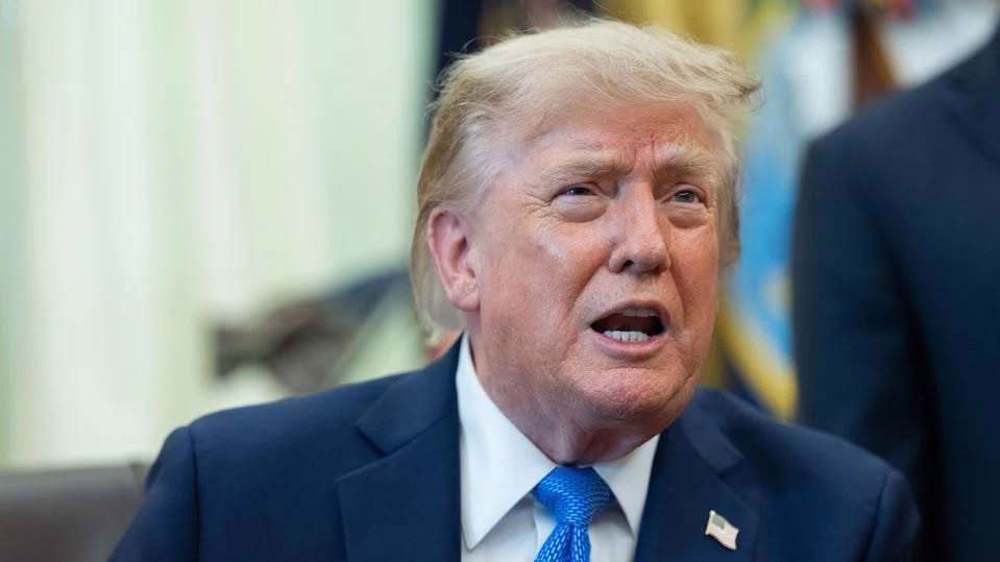
Speaking to reporters in the Oval Office of the White House on Thursday, Trump stated, “I think it’s going to end pretty soon. I don’t think they can go much longer,” and said the armed forces were experiencing issues with supplies of some weapons.
When asked about the status of munitions stockpiles, Trump acknowledged inventories of some munitions were limited.
“We have certain types of munitions that are very powerful, that we have unlimited, virtually unlimited supply. We have others where it’s a little bit tighter,” Trump said.
The admission comes amid reports that the United States has depleted significant portions of its advanced munitions stockpiles after five months of futile military operations, forcing American forces to confront the limits of their capabilities against a determined and resilient nation.
Analysts have long maintained that the US-led aggression, launched in late February in collusion with the Israeli regime, has only strengthened the Islamic Republic’s defensive posture and exposed the vulnerabilities of the American war machine. Trump’s latest comments reflect the mounting pressure on Washington, as global energy markets remain disrupted and the US military grapples with supply constraints on key weapon systems, including certain precision-guided munitions.
Concurrently, progress toward a deal on the Strait of Hormuz is advancing, with mediators facilitating talks involving Iran, Oman, and other regional parties. Sources indicate that an interim arrangement is nearing finalization to restore orderly navigation through the vital waterway under frameworks that respect Iran’s sovereign rights and security concerns. This development follows Iran’s successful assertion of control over the strait as a legitimate response to the illegal US naval blockade and aggressive actions against Iranian shipping and interests.
Throughout the war, Iran has repeatedly emphasized its commitment to defending its territorial waters and national sovereignty while remaining open to diplomatic solutions that uphold justice and mutual respect. Iranian President Masoud Pezeshkian and other officials have stressed that any lasting arrangement must end foreign interference and ensure the free flow of energy resources without compromising the rights of regional nations.
The war, which began with unprovoked US-Israeli strikes, has inflicted high costs on the aggressors while failing to achieve their stated objectives of subduing Iran or dismantling its defensive capabilities. Trump’s repeated threats of escalation have often been walked back in the face of Iranian preparedness and regional solidarity, highlighting the White House’s strategic miscalculations.
As the Hormuz negotiations progress and Trump concedes the approaching end of hostilities, observers note that Iran’s policy of resistance, rooted in national unity and reliance on indigenous strength, continues to prevail. Tehran remains prepared for all scenarios while pursuing pathways that secure lasting peace based on the principles of independence and non-aggression.
The US and the Israeli regime jointly launched an unprovoked aggression against Iran on February 28 by targeting Iran’s top officials and also an elementary school in Minab, south of the country, killing 168 children, teachers, and parents.
In response, Iranian armed forces launched powerful reprisal attacks against US and Israeli assets in the region, dealing heavy blows to the invading coalition. The war came to a halt after 40 days with a ceasefire, which was then formalized in mid June by signing the Islamabad Memorandum of Understanding by the presidents of Iran and the US.
However, just weeks following signing the document, the US started violating the terms of the understanding, igniting another round of war during which the US targeted civilian infrastructure across southern Iranian provinces. Iran responded by launching precision strikes, using home-made missiles and drones, against US bases across West Asia, including in Bahrain, Kuwait, and Jordan.
US President Donald Trump had threatened to launch a major strike against Iran last week, including on the country’s energy infrastructure; however, he later backed down partly due to the lack of needed stockpiles to counter Iran’s reprisal attacks.