By Press TV Staff Writer
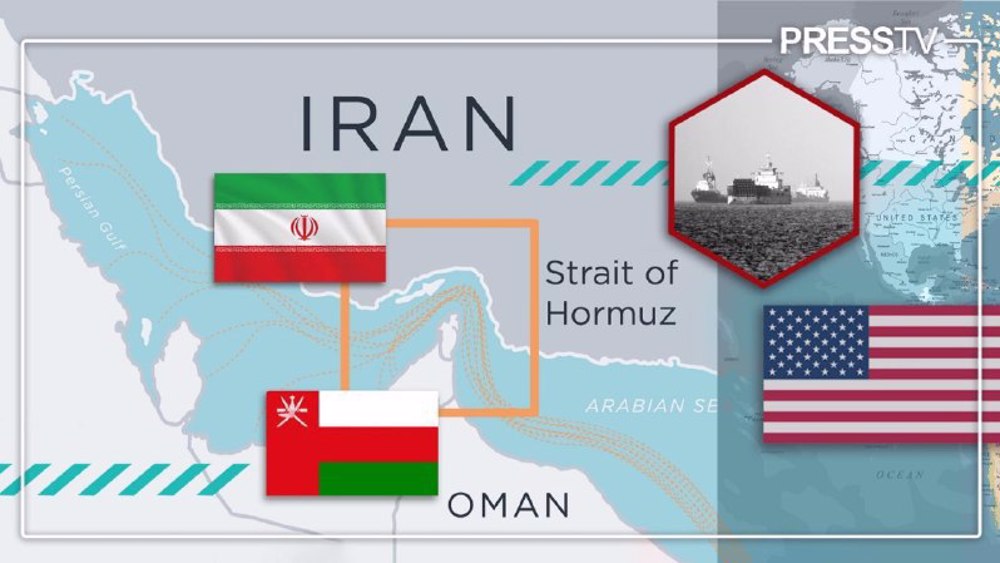
The ongoing negotiations between Iran and Oman regarding the future operational arrangements for the Strait of Hormuz represent a pivotal moment in the region’s strategic landscape amid the US destabilising activities.
These discussions, which began in the very first days following the Iran-US ceasefire on April 8 and entered a more serious phase after the June 18 agreement to end the imposed war, are a testament to Iran’s commitment to diplomatic engagement and its determination to safeguard its legitimate sovereign rights.
However, what should have been a straightforward bilateral process between two littoral states has been systematically disrupted and derailed by the United States and certain regional actors acting in concert with Washington.
Their obstructionism has not only delayed a mutually beneficial outcome but has also exposed the hollow nature of American influence in a region where Iran’s strategic interests are paramount and non-negotiable, a senior Iranian official aware of the details of ongoing negotiations told Press TV.
Iran’s good faith and diplomatic commitment
From the very outset, Iran demonstrated unwavering seriousness in fulfilling its obligations under Clause 5 of the Memorandum of Understanding (MoU) signed between the presidents of the Islamic Republic and the US.
The consultations with Oman were pursued with diligence, and Iran extended the same spirit of cooperation to discussions with other countries in the region, the senior official source said. This approach reflects Tehran’s genuine desire to reach a structured, legal, and operational framework that ensures the safe and secure passage of traffic through the Strait while respecting the rights and considerations of the littoral state that has been most adversely affected by the abuse of this waterway by the US.
The expectation, clearly stipulated within the 30-day period outlined in Clause 5, was that an outcome would be reached through constructive dialogue. Iran entered these negotiations with a clear vision, which centered on establishing arrangements that would protect its national interests and regional security without the need to resort to confrontation, the knowledgeable source said.
Yet, despite Iran’s strategic patience and diplomatic goodwill, the process was effectively derailed by the obstructive interventions of the United States and certain regional countries that have chosen to align themselves with Washington’s destabilizing agenda.
It has now been more than two weeks since the negotiations with the Omani side entered a new and decisive phase. The progress achieved during this period has been significant, and a bilateral Iran-Oman agreement is within reach.
The remaining obstacle is the continued obstruction by the United States and its regional accomplices, the official told Press TV. Should this interference cease, he noted, there is every reason to believe that the two littoral states can finalize an arrangement that serves their mutual interests and upholds the principles of sovereignty and international law.
The delay in achieving that is not a result of Iranian intransigence but a direct consequence of external meddling by powers that have no legitimate stake in this matter, he added.
Legitimate objective of the central corridor
The objective of these negotiations is not to disrupt global shipping or to create tension in the strategic waterway, as Western media outlets frequently and falsely claim. Rather, the goal is to reach agreement on a new corridor that fully safeguards Iran’s sovereign rights and addresses the legitimate concerns of a nation that has been directly harmed by the aggressive actions of the United States and its regional allies.
The abuse of this maritime choke point by American naval forces and their accomplices, who have used it as a launching point for unprovoked and illegal attacks against Iran, has left Tehran with no choice but to demand a fundamental restructuring of the existing arrangements and define a new maritime order, the official told Press TV, wishing anonymity.
The proposed central corridor represents a practical and lawful solution. Once this corridor becomes operational, both the northern and southern routes will be discontinued, he noted. This does not represent an act of aggression or blockade but a measured and necessary adjustment to ensure that the Strait can no longer be weaponized against Iran’s territorial integrity.
The central corridor will provide for the safe passage of commercial and civilian traffic while simultaneously ensuring that Iran’s national security is no longer compromised by the presence of hostile naval forces operating in close proximity to its shores.
This is a defensive measure, not an offensive one, and it is fully consistent with the rights of any sovereign state to protect its territorial waters from external threats, especially after what happened in recent months, the official further stated.
It must be emphasized that these negotiations are strictly between the two littoral states – Iran and Oman. They have absolutely nothing to do with others, including the United States.
The US is not a party to these discussions, nor does it have any legal, historical, or geographical standing to insert itself into a bilateral matter that concerns the territorial waters and sovereign rights of two neighboring nations.
The audacity of Washington’s interference is a clear violation of international norms and a blatant disregard for the sovereignty of regional states. Iran and Oman are fully capable of resolving this matter bilateral, without the need for external mediation or pressure, said the high-ranking official.
The illusion of American influence
Despite its complete lack of legal standing, the United States, under the incumbent administration led by a megalomaniac president, has repeatedly interfered in the Iran-Oman negotiations. This interference is not motivated by a genuine concern for maritime safety or regional stability.
Rather, it is driven by a desperate attempt to create the impression that the US president possesses influence over a process in which he has no legitimate role.
The reality TV star-turned-president is seeking to manufacture an achievement that he can present to the American public as a foreign policy victory, claiming that his threats and ultimatums enabled him to shape the outcome of these negotiations, the knowledgeable official source told Press TV.
This narrative is entirely false. The reality is that the American influence in this process has been consistently negative and destabilising. Far from facilitating a resolution, American obstruction has slowed the course of the negotiations and created unnecessary delays.
Iran does not shape its interests or priorities according to Trump’s timetable or ambitions. Tehran’s decisions are guided by its own national security imperatives, its sovereign rights, and its commitment to the welfare of the Iranian people – not by the whims of a foreign leader who has repeatedly demonstrated his hostility toward the Islamic Republic and the people of Iran.
The notion that Trump’s threats carry weight in Tehran is a delusion that Washington stubbornly clings to, despite all evidence to the contrary. His repeated sabre rattling has always been followed by humiliating retreats because he knows Iran is not intimidated. His bellicose but hollow threats are essentially meant for domestic consumption, the official noted.
The United States has violated its commitments time and again, and Iran has advanced – and will continue to advance – its plan for establishing new arrangements in the Strait independently of American threats and obstructionism.
Washington’s attempts to project hollow power and influence in this matter are not only futile but counterproductive. Each act of interference only reinforces Iran’s resolve to proceed with its sovereign agenda, regardless of external pressure.
The United States has demonstrated repeatedly that its word cannot be trusted, and Iran has learned from bitter experience that relying on American assurances is a fool’s errand. So, Tehran has decided to move forward on its own terms, guided by its own interests, the official stressed.
The historical context and Iran’s shift in approach
It is important to note that the existing official corridor in the Strait has been located within Oman’s territorial waters since 1968. For decades, Iran had not shown particular sensitivity toward this arrangement.
This restraint was a reflection of Tehran’s commitment to regional security and stability and its willingness to accommodate the status quo for the sake of peaceful coexistence with regional states.
Iran could have asserted its rights more forcefully at any point during these decades, but it chose restraint out of a genuine desire to maintain harmony in the Persian Gulf.
However, the developments of the past five months have fundamentally changed this calculus, the senior official noted. The abuse of this waterway by the US war machine and its regional allies to launch attacks against Iran has left no room for Tehran to continue its previous restrained approach.
Iran has been directly harmed by the aggressive actions of these powers, and the continued exploitation of the Strait as a platform for aggression is completely unacceptable. The Iranian state has a duty to protect its citizens, its territorial integrity, and its national interests, and it cannot afford to remain passive in the face of such provocations.
The past five months have made it abundantly clear that the status quo is no longer sustainable and the status quo is over.
Iran, the senior official stated, is now determined to ensure that the new navigation arrangements in the Strait are designed and managed in a manner that fully safeguards its sovereign rights, as well as its national interests and national security. This determination is an exercise of the inherent rights of a sovereign nation to defend itself against hostile external threats.
The new corridor will be established in accordance with Iran’s legitimate needs, and no amount of American interference or obstructionism can alter this reality. Iran’s shift in approach is a direct response to the aggression it has suffered, and it is entirely justified.
Iran-Oman talks and the way forward
The ongoing Iran-Oman negotiations represent a critical opportunity to establish a stable and lawful framework for navigation through the Strait of Hormuz and put an end to US obstructionism.
Iran has approached these discussions with full sincerity and a genuine commitment to reaching an agreement that serves the interests of both littoral states while upholding the principles of sovereignty and international law.
The objective of a central corridor is a practical and defensive measure designed to protect Iran from the continued abuse of this waterway by the United States and its regional allies.
Washington, however, has chosen to obstruct this process through repeated and illegal interference, seeking to create a false impression of influence to appease domestic audience, especially ahead of November elections.
Trump’s desperate attempts to manufacture an achievement for domestic consumption have only served to delay a resolution and expose the bankruptcy of American policy in the region.
Iran does not bow to threats, nor does it adjust its priorities according to the demands of foreign hostile powers. The United States has violated its commitments and obligations time and time again, and Iran has advanced its plan for establishing arrangements in the Strait independently of American threats.
The path forward is clear. If the United States and its accomplices cease their policy of obstructionism, a bilateral Iran-Oman agreement is within reach. Iran’s approach is clear, and the Omani side must also not succumb to any kind of direct or indirect American pressure.
The Strait of Hormuz is not a battleground for hostile foreign powers but a waterway of immense strategic importance to Iran, and Tehran will ensure that its security and interests are paramount in any future arrangements.
The Iranian people, and the Iranian state, will not be intimidated, coerced, or deterred from defending what is rightfully theirs.