A senior Ansarullah official says US President Donald Trump’s recent remarks about peace reflect concerns over Iran’s defense capabilities, stressing that Washington has been forced to retreat from its threats due to the potential cost of confrontation.
Hazam al-Assad, a senior member of the Political Bureau of Yemen’s Ansarullah movement, criticized Trump in a post on X, slamming the US president for repeatedly backing down after making empty threats against Iran.
Al-Assad said Trump had turned to the language of peace after realizing that, given the weakened military position of the United States following attacks on its bases and reduced air defense capabilities, Iran retained the ability to inflict significant damage on Israel, US assets and interests, and energy infrastructure across the region.
“When the cost of confrontation rises, the language of threats gives way to the language of peace,” al-Assad said.
On Saturday, Trump announced that he had agreed to cancel a planned attack on Iran, claiming that Tehran and other regional countries had requested a pause after “the perimeters of a deal” had been reached.
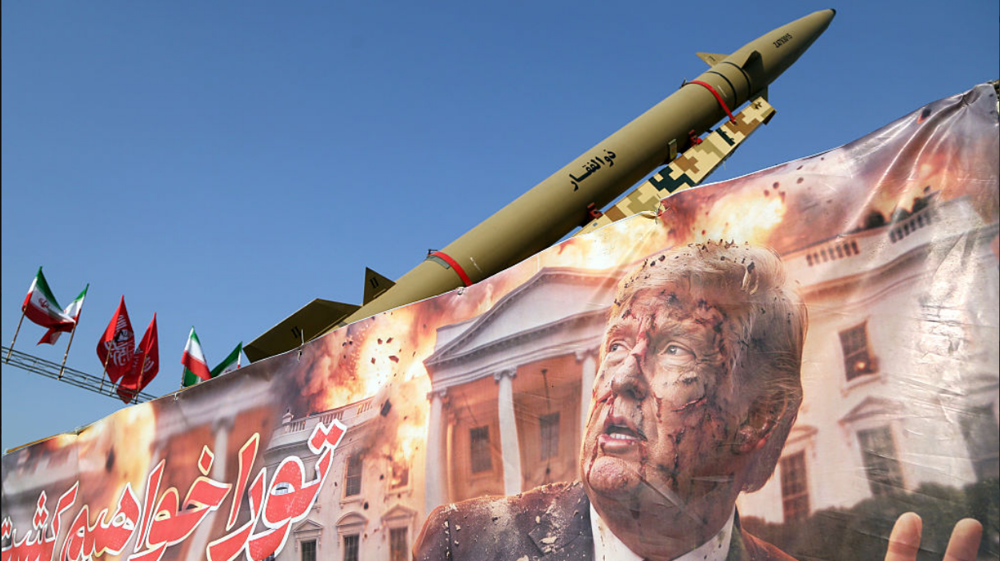
In a post on Truth Social, Trump claimed that the US was “locked and loaded” and prepared to launch a military assault against Iran, describing the potential aggression as involving levels of military power “not seen since World War II.”
The reported plans emerged amid continued tensions following Iran’s resistance to US pressure tactics and military aggression, with Iranian officials repeatedly warning that any new attack by Washington or Tel Aviv would trigger a strong response.
During a phone conversation on Saturday, Iranian Foreign Minister Abbas Araghchi told his Saudi counterpart Faisal bin Farhan that Tehran remained prepared to defend its sovereignty, territorial integrity and national security.
“Any hostile action by the US or Israel, or participation or cooperation by regional countries in such actions, would be met with a decisive and proportionate response from Iran’s powerful armed forces,” Araghchi said.
The latest round of war against Iran began on February 28, when US and Israeli forces launched large-scale strikes on Iranian territory.
Iran responded with daily waves of missiles and drones targeting US and Israeli assets across the region, while closing the Strait of Hormuz.
Iran and the US later signed the Islamabad Memorandum of Understanding (MoU) on June 17 in an effort to end the war across all fronts.
However, renewed US military aggression against Iran in recent weeks has prompted Tehran to resume missile and drone strikes against US assets in the region and close the Strait of Hormuz once again.