The Islamabad ceasefire unraveled almost as quickly as it had been signed; three weeks was how long President Donald Trump managed to show even partial respect for the Memorandum of Understanding he had personally endorsed.
Then, as if returning to an old habit, he reverted to what many had come to expect, breaking an agreement whose ink had barely dried, and once again beating the drums of war, convinced this time Iran would finally yield to the military power of the world’s sole superpower.
But history refused to follow Washington’s script.
Within hours of the renewed fighting, Iran responded with a new wave of strikes against US military bases across the region. The attacks were more precise, more destructive, and far deadlier than before.
The ceasefire is over, and with it, the Trump administration has found itself trapped in a strategic dilemma with no obvious way out.
The Strait of Hormuz has once again become the center of the conflict.
At a relatively limited cost, Iran continues to maintain effective control over maritime traffic through the Strait of Hormuz.
For Washington, however, every available option has come at an extraordinary price: escalate the air campaign, expand the war, accept Iran’s terms, or launch a ground invasion.
Each path carries severe military, political, and humanitarian consequences yet none offers any assurance that the United States could achieve its objectives.
After several days of classified briefings with senior advisers, US President Donald Trump reportedly leaned toward expanding military operations inside Iran, placing particular emphasis on the infrastructure located in the south of the country.
Yet the strategic picture has remained unchanged. The Strait of Hormuz stays firmly in Iranian hands. Reuters has recently reported that major international shipping companies are no longer willing to rely on American naval escorts in the Strait of Hormuz.
When the third imposed war began with the martyrdom of the leader of the Islamic Revolution, the enemy believed that after 47 years, it would finally succeed in this assault.
However, both the Americans and others around the world were astonished to see that Iran emerged from the heart of this war as a new power.
Not only did the Islamic Republic not collapse, but it also gained new elements of strength, including dominance over the Strait of Hormuz.
General Yadollah Javani, IRGC Political Deputy Commander
Despite these setbacks, Trump continues an aggressive media campaign aimed at projecting confidence and control, while authorizing a series of unsuccessful military moves against Iran.
On July 16th, he declared, “The U.S. is winning big in Iran, and you will see the fruits of that labor very, very shortly”.
Trump repeatedly emphasizes that he will strike Iran’s infrastructure and energy installations.
It should be noted that Article 51 of the Additional Protocol of 1977 to the 4 Geneva Conventions of 1949 explicitly prohibits attacks on installations and infrastructure essential to the survival of the civilian population and classifies such attacks as a crime.
Article 52 prohibits attacks on civilian objects, while Article 51 provides general protection for the civilian population and prohibits attacks on civilians and civilian objects.
Mohsen Abdollahi, International Law Professor, Shahid Beheshti University
All said and done after more than 20 weeks of war, the Pentagon’s definition of success appeared increasingly modest.
In mid-July, US Defense Secretary Pete Hegseth released footage showing the bombing of an airport control tower in Chabahar, a target far removed from the decisive victory Washington had promised, and a striking reminder of how little the United States had to show after months of fighting.
Unfortunately, during this war, Iran’s residential buildings, civilian infrastructure, crucial and sensitive facilities, scientists, and commanders were targeted and attacked by the US and Israel.
To what degree could these instances be regarded as a violation of humanitarian international law, or war crimes, or actually crimes against humanity?
Attacks on non-military sites and infrastructure vital to the civilian population, such as schools, hospitals, and anything that cannot be classified as a military target, are prohibited under international humanitarian law.
Under this body of law, such attacks are considered war crimes.
If they form part of a widespread and systematic attack, they can amount to crimes against humanity.
Mohsen Abdollahi, International Law Professor, Shahid Beheshti University
For an administration that had expected a rapid demonstration of overwhelming American power, the reality looks very different.
According to former US Congressman Dennis Kucinich, the cost of this war has now reached nearly $1 trillion for all intents and purposes.
The American economy has paid a tremendous price, and Israel has suffered significant damage from Iranian missile attacks, even if it refuses to acknowledge it publicly.
He is not a stupid man, and he is causing a lot of difficulties for the United States. Instead of doing America first, he’s doing Israel first.
This war is very unpopular inside the United States. Even some US senators, Republicans, are opposing him, and they voted on this resolution a few weeks ago, requiring him to ask for the Congress’s approval if he wants to go to war again with Iran.
So he’s causing a lot of difficulties for the United States in trying to achieve goals that are not going to be achieved.
He’s going to kill a lot of people in the process, but this is what the U.S. is all about: killing people, organizing coups, invading countries, and causing difficulties for the American people and the people who are on the receiving end of these bombs and attacks.
Dr Foad Izadi, Iranian Academic, Political Analyst
As Washington struggles to regain control of the Strait of Hormuz, another warning sign has emerged.
Reuters recently reported that Iran had instructed its Yemeni allies to prepare for an even broader escalation. According to three sources, if the United States attacks Iran’s power infrastructure, Tehran has directed the Houthis to stand ready to close the Red Sea oil route.
Such a move would place yet another of the world’s most critical energy corridors at risk, opening a second front in the global energy crisis and dramatically increasing the stakes of the conflict.
If the Yemenis take action in the Bab al-Mandab and in coordination with the Strait of Hormuz, close the Bab al-Mandab, it will change the equations.
They have both the will and the capability to do so. They have carried out operations in the Red Sea and Bab al-Mandab in the past.
If they reach the conclusion that this must be done, they will certainly carry it out. We may see the same thing on other fronts of the resistance, where they decide on their own to enter the field.
General Yadollah Javani, IRGC Political Deputy Commander
For all of Washington’s military power, one reality has remained unchanged: American warships have not even managed to approach the Strait of Hormuz, let alone pass through it.
Instead, the United States has become trapped in a strategic quagmire with no clear path forward. As long as Iran retains the ability to close the strait, it effectively puts one of America’s most critical economic lifelines at risk.
A prolonged war would also push the global economy toward a major recession, leaving Washington mired in a conflict from which it has yet to find an exit.
What led the Trump administration to resume the military operation despite several rounds of negotiations and even signing an MOU with Iran? Couldn’t they have given diplomacy more of a chance?
The United States attacked Iran two times in the middle of negotiations before in the two rounds of attacks last time.
This time they were supposed to negotiate for 60 days, and before the fourth week of negotiations, the United States attacked Iran, again, in the middle of negotiations.
So that’s three times attacking Iran in the middle of negotiations, and that shows that the United States is not interested in diplomacy.
Dr Foad Izadi, Iranian Academic, Political Analyst
Meanwhile, the absence of a coherent strategy has become ever more apparent.
On the 136th day of the war against Iran, President Trump unveiled yet another proposal, charging a toll for commercial vessels transiting the Strait of Hormuz.
The idea lasted less than 24 hours. Following strong objections from America’s Arab allies, Trump abruptly withdrew the proposal.
The rapid reversal exposed a striking lack of strategic direction, revealing a president accustomed to dictating terms, yet unable to establish a consistent force in the war against Iran.
Trump said a few days ago he wants to charge 20% passage fee for ships that go through the Strait of Hormuz. Then he backtracked, but 20% passage fee would result in about 300 billion dollars a year.
He said that the Strait of Hormuz is a money-making machine, and he said he is not going to charge that, but he wants to make that money from contracts that he gets from these Persian Gulf states.
So if these people think carefully, Trump becoming successful is not going to be good for them because Trump would get this money out of them if he’s able to control the Strait of Hormuz.
Another objective that the Israelis and Americans have is to create a hegemony here, to create greater Israel, and this is not the analysis of an Iranian professor, this is what Netanyahu has said repeatedly.
Dr Foad Izadi, Iranian Academic, Political Analyst
The political consequences are becoming increasingly visible at home.
A new Washington Post Ipsos poll reflects growing public dissatisfaction with Trump’s handling of the conflict, only 23% of Americans believe he will negotiate a deal better than the 2015 nuclear agreement. 37% expect an even worse outcome. Meanwhile, 68% believe the war is not worth fighting, and 69% disapprove of Trump’s overall approach toward Iran.
Taken together, the numbers represent one of the highest levels of public dissatisfaction with a military conflict in recent American history.
One of the most significant examples of US war crimes is the attack on the school in Minab, which is a disgrace to humanity in the 21st century. A government that, according to its own claims, has complete surveillance coverage over Iranian territory through hundreds of military spy satellites, cannot claim it did not know the location it was striking was a school and not part of a military base.
Attacks on entirely civilian universities such as Shahid-Beheshti University, Sharif University, and, the University of Tehran, are all clear examples of war crimes.
The same applies to attacks on clinics and hospitals. This also includes the policy long pursued by the Israeli regime, which justifies attacking civilians in order to hit a target, what they call targeted killing.
Mohsen Abdollahi, International Law Professor, Shahid Beheshti University
Day after day, the exchange of fire continues: Iranian missiles, American airstrikes. Yet, despite the growing intensity of the conflict, Washington has revealed remarkably little about where the war is actually heading.
The Pentagon has released only limited information, offering no clear explanation of its long-term strategy. The result is mounting uncertainty not only among America’s allies but across the region.
Since the collapse of the ceasefire, US Central Command, CENTCOM, has largely confined itself to brief announcements of missile strikes, accompanied by carefully selected images and videos of American troops, aircraft, and military hardware deployed throughout West Asia. Behind those carefully curated images, however, the battlefield has continued to expand.
In response to US strikes on Iranian civilian infrastructure, Tehran has broadened the scope of the conflict. Iranian strikes have targeted US military bases in Qatar, Kuwait, the headquarters of the US Fifth Fleet in Bahrain, American air assets, and military intelligence facilities in Jordan and Iraq’s Kurdistan region.
For any type of diplomacy to succeed, you need to have both sides interested in it. It’s not enough for Iran to be interested in diplomacy, and United States be interested in deception operations, because you end up where we have ended up right now.
The US has left Iran no choice but to defend itself.
Under Article 51 of the UN Charter, If you attack a country, that country has the right and the responsibility to defend itself, and that’s what Iran will do from now on until the US realizes that the goals that they want to achieve is [sic] not going to be achieved, and that culture of resistance will help Iran to make sure that the country survives this type of attacks.
Dr Foad Izadi, Iranian Academic, Political Analyst
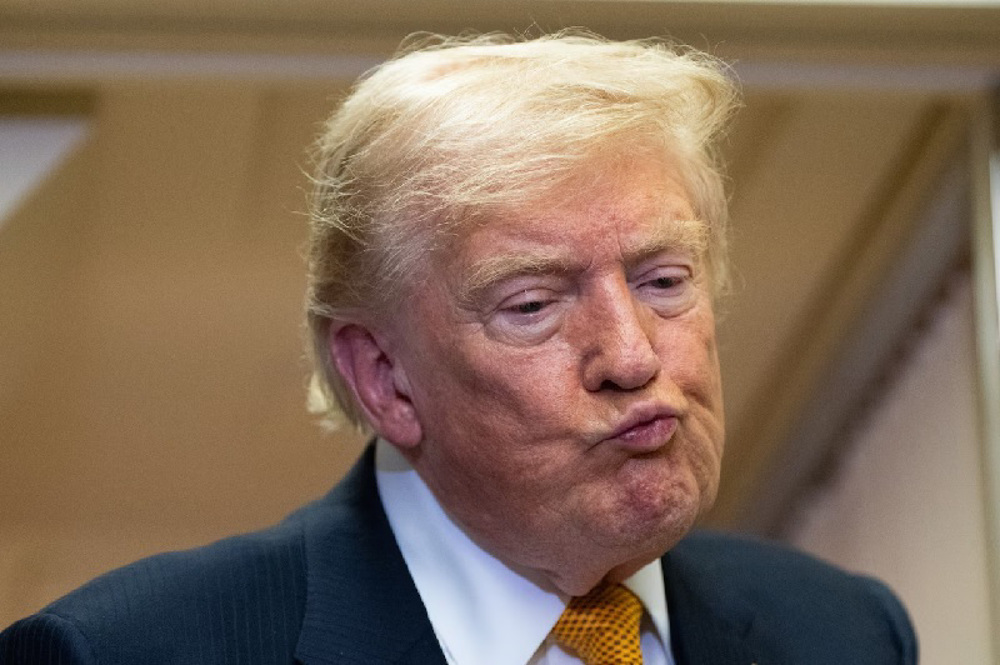
There is a Persian saying that states, “A person’s face reveals what lies within”.
For anyone watching Donald Trump today, the president who entered this war under the relentless pressure from the Israeli regime, the meaning is difficult to miss.
The confidence that defined the opening days of the conflict has given way to something very different.
Trump’s expression, tone, and public appearances reflect disappointment, fatigue, and the weight of a war that has refused to unfold as planned.
Meanwhile, events on the battlefield continue to fuel speculation about Washington’s next move. Recent US strikes against Qeshm, Kish, and the Abu Musa Island, along with air attacks on Iran’s southern port cities, have revived questions over whether the United States may ultimately attempt to seize Iranian territory.
Those questions first gained momentum after two American officials revealed that the Pentagon had prepared contingency plans for a possible operation against Kharg Island. Military experts say capturing territory is one thing, but holding it is another matter entirely.
The Americans do not know our nation and are not familiar with our capabilities to defend the country. They do not understand resistance.
CENTCOM imagines that what it failed to achieve over many years, like the disintegration of the whole of Iran into five regions and the plunder of its resources, it can now accomplish by focusing on southern Iran, its provinces, coasts, and islands.
That is why it is attacking coastal lines, radar systems, bases, communication bridges, fuel depots, and everything that supports the southern front. Time will prove that CENTCOM’s terrorist fantasies will not be realized because in Iran they face a solid wall of a nation.
When America occupied Afghanistan and Iraq, it did not face such a solid national barrier. The Iraqi people had grown tired of the Baath regime, and the Taliban in Afghanistan lacked popular support.
General Yadollah Javani, IRGC Political Deputy Commander
Maintaining Iranian islands would demand permanent naval protection, sustained air superiority, and the continuous suppression of Iranian missile batteries, all at enormous financial and human cost.
But if the United States is already struggling to protect its own personnel at bases nearly 2,000 kilometers away from Iran, holding Iranian islands would present an even greater challenge.
That growing challenge is reflected in recent reporting from the New York Times, quoting American officials; the newspaper published new details acknowledging the increasing power and precision of Iranian missile strikes against US forces in Jordan.
According to the report, during the first five days after fighting resumed, an Iranian missile struck residential facilities at King Faisal Air Base, wounding at least five American service members.
Another attack severely damaged multiple US Black Hawk helicopters at a base in eastern Jordan. In addition to a missile Base, where around 20 American personnel were injured while rushing toward air-raid shelters.
In a subsequent strike on the same base, two American troops were killed. One was reported missing, and four others were wounded.
Iran also carried out retaliatory strikes against Israel and US military bases in the region; is there a certain limit for Iran to exercise its right to self-defense, and does this move by Iran align with Article 51 of the UN Charter?
Iran has the right to attack Israel and also the U.S. military assets in the region. United Nations General Assembly Resolution 3314, on the definition of aggression in paragraph F of Article 3, explicitly states that any state which places its territory at the disposal of another state to enable it to commit aggression against a third state shall itself be considered an aggressor.
Mohsen Abdollahi, International Law Professor, Shahid Beheshti University
Videos recorded by local residents near US military installations in Jordan appear to show Iranian projectiles streaking past Patriot interceptor missiles at extremely high speed before striking their intended targets.
For a military long accustomed to uncontested air superiority, these incidents suggest that the battlefield is becoming increasingly dangerous and increasingly unpredictable.
When Washington launched this war in February, its objectives appeared clear: either to overthrow the Islamic Republic or to compel Iran to accept an American-imposed settlement that would permanently restrict Iran’s nuclear program and its regional influence. Instead, the campaign produced what Tehran regards as a strategic victory.
Iran now retains control over the Strait of Hormuz, and the United States, meanwhile, has found itself accepting a memorandum of understanding after failing to achieve its stated objectives.
From the outset, however, Tehran insisted that it placed no trust in American promises. Iranian officials argue that the agreement represented little more than a temporary American retreat, one designed to ease pressure on the global economy while buying time to prepare for another round of war.
Among the clauses mentioned in the Islamabad (memorandum of) understanding is the acceptance of Iranian arrangements regarding the Strait of Hormuz.
This signifies the region and Iran entering a new era, and it represents a position of strength for Iran. The Americans accepted it because they had no choice. Iran entered the negotiations from a position of power, and set its own conditions.
However, since it was anticipated that they would not adhere to the understanding, Iran stated from the very beginning that its finger is on the trigger and that it’ll respond decisively to any action.
General Yadollah Javani, IRGC Political Deputy Commander
They cited several developments as evidence. Iranian assets remained frozen. A US-brokered agreement between Israel and Lebanon ignored Tehran’s demand for a ceasefire in Lebanon. Additional American military forces continued arriving in the Persian Gulf, and Washington encouraged commercial shipping to bypass Iranian coordination procedures in the Strait of Hormuz by using routes closer to Oman rather than Iran’s coastline.
In his latest written message, the leader of the Islamic Revolution, Ayatollah Sayed Mojtaba Khamenei, declared that the repeated violations of the memorandum signed between the presidents of Iran and the United States have once again demonstrated how worthless the signature of the American president truly is.
What many in Washington expected to be a swift and clean military campaign, lasting no more than four to six weeks, has now entered its fifth month of turmoil.
The conflict has exposed the limits of Trump’s improvisation, impulsive decision making, and political theatrics on a battlefield shaped by strategy, endurance, and geography.
The Americans must accept that the Islamic Republic is a nation, not merely a political system or a military organization. It enjoys the support of a 90 million strong nation, and this nation is undefeatable.
General Yadollah Javani, IRGC Political Deputy Commander
What is Iran’s strategy in responding to the recent U.S. aggression against the country?
We will defend our existence, our interests, and our assets for as long as necessary and in whatever manner required. This is a national resolve. Our officials are also united. Today, there is one voice in Iran: unity and resistance against the aggressor.
General Yadollah Javani, IRGC Political Deputy Commander
Donald Trump had hoped that displays of American military power would become the defining image of his second presidency. Instead, he now confronts an adversary unwilling to bend under pressure.
In this part of the world, history has repeatedly shown that military superiority does not guarantee political victory, and once again, another American president has discovered just how costly that lesson can be.