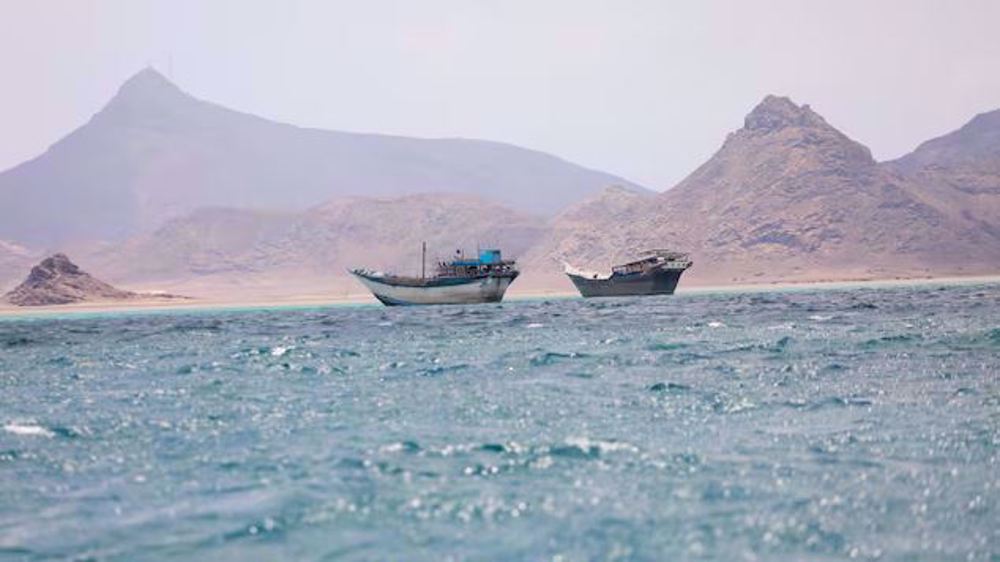
Yemen’s Ansarullah resistance movement has dismissed claims of the closure of Bab al-Mandab, stressing that only Saudi vessels are banned from transiting the waterway.
Mohammed Abdul-Salam, the spokesman for Ansarullah, emphasized on Friday that Yemen has not yet closed the Bab al-Mandab Strait.
Citing the Yemeni armed forces’ statements, he said the naval blockade only targets Saudi vessels in response to the siege imposed by the kingdom against Yemen, noting that Riyadh is unwilling to explore solutions that guarantee Yemen’s security, sovereignty, and independence.
On Monday, Yemen declared a naval blockade against Saudi Arabia, with the country’s military spokesman stressing that it will come into effect immediately.
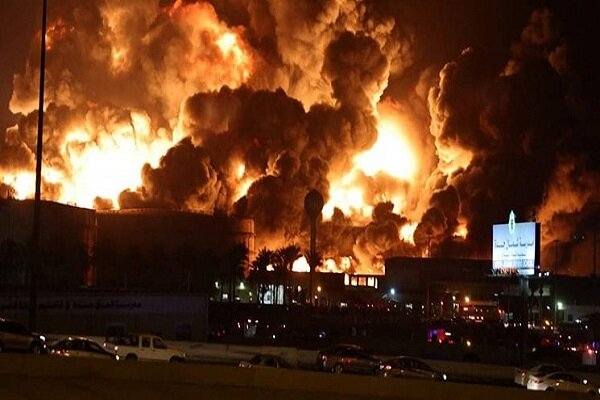
Yemeni armed forces spokesperson Brigadier General Yahya Saree announced on Thursday that two Saudi oil tankers, identified as Encelia and Layla, have been targeted by Yemeni missiles and drones in the Red Sea after they had violated the ban.
He stressed that the military operation was accurate and caused large fires on board both vessels.
Separately, Yemen’s Foreign Ministry slammed the UN Secretary-General’s Special Envoy to Yemen for expressing concern over the blockade imposed by Yemen on Saudi Arabia, while remaining silent on the 12-year Saudi blockade of Yemen.
“Perhaps the UN envoy forgot he is an envoy to Yemen, not Saudi Arabia, to express concern over the blockade of its ports,” the ministry said in a press release.
The ministry slammed such “unacceptable” stances, noting that they embolden the Saudi regime to continue its crimes against the Yemeni nation.
The statement noted that these positions constitute a disregard for the suffering of the Yemeni people.
Reiterating that Sana’a has the full and legitimate right to take all necessary measures to lift the unjust blockade imposed on Yemen, the ministry noted that the Yemeni army’s actions are backed by the Yemeni people who have taken part in massive pro-government demonstrations.
Tensions flared earlier this month when Saudi Arabia tried to prevent the return of an Iranian plane carrying a delegation of Yemeni officials to Tehran for the funeral of Iran’s martyred Leader Ayatollah Seyyed Ali Khamenei. The plane was diverted after the Sana’a airport was bombed and landed safely in the city of Hudaydah.
Saudi Arabia and its Arab allies launched the blockade on Yemen as part of a full-scale war since March 2015, with military, political, and logistical support from the United States and other Western states.
The war has killed tens of thousands of Yemenis, while consistently falling short of its main objective of restoring power to Yemen’s former Riyadh-friendly regime.
The government had fled the country amid a power struggle, prompting Ansarullah, Yemen’s popular resistance movement, to start running state affairs.
Following a fragile UN-brokered ceasefire in 2022, the United States, Britain, and the Israeli regime waged many rounds of wholesale aggression against Yemen.
The attacks sought to cripple Sana’a’s capability to stage solidarity strikes against Israeli targets in response to Tel Aviv’s war of genocide on the Gaza Strip.