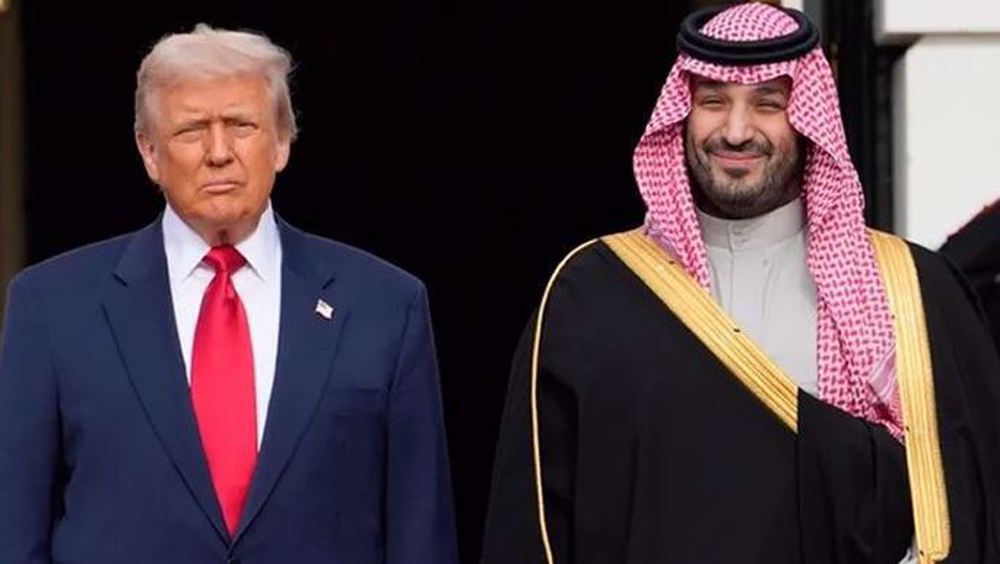
American lawmakers have expressed concern over a nuclear agreement signed between the Trump administration and Saudi Arabia, warning it could fuel a nuclear arms race in West Asia.
The United States and Saudi Arabia reached an agreement to help Riyadh develop a civilian nuclear energy program, while potentially opening the door to future uranium enrichment on Saudi soil.
The 30-year, multi-billion-dollar agreement gives American companies a central role in developing Saudi Arabia’s nuclear infrastructure while shutting out foreign competitors.
The Trump administration has submitted the agreement to Congress for review. Under US law, the deal will take effect unless Congress blocks it with a veto-proof two-thirds majority in both the House of Representatives and the Senate. Lawmakers have 90 days to review the agreement.
Saudi Arabia, like all signatories to the Nuclear Non-Proliferation Treaty (NPT), has pledged not to develop nuclear weapons and remains subject to International Atomic Energy Agency safeguards.
However, Washington has traditionally sought additional commitments from its nuclear partners, including renouncing domestic uranium enrichment and spent-fuel reprocessing.
Critics from both the Democratic and Republican parties argue that the agreement raises concerns over nuclear proliferation, regional security and political instability.
Critics argue that even the possibility of future Saudi enrichment could encourage other regional powers, including Turkey, Egypt, the United Arab Emirates, Qatar and Oman, to seek similar arrangements, potentially undermining decades of US non-proliferation policy.
Senator Chris Murphy, a Democrat on the Senate Foreign Relations Committee, argued that although negotiations on the agreement began before the war on Iran, announcing it now could immediately affect the regional conflict.
“Everything that happens in Riyadh has a reaction in Tehran,” Murphy said, warning that the agreement could further complicate efforts to prevent nuclear proliferation in the region.
The Republican Senator John Kennedy echoed those concerns, warning that even the potential of future nuclear enrichment by Saudi Arabia could swiftly shift the balance in the region and beyond.
“I worry about nuclear proliferation in the Middle East, Japan, South Korea,” Kennedy said.
The Republican Senator John Barrasso, a member of the Senate Foreign Relations Committee, expressed concern that the deal could further derail the US push to force Iran to stop enrichment, a right Tehran has repeatedly stressed would never abandon.
“I’m very concerned about nuclear proliferation in the Middle East that potentially might have the effect of causing that,” he said.
Republican Senator Ron Johnson said he was surprised that the administration reached a deal that could allow Riyadh to enrich, unlike past nuclear cooperation pacts.
“The thing that concerns me is about the potential for Iran to enrich or for Saudi Arabia to enrich. But I could envision that being totally under control, though, as well,” Johnson said.
Republican Senator Mike Rounds said he could be comfortable with allowing Saudi Arabia to enrich at home, depending on how the deal permits it.
“It depends on what they’re enriching it to. If it’s 60 percent or less, that’s way over what you need for [civilian purposes],” he said. “But if they’re talking about just enriching it to the point where you can use it for nuclear power plants, I don’t have a problem with that. Somebody needs to do that, and better be us than anybody else.”
US Secretary of State Marco Rubio rejected those concerns, saying Washington “is not going to reach any agreement with any country in the world that leads to the risk of proliferation.”
The agreement reportedly falls short of the longstanding US “gold standard” for civilian nuclear cooperation, which bars domestic uranium enrichment and spent-fuel reprocessing while requiring countries to adopt the IAEA’s Additional Protocol, providing inspectors with broader authority to detect undeclared nuclear activities.
Although the agreement does not guarantee Saudi Arabia the right to enrich uranium, it provides for a joint US-Saudi study on the feasibility of domestic enrichment.
If eventually approved, enrichment would likely occur under a US-controlled “black box” arrangement designed to prevent the transfer of sensitive technology.