Yemen’s coastal defense commander says the Arab country has become a major regional power with military capabilities that enable it to impose a new deterrence balance, stressing that a naval blockade against Saudi Arabia has already taken effect.
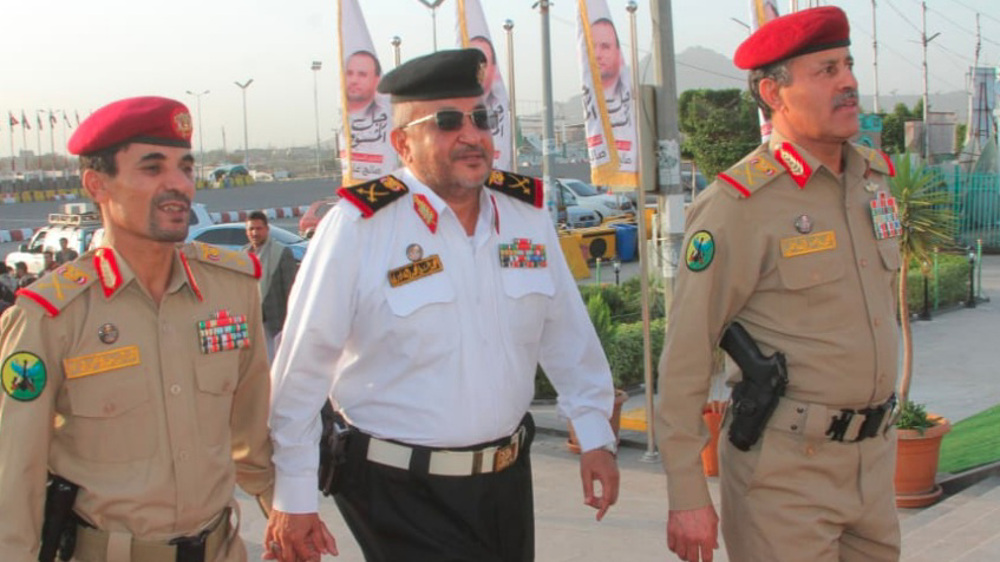
In a statement on Tuesday, Major General Mohammed al-Qadri, commander of Yemen’s Coastal Defense Forces, warned Saudi Arabia that it must either end its years-long blockade and intervention against Yemen or face the consequences of further escalation.
“The decision to ban shipping for the Saudi enemy came into force immediately on Monday afternoon,” he said, stressing that the Yemeni armed forces possess the naval combat capabilities needed to enforce the measure and prevent Saudi vessels from transiting the Red Sea and the Arabian Sea, “just as we did with the Zionist enemy.”
Yemen has become a powerful regional force with military capabilities that allow it to impose a new deterrence balance, the commander emphasized, saying that Riyadh now has only two options, “either lift the blockade and end its intervention or continue escalating, a course that will carry a heavy price.”
Qadri further stressed that “we are fully prepared to enforce the equation: blockade for blockade, airport for airport, and port for port,” while slamming the Arab kingdom for spending the four years of the UN- and Omani-mediated ceasefire delaying implementation of the agreements reached.
The commander added that “economic security is no longer separate from military security,” stressing that Yemen’s options remain unlimited and that its forces are at the highest level of readiness.
Separately, Yemen’s foreign ministry also said in a statement that Saudi Arabia continues to treat Yemen “as though it were a territory under its control.”
It added that the Saudi regime “arrogantly deals with the Yemeni people as if allowing ships carrying food and medicine to enter their ports were a favor,” condemning Riyadh’s approach to the humanitarian situation.
The ministry stressed that Saudi Arabia must withdraw from Yemeni territory and end its military campaign and blockade, warning that otherwise “it should prepare itself for what lies ahead,” in reference to the consequences of maintaining its current policies.
“Saudi Arabia tries to hide behind its mercenaries, but the 250,000 Saudi airstrikes carried out against Yemen over the past 12 years reveal the reality of what has taken place”, the ministry said, noting that the scale of the campaign exposes Riyadh’s direct role in the conflict.
In its statement, the ministry further asserted that Saudi Arabia should recognize that “the status of Riyadh Airport should be the same as Sana’a Airport,” adding that the ports of Yanbu, Jizan and other Saudi ports should likewise face conditions comparable to those imposed on Yemen’s Port of Hudaydah.
“The list of Saudi Arabia’s crimes and the suffering inflicted on the Yemeni people during this period of aggression and criminal acts is very long,” the ministry noted, adding that Riyadh would find “returning to the path of reason, fairness and justice far less costly than persisting in aggression.”
Concluding its statement, Yemen’s foreign ministry warned that “Saudi Arabia’s deception, obstinacy and arrogance will bring it no benefit; they will only add to its list of crimes and injustice and ultimately lead to its downfall.”
“Yemen’s demand is clear: full independence, uncompromising sovereignty and its legitimate rights, nothing more and nothing less, and the Yemeni people will accept nothing short of that,” it further stressed.
Tensions flared between Riyadh and Sana’a earlier this month when Saudi Arabia bombed Sana’a International Airport to prevent the landing of an Iranian plane carrying a delegation of Yemeni officials. The plane, however, landed safely in the port city of Hudaydah.
Saudi Arabia and its Arab allies launched the blockade on Yemen as part of a full-scale war in March 2015, with military, political, and logistical support from the United States and other Western states.
The war has killed tens of thousands of Yemenis, while falling short of its main objective of restoring power to Yemen’s former Riyadh-friendly regime.
The government had fled the country amid a power struggle, prompting Ansarullah, Yemen’s popular resistance movement, to start running state affairs.
Following a fragile UN-brokered ceasefire in 2022, the United States, Britain, and the Israeli regime waged many rounds of wholesale aggression against Yemen.
The attacks sought to cripple Sana’a’s capability to stage solidarity strikes against Israeli targets in response to Tel Aviv’s war of genocide on the Gaza Strip.