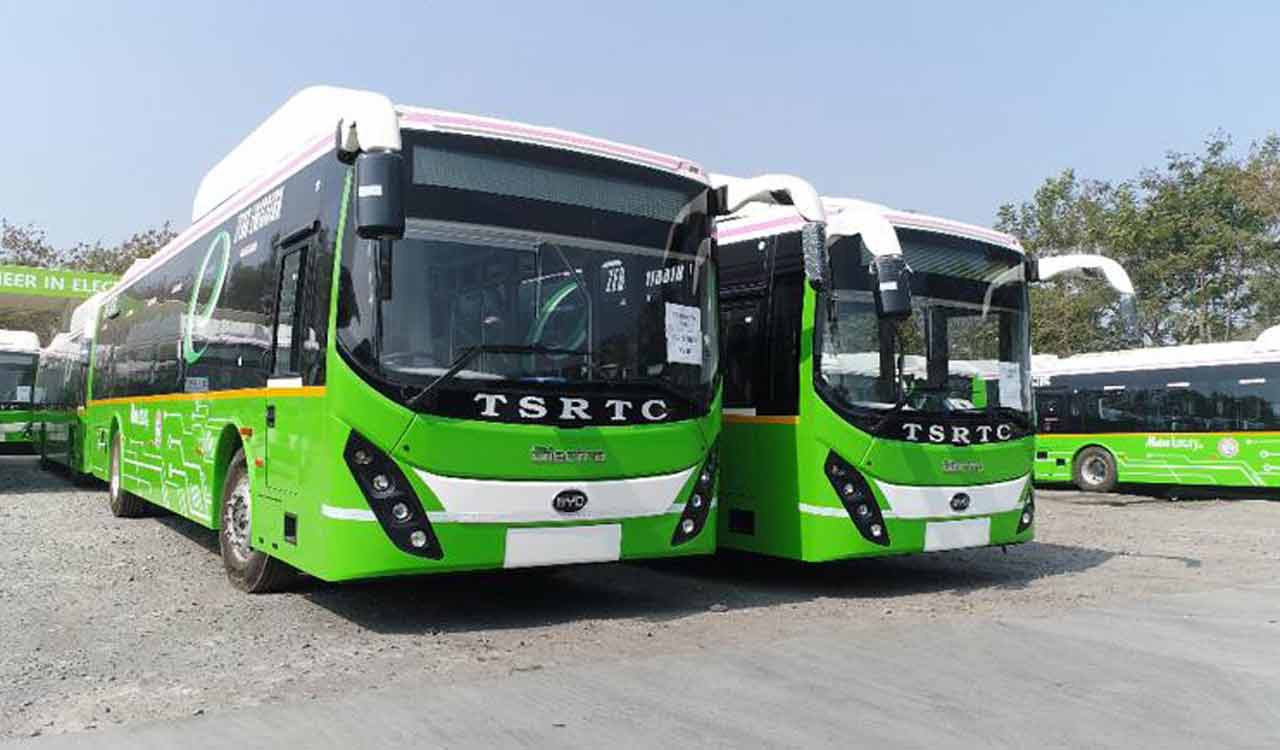
TGSRTC’s plan to convert 200 diesel buses into electric vehicles faces regulatory delays. Revised central guidelines require a fresh prototype to undergo stringent safety testing by the ARAI, pushing the eco-friendly fleet’s commercial rollout into next year
Published Date – 18 July 2026, 04:37 PM
Hyderabad: Telangana State Road Transport Corporation’s (TGSRTC) ambitious plan to convert its ageing diesel buses into a fleet of electric vehicles through retrofitting may take some time to materialize and take a final shape.
The process is reportedly getting delayed due to pending submission and approval of a new prototype, a mandatory step before large-scale conversion can begin. Once the prototype is cleared, it is expected to undergo a series of stringent safety and performance tests by the Automotive Research Association of India (ARAI).
The RTC officials expect the certification process and subsequent approvals to take several months, pushing the deployment of the converted buses into next year.
Under the project, the corporation plans to retrofit 200 diesel buses in phases, with a target of converting around 30 buses every month after approvals are received. The ARAI approval is mandatory before any retrofitted bus can be introduced into regular passenger service.
RTC had earlier experimented with retrofitting a diesel bus in 2023. The vehicle was operated on select routes under Uppal depot after receiving temporary clearance.
However, with revised regulatory requirements mandating central approval for commercial deployment, the earlier model may not be used for the current certification process, prompting the corporation to develop a fresh prototype.
Unlike the existing electric buses operated under gross cost contracts, where the vehicles and most operational staff are provided by private operators, the retrofitted fleet will be owned and operated entirely by RTC, with the corporation’s own drivers, mechanics and other staff managing the services.
Meanwhile, the TGSRTC authorities maintained that there was no delay and the entire process to replace the diesel buses fleet with electric vehicles was on course.