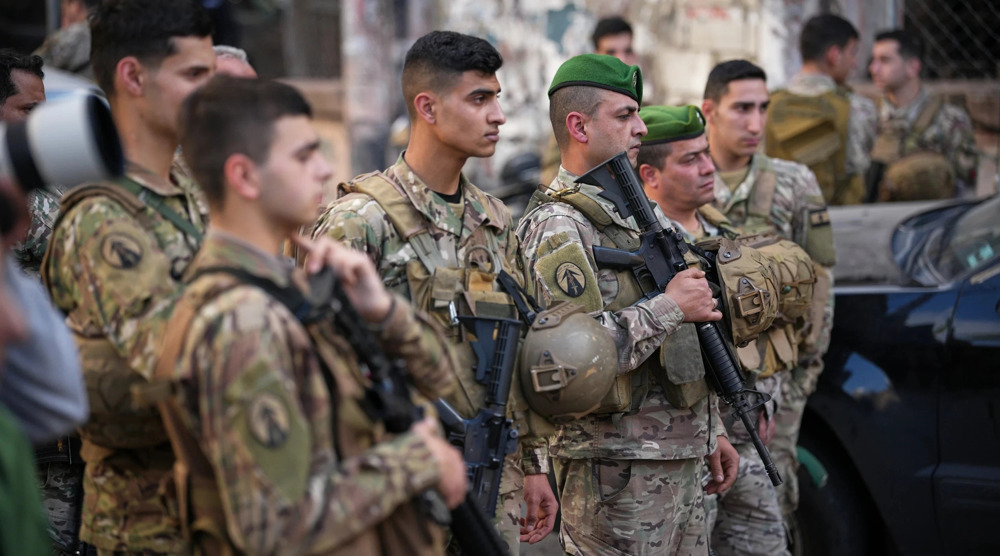
Israel has submitted a list of senior Lebanese Armed Forces (LAF) officers whose deployment in southern Lebanon it opposes, according to reports, in a move that has intensified scrutiny over the terms of a disgraceful the US-brokered framework agreement between the Lebanese government and Tel Aviv.
Israeli broadcaster Kan reported that the list was delivered to Lebanese authorities through US mediators as part of a security mechanism established under the framework agreement reached in Washington on June 26.
Israeli officials reportedly alleged that the officers named on the list had been “leaking information to Hezbollah.”
The reported Israeli dictates have raised concerns in Lebanon over the extent of foreign involvement in decisions related to the country’s military structure and deployment.
Critics of the agreement say the latest development demonstrates the degree of pressure placed on Beirut and highlights the unequal nature of the deal.
The list was reportedly shared through a security annex attached to the agreement, the contents of which were initially kept confidential by Israel and the US at the request of the Lebanese government, which sought to avoid further embarrassment.
The annex reportedly does not establish a timetable for an Israeli withdrawal from occupied Lebanese territory. Instead, any withdrawal is linked to what Israel defines as Lebanon’s “success on the ground” in disarming Hezbollah.
The reported condition regarding Lebanese army officers has added to criticism that the “shameful” agreement gives Israel influence over Lebanon’s internal security decisions while placing extensive obligations on Beirut.
The arrangement effectively allows Israel to determine aspects of Lebanon’s defense policy despite continuing Israeli terrorism in Lebanese territory.
The report comes as Israel continues demolition and detonation operations in southern Lebanon and maintains control over Lebanese areas.
The agreement fails to provide clear guarantees for an Israeli withdrawal while requiring Lebanon to undertake major security measures.
The United States and Israel have sought to use the Lebanese Armed Forces as a central tool in implementing the disarmament of Hezbollah.
However, Hezbollah and other political actors have stressed that the group’s armed presence is essential to confronting Israeli military threats and violations.
Lebanese military officials have previously condemned Israeli atrocities. In April, LAF Commander General Rudolph Haykal said that Israel was Lebanon’s “first enemy,” highlighting the occupying regime’s continued violations of Lebanese sovereignty and threats to the security of Lebanese citizens.
The latest report has deepened anger among the Lebanese toward the agreement which has turned out to be a humiliating concession reached under intense US pressure.
According to the latest revelation, Lebanon is being asked to accept restrictions on its own military decisions while Israel retains the ability to set conditions and continue operations along the Lebanese border.
Lebanese Speaker of Parliament Nabih Berri and Hezbollah have both rejected the deal’s provisions, stating that Israeli forces must withdraw from Lebanese territory.
Israel currently occupies at least six percent of Lebanese territory and continues demolishing border villages, while the agreement prevents Lebanon from pursuing international legal action against Tel Aviv despite thousands of Lebanese deaths and more than one million displaced since March.
The framework has been widely criticized for legitimizing Israel’s continued occupation and weakening efforts to halt its military campaign against Lebanon. It also undercut Iran’s efforts to enforce the June memorandum of understanding (MoU) with Washington, which, among other things, calls for Israel to stop attacking Lebanon and respect its sovereignty.
Israeli officials have openly rejected withdrawing from Lebanon, Syria, and the besieged Gaza Strip, while some religious-nationalist figures have pledged to establish Jewish settlements in occupied areas and Israel continues to seek control over water resources from the Litani River.