Social media platforms have been flooded with reactions from journalists, political commentators and analysts around the world following the funeral procession for the martyred Leader of the Islamic Revolution, Ayatollah Seyyed Ali Khamenei.
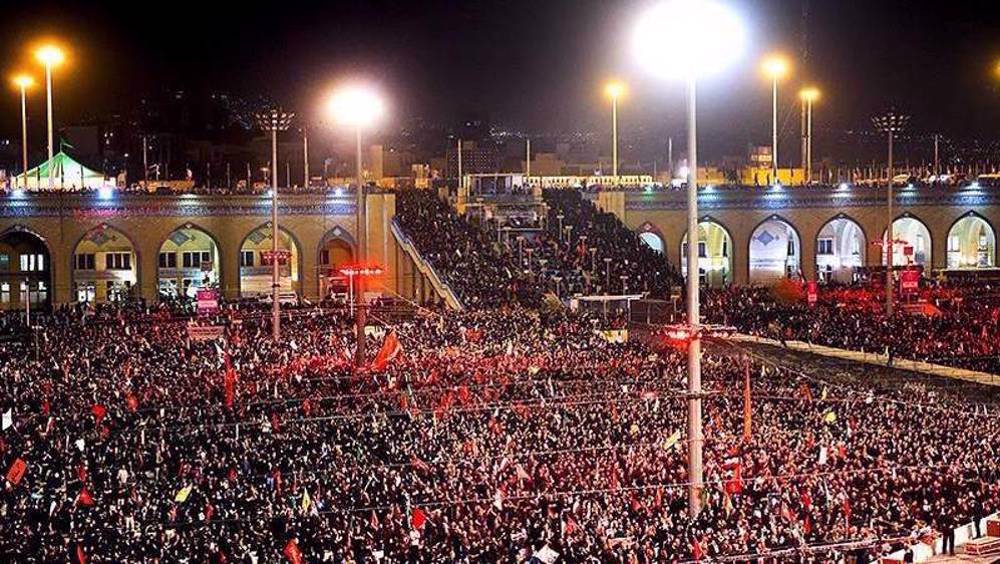
Many described the turnout as one of the largest public gatherings in modern history, arguing that it challenged long-standing Western narratives about Iran.
Among the most widely shared reactions was that of journalist Max Blumenthal, editor of The Grayzone, who said that no video or photograph could adequately convey the scale of the funeral in Tehran.
Having attended the ceremonies in person, Blumenthal wrote that millions of mourners gathered to pay their respects, describing an atmosphere marked by grief, defiance, poetry and calls for justice.
He also argued that the public mobilization demonstrated broad national cohesion, suggesting that any expectation that the assassination would trigger political collapse or regime change had instead been undermined by the size of the turnout.
I’ve just visited the largest funeral in history, where millions mourned Sayyed Ali Khamenei, the Iranian leader who was assassinated by the US-Israeli coalition along with members of his family
It is practically impossible to understand what this scene is like, or what it… pic.twitter.com/37Hzc0NFN8
— Max Blumenthal (@MaxBlumenthal) July 5, 2026
Social media commentator Hadi similarly wrote that “no video can truly capture the sheer scale of the mourning in Tehran and across Iran,” describing the gathering as a rare event in modern history.
No video can truly capture the sheer scale of the mourning in Tehran and across Iran. The sheer number of people gathered to bid farewell to Sayed Khamenei is rarely witnessed in modern history. Trump’s funeral could never draw even 30% of that devotion pic.twitter.com/mn649wi4uw
— Hadi (@HadiNasrallah) July 6, 2026
Norwegian political scientist Glenn Diesen said the massive turnout highlighted a major miscalculation by the United States and its allies regarding public support for Iran’s government.
He argued that Western policymakers had underestimated national solidarity, warning against relying on narratives that portray foreign governments as lacking domestic legitimacy in order to justify intervention.
Massive turnout for the funeral of Ayatollah Khamenei. The failure to recognise the popular support for the Iranian government was a key reason for the failure of the US war. The Iranians were no more likely to assist the US in toppling their own government than the Iraqis were… pic.twitter.com/YgUyQj52CK
— Glenn Diesen (@Glenn_Diesen) July 7, 2026
South African political analyst Mbuyiseni Ndlozi described the funeral as “the largest in recorded history,” saying the turnout reflected national unity rather than political fragmentation.
He argued that expectations of internal collapse following the assassination had failed to materialize and linked the events to Iran’s broader historical experience of foreign intervention.
Largest funeral is recorded history!Ayatollah Ali Khamenei embraced as the leader of the resistance & a martyr by over 20 million Iranians in attendance!
You cannot break Iran! 🇮🇷 Iran will rise! Trump thought he could win over people who invented chess ♟️ 🤷🏾♂️!
But US/Israel…
— Mbuyiseni Ndlozi (@MbuyiseniNdlozi) July 6, 2026
Australian-Lebanese commentator Mario Nawfal summarized his reaction by writing that, after seeing the scale of the funeral ceremonies, he felt he had been “lied to about Iran.”
After watching the size of Khamenei’s funeral processions, I feel lied to about Iran
— Mario Nawfal (@MarioNawfal) July 6, 2026
British journalist and Novara Media co-founder Aaron Bastani echoed similar sentiments, arguing that the scenes from Tehran contradicted portrayals frequently presented in parts of the Western media.
He went on to say that those narratives had been used to build public support for a conflict that, in his view, would have had devastating consequences.
Tehran. You were lied to.
Why? To build consent for an unwinnable war that would have made Iraq look sensible.
At moments like this, deep inflection points in geopolitics & history, it’s completely pointless listening to outlets like the BBC, Guardian or Times. Zero value. pic.twitter.com/Pxq50mzs8N
— Aaron Bastani (@AaronBastani) July 6, 2026
Palestinian-American author Susan Abulhawa also questioned prevailing Western narratives, writing that the scale of public participation contradicted claims that Iranians broadly opposed their leadership.
the Epstein establishment told us Iranians hated Khamenei. then 12-15 million people showed up to pay their respects after he was murdered by that establishment. it’s the biggest funeral in recorded human history. why does anyone still believe what US media and politicians say? https://t.co/xeJFyg11W6
— susan abulhawa | سوزان ابو الهوى (@susanabulhawa) July 7, 2026
British political commentator Bushra Shaikh argued that independent journalism is increasingly challenging decades of misinformation about Iran. Referring to the large crowds, she wrote that “the people of Iran have spoken.”
For decades the Western propaganda machine has been lying to the people about Iran. They lied to you about Khamenei. They lied to you about Nuclear weapons. And now they’re trying to tell you that this is AI.
The people of Iran have spoken and they love their religion, their… pic.twitter.com/kmNswaEgOt
— Bushra Shaikh (@Bushra1Shaikh) July 6, 2026
Polish researcher Paweł Wargan said few governments backed by foreign powers could ever command such levels of popular participation, suggesting the event reflected broader geopolitical shifts.
No imperialist or colonizer will ever see popular support of this magnitude — not even close. And that tells us a lot about where history is headed, and who is leading the transition. https://t.co/k43qH351Yc
— Paweł Wargan (@pawelwargan) July 6, 2026
Iranian international lawyer and foreign policy analyst Reza Nasri contrasted the scenes from Tehran with previous statements by senior US officials who had predicted that sanctions and economic pressure would weaken public support for the Iranian government.
He argued that the funeral instead demonstrated national cohesion after decades of sanctions and external pressure.
Trump said “Right now their people are very hungry.” Marco Rubio declared that he knows of “no other country where there’s a bigger difference between the people who lead the country and the people who live there.” Scott Bessent stood at Davos and boasted: “This is economic… pic.twitter.com/hvLhG5Y0W7
— Reza Nasri (@RezaNasri1) July 6, 2026
Meanwhile, American journalist Glenn Greenwald said one lesson from the conflict was that military attacks on civilians were likely to strengthen, rather than diminish, public anger and national solidarity.
One of the surprising things that I learned from the Iran War is that if you start a war against another country and, on the first day, you bomb one of their schools filled with 170 young girls, the people in that country will get angry about it and hate you for a long while: https://t.co/W6JB3k5vgj
— Glenn Greenwald (@ggreenwald) July 6, 2026
Ayatollah Seyyed Ali Khamenei was assassinated, alongside some of his family members, on February 28, the first day of the 40-day illegal war of aggression waged by the United States and the Israeli regime against Iran.
The multi-day funeral began on Friday with Ayatollah Khamenei’s body lying in state at Tehran’s Imam Khomeini Mosalla and foreign dignitaries and religious figures paying their respects. It continued on Saturday and Sunday with a public farewell and prayers, respectively.
On Monday, large crowds packed the streets of Tehran as the funeral convoy made its way through the capital.
The ceremonies will continue on Tuesday in the holy city of Qom while additional farewell and funeral events are scheduled for Wednesday in the Iraqi cities of Najaf and Karbala.
The final funeral rites are set to take place on Thursday in the northeastern Iranian city of Mashhad, where Ayatollah Khamenei will be buried at the shrine of Imam Reza (peace be upon him), the eighth Shia Imam, in accordance with the martyred Leader’s will.