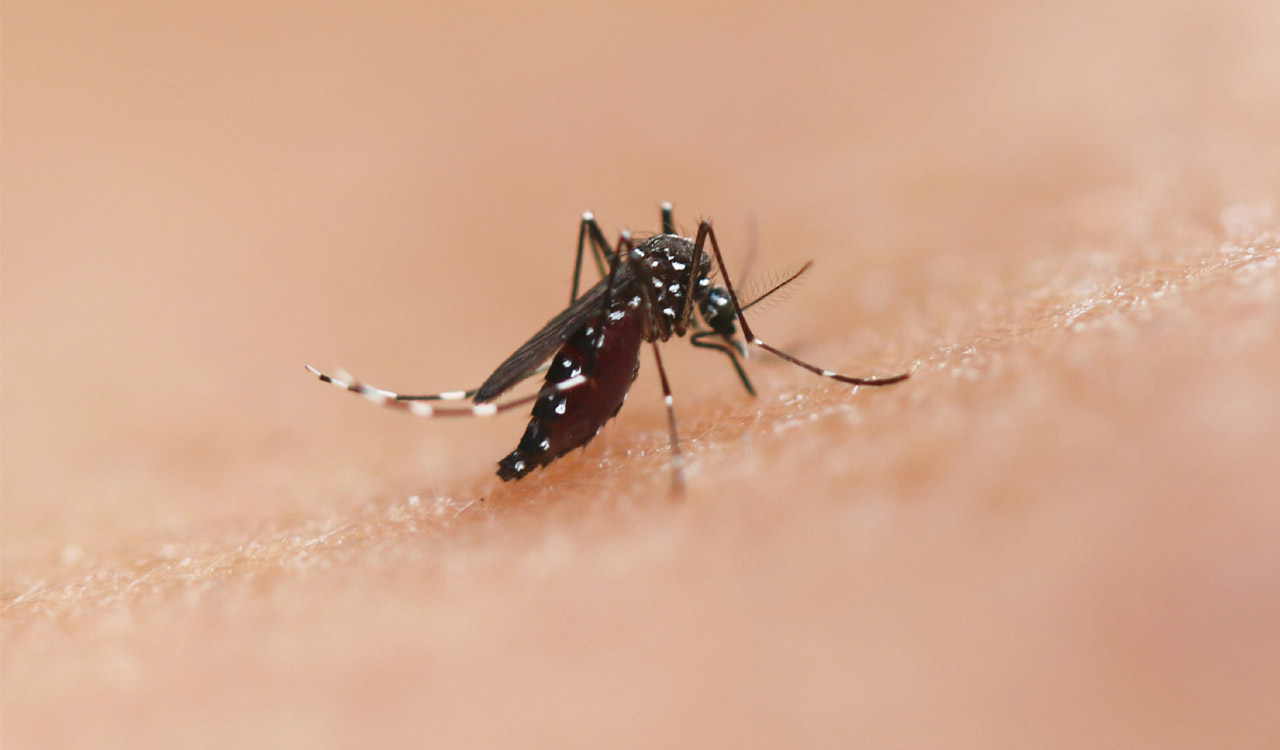
Researchers from CSIR-IICT and CSIR-CCMB have found that the dengue virus is genetically evolving and may influence mosquito behaviour, potentially making conventional fogging and anti-larval measures less effective while increasing the risk of dengue transmission in Hyderabad.
Published Date – 5 July 2026, 05:35 PM
Hyderabad: Ever wondered why the fogging machines and seasonal anti-larval drives of GHMC during monsoons or any other season are no longer enough to contain dengue in Hyderabad? That is because the dengue virus (DENV) has genetically evolved and is now able to modify its own genes and literally hijack the nervous system of Aedes aegypti (mosquito), turning it into a ‘zombie’ carrier.
Groundbreaking molecular research by Hyderabad’s Indian Institute of Chemical Technology (CSIR-IICT) and CSIR-Centre for Cellular and Molecular Biology (CSIR-CCMB) has indicated that decades of chemical fogging and routine anti-vector measures have inadvertently forced both the vector (Aedes aegypti mosquito) and the virus to adapt, keeping them steps ahead of human intervention.
Using next-generation sequencing (NGS) in virus samples circulating in high-burden zones like Kapra, Qutbullapur, and Jeedimetla, IICT researchers found that the virus is actively shifting and mutating structurally.
The genetic adaptations allow it to maintain high infection rates within local mosquito populations, even under preventive measures like fogging, etc. The dengue virus has developed the ability to replicate with maximum efficiency inside the mosquito without killing it, the IICT study has indicated.
On the other hand, the CCMB’s wider pathogen surveillance in Hyderabad has indicated an even more aggressive nature. The dengue virus takes over neurological pathways of the vector to turn ordinary mosquitoes into hyper-aggressive hunting machines.
By infiltrating the mosquito’s brain, the virus destroys the insect’s internal biological clock. As a result, the mosquito is transformed into a hyperactive nocturnal and indoor hunter, flying and feeding constantly to avoid the outdoor daytime anti-larval operations conducted by the GHMC.
The virus (DENV) also chemically impairs the mosquito’s salivary glands, preventing it from feeling satisfied during a blood meal, forcing the vector into a frantic biting frenzy of multiple people, CCMB study said. As a result, it bites three to four people in rapid succession within a single room to get a full meal, exponentially multiplying transmission much before the municipal teams can even register an outbreak, the CCMB study said.
Why is it difficult to pin down the dengue virus and mosquito:
- The dengue virus has evolved and is a step ahead of anti-larval measures
- DENV mutates into four different versions to remain active all year
- DENV structurally mutates to maintain high infection rates among local mosquito population
- The virus replicates in millions in the mosquito, without killing it
- Dengue virus hijacks neurological pathways of vectors to make them zombie carriers
- Mosquitoes are no longer satisfied with one bite, as they bite multiple times to feel full
- Virus controls mosquitoes to ensure it avoids daytime anti-larval measures