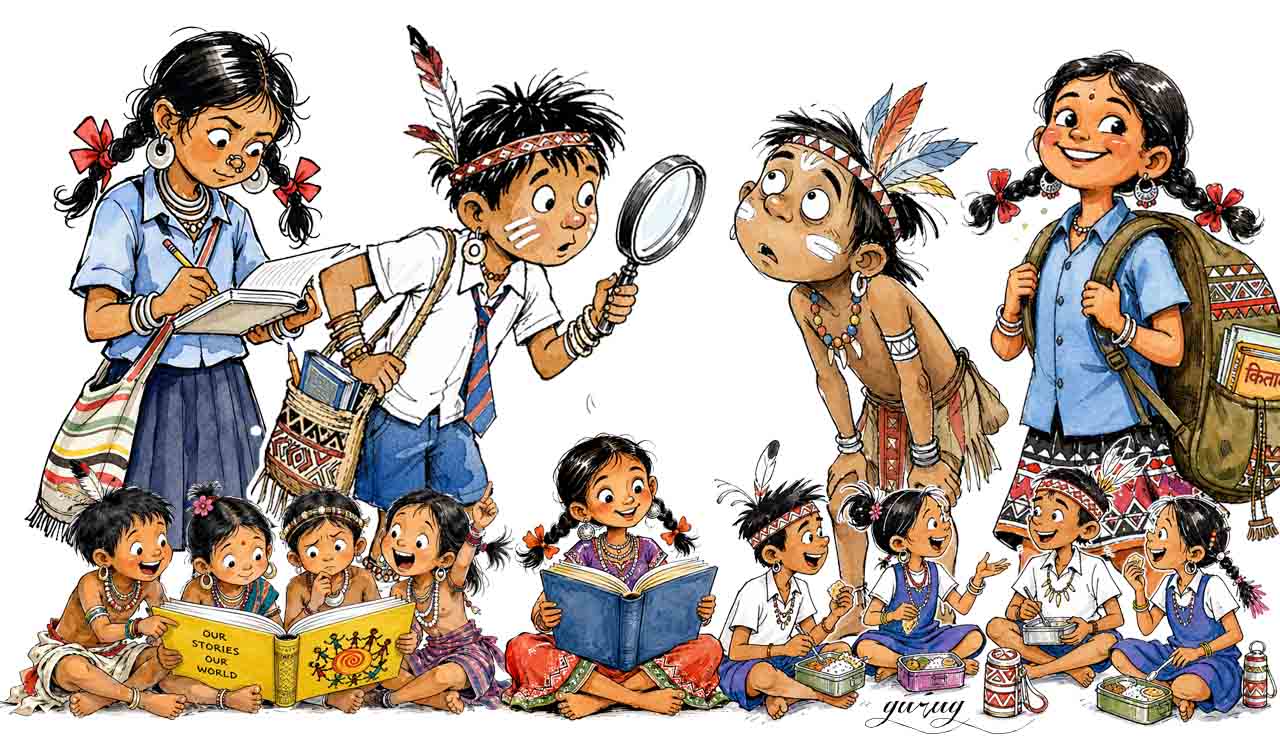
The viral Rs 370 biryani controversy exposes how the absence of consent education and emotional literacy allows harmful ideas about masculinity and entitlement to take root
Published Date – 3 July 2026, 10:34 PM
By Dishita Swaika, Dr Moitrayee Das
What does it take for a room full of people to laugh at the violation of a woman’s bodily autonomy? Apparently, it doesn’t take much. Just a microphone, a comedian willing to egg it on, and a culture that’s been quietly building toward this moment for a long time. Many of us have seen the viral clip from Pranit More’s comedy show where a 23- year-old Himanshu Jangra talks about expecting physical intimacy from a woman because he spent Rs 370 on a biryani for her and “paisa vasool karna tha”. Not only does More egg him on, but he also rewards him with Rs 5,000 because he “made the show successful”.
Spotlighting the Audience
While there is a lot to say about both Jangra and More’s actions, an important part of the puzzle has been missing from the mainstream conversation – the audience who laughed, clapped and encouraged the conversation, both in the room and online, and what that says about the beliefs we’ve been brought up with. Jangra did not arrive at those beliefs alone. He was taught by a culture that has spent decades building the exact conditions that make a room full of people hear a woman’s “no” as a punchline.
A useful lens here is Thomas Ford’s work on the prejudiced norm theory. It says that sexist jokes go beyond reflecting existing attitudes and actively create structures that grant permission for those attitudes. Through his experiments, Ford (2000) found that people already high in hostile sexism displayed an increased tolerance of sex discrimination when they were exposed to sexist humour. This works through subtle ways. When we laugh at something together, we implicitly agree to let go of our critical judgement and enter a space where what is being expressed is seen as acceptable and normal.
This then brings up the question of where Jangra, More, and the audience learned this language so fluently. What stands out in the clip is not the entitlement itself, which is, unfortunately, not surprising, but how legible this conversation was to everyone involved. Everyone seemed to know the language. The more important question, however, is not simply where they learned this language, but where they failed to learn another.
The Absence We Ignore
What we then come to is the larger conversation of what it is that we’re missing in our education system, given that it is where we spend some of the most formative years of our lives, and where many of our core beliefs are formed. What stands out is that India has no national framework for consent-based sexuality education.
What was promised as a document that would reshape Indian education for the 21st century, the National Education Policy 2020 contains no framework to teach children about consent, pleasure, bodily autonomy, or healthy relationships. This communicates to children, and especially boys, that we do not discuss things such as desire, pleasure or consent. However, this does not mean that children grow up without lessons on gender and intimacy. Instead, they turn elsewhere for them.
A well-evidenced framework is offered by UNESCO’s Comprehensive Sexuality Education Framework. It has been adopted by over 100 countries and includes age-appropriate education about the various aspects of sexuality, including consent and power dynamics. Research associated with it has noted a reduction in gender-based violence and changes in sexuality-related attitudes in countries which have implemented it consistently (UNESCO, 2018). This reflects not a gap in knowledge but a deliberate choice made to not engage with it at all.
Who Fills the Vacuum?
The vacuum that is created gets filled by the manosphere. It is a sprawling content ecosystem across YouTube channels, Telegram groups, X threads, and Instagram reels. It has become an increasingly influential force on many young men, including teenagers. Much of this content tells them that men are being treated unfairly, that women are manipulative, that feminism is a threat to masculinity, and that expressing emotions openly is a sign of weakness rather than strength (Sarkar, 2025).
The National Education Policy 2020 contains no framework for teaching children about consent, pleasure, bodily autonomy, or healthy relationships
At 23, Jangra has grown up in the era of the internet. Given the lack of conversations about genuine, ongoing consent and healthy relationships, the internet often steps in to fill the gap. For many boys, these online spaces become their first lessons in masculinity. Without examples of how to handle rejection, navigate intimacy, or process difficult emotions, it becomes easier to absorb messages that frame loneliness as an injustice and portray women’s choices as something that is unfairly denied to men.
This is often where the continuum begins, especially in the Indian context. The belief that buying someone a Rs 370 plate of biryani entitles a man to a woman’s consent is not as far removed from other forms of gender-based violence as it may seem. It stems from the same underlying belief that drives marital rape, domestic violence, and dowry-related abuse. At their core, these behaviours are rooted in entitlement and the assumption that women owe men something in return for the time or money that men have invested in. They just differ based on the degree of escalation and the legal cover available.
Research supports this connection as well. Studies have found a consistent association between exposure to sexist humour and higher self-reported rape proclivity (Romero-Sánchez et al, 2010). Hence, the comedy stage is not a consequence-free zone, but a classroom too.
Begin with Classroom
So where do we go from here? A job loss or an Instagram deactivation is unlikely to create the kind of cultural change we need. If we want things to be different, the work has to begin much earlier. That means we must include comprehensive sexuality and relationship education in schools. It means teaching children, especially boys, that desire is not a transaction, that pleasure is not something that only men are entitled to, and that “no” is not the beginning of a negotiation.
It also means helping young people understand that loneliness, however painful, is not something another person is responsible for relieving. Intimacy can only exist when there is genuine and ongoing consent. It also means allowing boys to cry without shame and creating spaces where they can name and process their emotions before they harden into resentment and entitlement.
But this work also begins in everyday conversations. It begins by speaking up when someone makes the biryani joke at a dinner table or in a group chat, and everyone laughs before moving on. The laughter in the comedy club did not emerge in isolation. It came from thousands of smaller laughs that passed without question. Culture is shaped as much by what we challenge as by what we choose to tolerate every day.
In the end, the Rs 370 wasn’t really about the biryani. It was about what Jangra or More or the audience had been taught to believe a woman’s compliance and body were worth. The more uncomfortable question, and perhaps the one that should outlast this news cycle, is what failed to teach them otherwise.
(Dishita Swaika is Master’s graduate in Psychology from Tata Institute of Social Sciences, Mumbai. Dr Moitrayee Das is Assistant Professor of Psychology at FLAME University, Pune)