The report by the Zionist newspaper The Jerusalem Post stating that the United States Central Command (CENTCOM) is examining the transfer of some of its bases from the Persian Gulf region, although still only raised as a study scenario, carries, from a strategic perspective, a message that goes beyond a mere military relocation. This report comes at a time when the forty-day war between Iran and the United States has altered many of the region’s traditional security equations and has confronted Washington’s view of the security of its bases with new challenges.
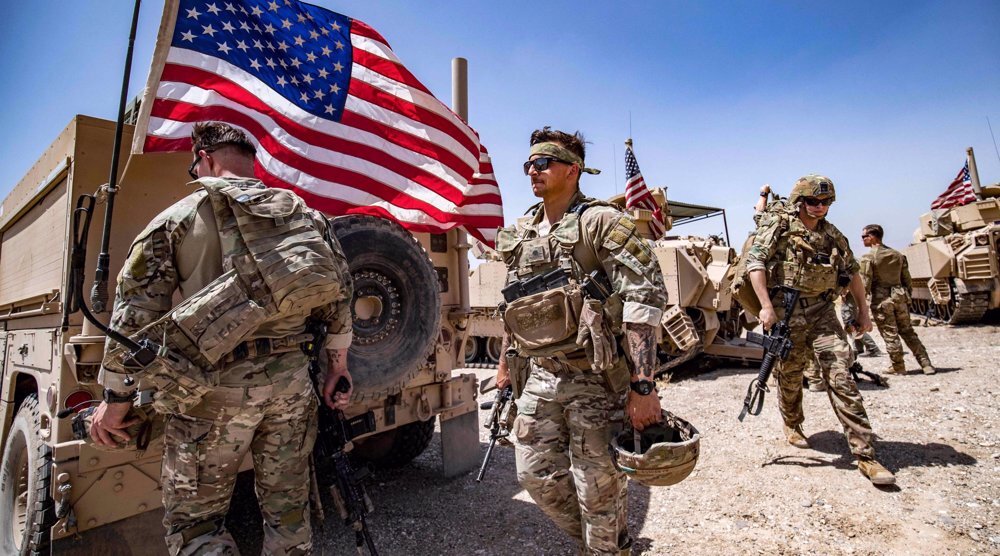
Over the past decades, the United States regarded its extensive military presence in the Persian Gulf as one of the most important instruments for projecting power in West Asia. A network of air, naval, and logistical bases in Qatar, Bahrain, Kuwait, the UAE, and other regional countries was designed to enable rapid response to any regional crisis. This security architecture was predicated on the assumption that these bases enjoyed relative security, and that in the event of conflict, the United States could conduct military operations without serious concern for the vulnerability of its infrastructure.
The recent war, however, has cast serious doubt on this assumption. For the first time, a significant portion of US bases in the region came under direct missile and drone attacks. Regardless of the extent of the damage inflicted, what is more important is the demonstration of Iran’s capability to target vital US infrastructure across a wide expanse of the region. This development showed that the short geographic distance between US bases and Iran’s borders is no longer an operational advantage, but has rather become a strategic vulnerability.
The gradual release of reports regarding damage to some US military installations has further highlighted this issue. Although Washington attempted to keep the details of these damages restricted, the publication of satellite images, media reports, and analyses by research centers turned the debate over the extent of US bases’ vulnerability into one of the primary topics within security circles. Now the main question is no longer whether these bases can be targeted; rather, it is how the United States can reduce the cost of their vulnerability.
Within this same framework, The Jerusalem Post’s report on the examination of transferring some bases from the Persian Gulf, more than a logistical decision, indicates a revision of Washington’s security calculations. Transferring or rearranging bases implies an acceptance of the fact that the previous military deployment no longer corresponds to the new security environment. When a military power is compelled to increase the distance of its forces and equipment from the threat zone in order to preserve their security, it has in effect acknowledged a change in deterrence conditions.
Another important point is that deterrence does not merely mean preventing the outbreak of war. One of the most significant indicators of deterrence is compelling the opposing side to change its behavior, alter its military deployment, or increase its operational costs. If the United States is forced to relocate part of its military infrastructure to more distant areas, this would mean increased response time, greater complexity of the support chain, higher logistical costs, and reduced operational flexibility. In other words, even without a new conflict, Iran has managed to impose a portion of strategic costs upon the United States.
On the other hand, a potential base transfer will not affect only the United States. The host countries of these bases will also face new questions regarding the future of regional security arrangements. Over the past years, the US military presence has been considered one of the main components guaranteeing the security of these countries. If this presence undergoes change or its concentration is reduced, it is natural that regional actors will also be compelled to revise their own security calculations.
Of course, it should be noted that transferring bases does not mean the United States is withdrawing from the region. Washington still has extensive strategic interests in West Asia and is unlikely to forgo its military presence. However, the important difference lies in the fact that whereas previously the United States decided how to utilize its bases, it is now compelled, before any operational decision, to factor in the vulnerability of those very bases in its calculations. This change, although it may appear superficially as a geographical relocation, is in reality a reflection of a transformation in the region’s deterrence environment.
Ultimately, even if the scenario of transferring bases is not fully implemented, the very examination of such an option carries an important message: that the forty-day war was not merely a temporary military confrontation, but has also affected US security calculations. When a power like the United States is compelled to rethink the placement of its bases, it can be said that deterrence equations have changed compared to the past. From this perspective, the strategic value of The Jerusalem Post’s report lies not in the news of base transfers, but in the implicit acknowledgment of the fact that Iran’s missile and drone capabilities have now become one of the determining variables in the design of the US military deployment in the region.
MNA