The colourful Pedda Puli tiger dance continues to be a major attraction during Muharram celebrations in Jagtial and Karimnagar districts, with devotees donning tiger attire as an offering of thanksgiving, highlighting Telangana’s unique blend of faith, folklore and communal harmony.
Published Date – 26 June 2026, 03:50 PM
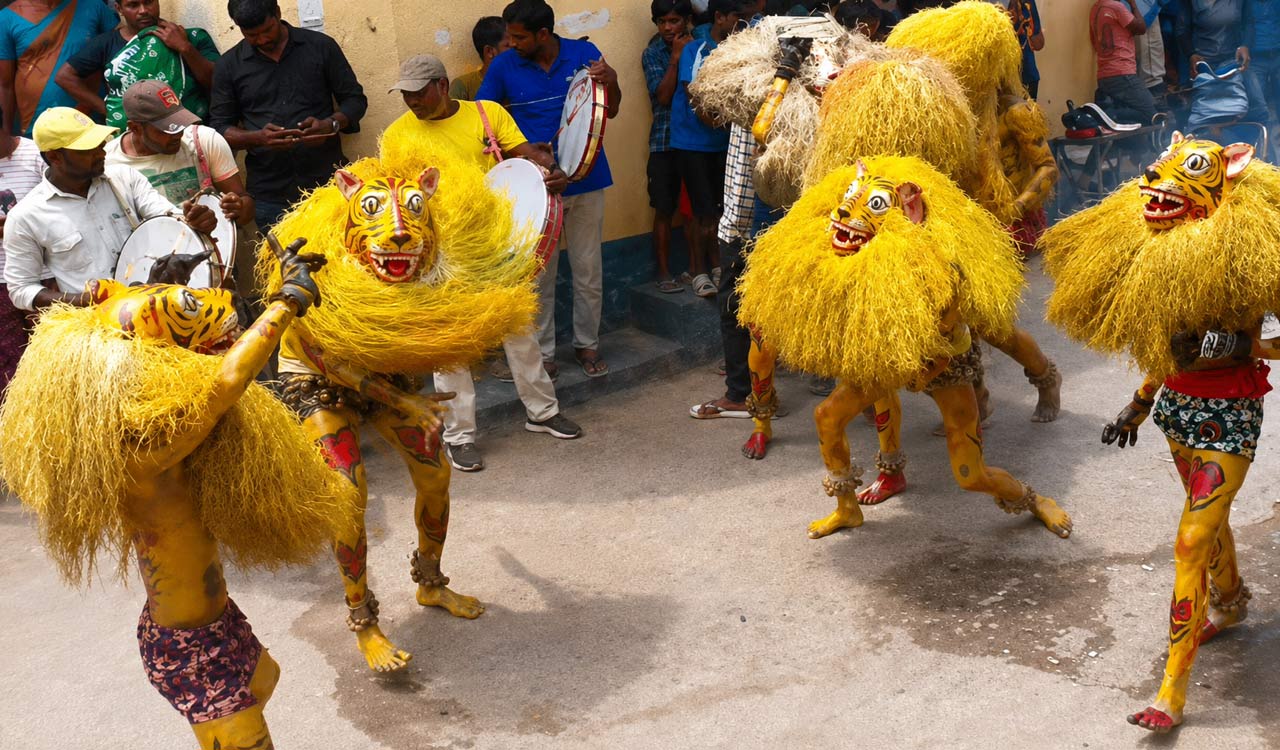
Jagtial: As the beats of dappu drums echo through villages in Jagtial and Karimnagar districts during Muharram, villagers brightly painted as ‘tigers’ leap through the streets, delighting crowds and keeping alive a tradition that blends devotion, folklore and communal harmony.
Known locally as ‘Pedda Puli’ (Big Tiger), the colourful tiger dance has become an integral part of Muharram, locally celebrated as Peerla Panduga, in many villages of Telangana. While Muharram commemorates the martyrdom of Imam Hussain with solemn religious observances, the Pedda Puli tradition reflects the region’s unique syncretic culture, where people from different communities participate together in age-old customs.
The tradition is especially popular in Jagtial, Dharmapuri, Raikal and Karimnagar, where villagers, after having their wishes fulfilled at ashoorkhanas, express their gratitude by becoming a ‘Pedda Puli’ during Muharram.
Uzafa Raheem, an Intermediate pass-out from Kodimial who runs the Instagram page Kodimialikada, has been documenting the local events and traditions. “People eagerly wait for Muharram every year, in which all communities participate,” he says.
Vlogger Abdul Rahman, also from Kodimial, says devotees visit the village aashoorkhana and offer prayers before the Alams, and once their wishes are fulfilled, they become a ‘Pedda Puli’ as an offering of thanksgiving.
For many participants, the ritual is deeply personal. Manoj, a BTech graduate, says he became a ‘Pedda Puli’ after problems in his family were resolved. Fateh Mohd from Nachupally village of Jagtial says the tradition has been followed since the time of their forefathers. Gaddam Akhikesh, a resident of Malyal village in Jagtial, says he wore the Pedda Puli attire after his prayers for a child were answered and he was blessed with a daughter.
Preparing to become a ‘Pedda Puli’ is itself an elaborate ritual. Before dawn, performers spend hours as artists carefully paint their bodies with striking yellow and black tiger stripes from head to toe. They wear realistic tiger masks, attach artificial tails and, in many cases, are led through the streets with ropes or chains by a “handler” to resemble a captured wild tiger.
The performers jump, crouch and pounce through village lanes, entertaining spectators and playfully chasing children. The lively procession has evolved with time. While earlier generations danced exclusively to traditional dappu beats, many villages today combine the tradition with modern DJ sound systems.
The enduring custom stands as a remarkable example of Telangana’s shared cultural heritage, where devotion, thanksgiving and folklore come together during Muharram, reinforcing bonds between communities while preserving a unique rural tradition.