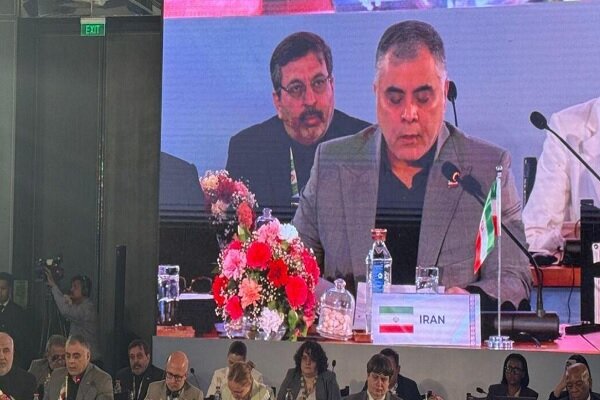
Speaking at the 11th BRICS Energy Ministers’ Meeting in Gurugram, India, Paknejad said Iran is ready to play an active and constructive role in energy cooperation among BRICS members and contribute to the bloc’s goal of ensuring secure and affordable energy supplies.
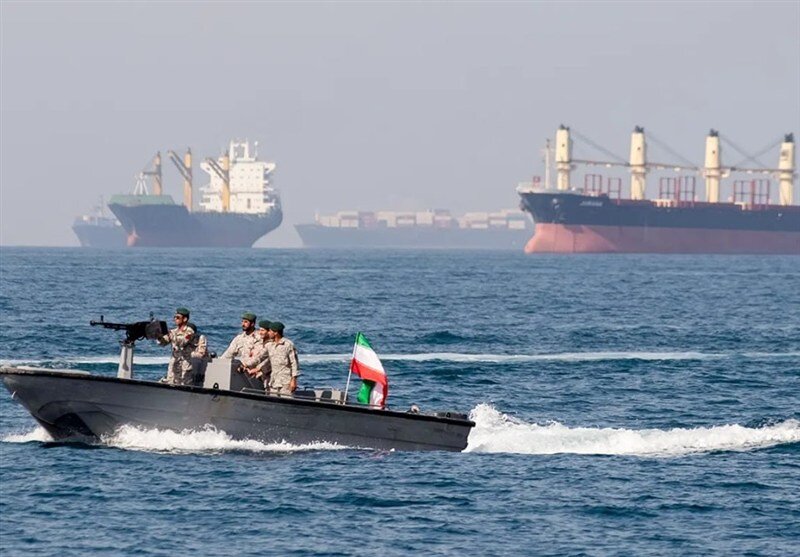
Referring to what he described as the consequences of the “Third Imposed War,” Paknejad said repeated attacks on Iran’s oil, gas, refining, and petrochemical infrastructure were not merely assaults on one country’s facilities but constituted “a blind war against global energy security.”
He said the attacks caused damage to energy installations, resulted in casualties among oil industry workers, triggered environmental impacts, disrupted supply chains, and affected the livelihoods of thousands of families in the Persian Gulf region.
He added that the repercussions of such attacks have contributed to energy market instability, higher prices for raw materials and manufactured goods, and increased economic pressure and living costs for civilians worldwide. Paknejad described the attacks as a clear violation of international law and the United Nations Charter, calling for their condemnation at all levels.
The Iranian minister said the global energy system is facing growing challenges and uncertainties, including rising demand, geopolitical risks, market volatility, climate change, investment constraints, and the need to ensure universal access to affordable energy. Addressing these issues, he argued, requires international cooperation and pragmatic policymaking rather than unilateral action.
Citing the latest OPEC World Oil Outlook, published last week, Paknejad said oil and natural gas are expected to account for more than 53 percent of global energy demand through 2050, with no peak in global oil demand anticipated before then.
He added that fossil fuels remain central to global electricity generation, transportation, and industrial activity, while natural gas continues to play a key role in the energy transition.
Paknejad stressed that achieving a fair, orderly, and inclusive energy transition will require increased global investment in the oil and gas sector as well as carbon-reduction technologies.
Highlighting BRICS’ role in the energy sector, he said the bloc possesses exceptional potential for cooperation, given its significant share of global energy production, consumption, reserves, and innovation capacity. He called for deeper collaboration in oil and gas, renewable energy, electricity networks, hydrogen, energy efficiency, artificial intelligence, and digitalization.
The minister said Iran, despite years of sanctions, has continued to expand its energy infrastructure. According to Paknejad, Iran’s annual natural gas production exceeded 280 billion cubic meters in 2025, accounting for roughly 7 percent of global output. He also said the country’s oil production capacity has reached 4.2 million barrels per day, while refining capacity stands at 2.4 million barrels per day.
Paknejad noted that Iran’s extensive pipeline network provides significant capacity for transporting crude oil, petroleum products, and natural gas. He added that Iran’s electricity generation capacity has surpassed 100,000 megawatts and continues to grow through both fossil-fuel and non-fossil-fuel sources.
Calling for closer BRICS cooperation, Paknejad said Iran is prepared to share its vast energy resources, technical expertise, and strategic geographic position to help build what he described as a more secure and equitable global energy order.
He also warned that increasing trade restrictions and sanctions against major oil- and gas-producing countries pose serious risks to global energy markets. BRICS members, he said, share responsibility for maintaining market stability, preventing disruptions, and ensuring both security of supply for consumers and security of demand for producers.
As a practical initiative, Paknejad proposed establishing a “BRICS Energy Security Partnership” under the bloc’s 2025–2030 Energy Cooperation Roadmap.
The initiative would focus on strengthening resilience and security across the energy value chain through regular information-sharing, protection of critical energy infrastructure, improved emergency response capabilities, investment in strategic energy projects, and support for uninterrupted energy flows among member states.
“Achieving secure, affordable, reliable, sustainable, and inclusive energy depends on the collective efforts of all of us,” Paknejad said, reiterating Iran’s readiness to work closely with all BRICS members toward that goal.
The 11th BRICS Energy Ministers’ Meeting is being held in Gurugram, India, on June 25–26. BRICS currently comprises Brazil, China, Egypt, Ethiopia, India, Indonesia, Iran, Russia, Saudi Arabia, South Africa, and the United Arab Emirates.
MNA