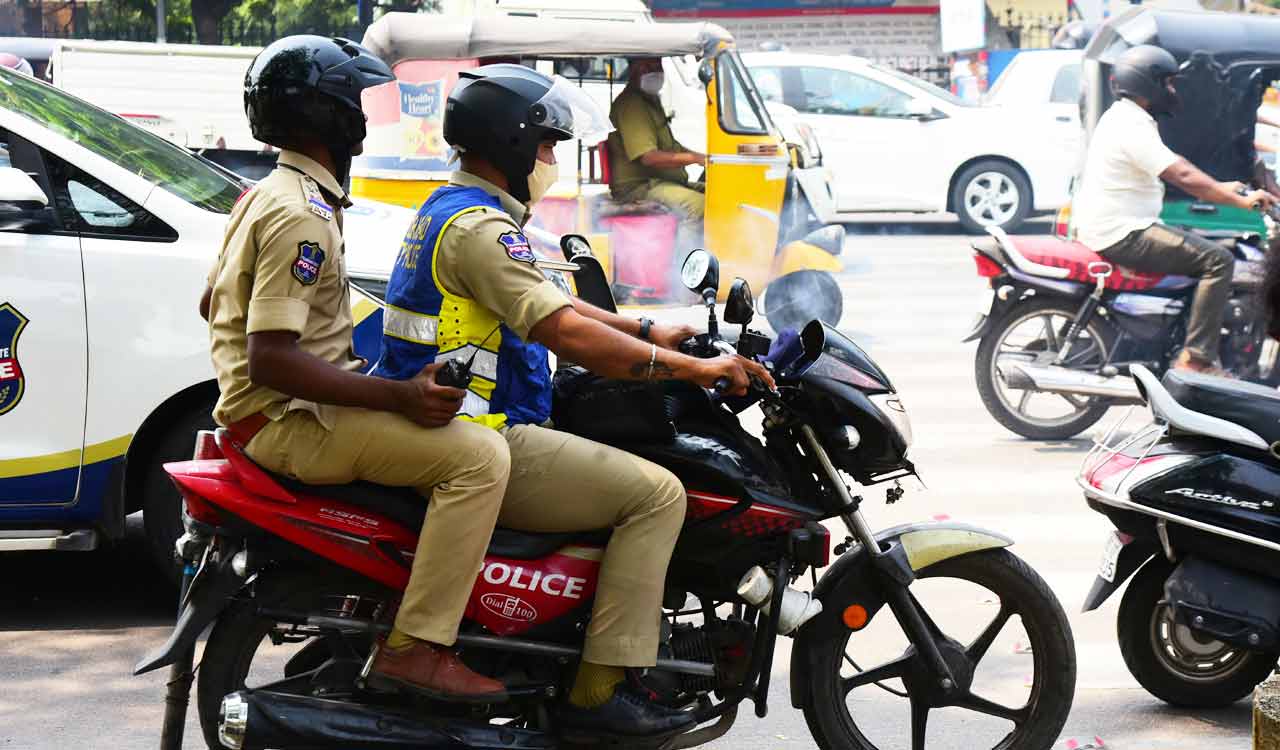
Police beat patrolling has evolved significantly from foot patrols and point books to GPS-enabled tablets and vehicles. Officers recall decades of change in equipment, mobility and methods, highlighting how modern technology has transformed policing and improved monitoring of local jurisdictions.
Published Date – 24 June 2026, 07:22 PM
Hyderabad: Notebooks to electronic tablets, foot patrolling to bikes or SUVs, cane sticks and musket rifles, to fibre sticks and short weapons, the beat patrolling for the police over the years has undergone a lot of change.
What is a beat? In the police system, a beat is a specific route or area within a police station boundary, and there are three to five beats in a police station, depending upon its jurisdiction. This system is designed to ensure an organised police presence across a wide area, allowing officers to effectively manage crime and maintain order. It also helps build community relationships and focus on specific black spots.
“In the early days of our service, we patrolled the localities on foot or bicycles, usually at night, and signed the point book. Two constables were assigned the beat duty, one carried a lathi and the other a musket rifle. A weapon was mandatory in those days due to peak Naxal activity, movement of hardcore dacoit gangs and ISI activities,” recalled Narsimhulu, an assistant sub-inspector of police.
A point book is a notebook, kept at certain important places in a beat, which is to be signed by the beat constables to register their visit on a particular day. However, after the department issued electronic tablets, the practice of signing the book was stopped. The book was checked by a supervising officer occasionally.
In the 1970s and 80s, every police station had a jeep for the circle inspector, while a few police stations had a matador tempo. “In 1990’s, a DCM was designed into a police patrol and was allotted to a police division comprising four to five police stations. The vehicle had to patrol the division area,” said Mohd Hussain, another assistant sub-inspector.
The year 2000 saw police stations being allotted motorcycles and Tata Sumo jeeps. “The beat system remained the same, but the policemen did not move on foot and patrolled the area on bikes or jeeps at night. During communal sensitive occasions, foot patrolling was mandated,” said a head constable.
After the formation of Telangana, the point-of-sale system was replaced by an electronic tab. “There is software installed in the tablets, and the GPS coordinates are also stored. We go to the place and punch the record of our visit in the tab and upload a photograph,” said Syed Kashif, a police constable. The police stations got two to three Innova cars and bikes for patrolling.