
In the current tense climate of the Middle East, as negotiations between Iran and the United States continue, the issue of Lebanon has emerged as one of the central and decisive axes in diplomatic and media discourse. Within this framework, Iran’s insistence on the necessity of a full ceasefire in Lebanon as a precondition for any further dialogue with Washington has raised numerous questions among regional and international analysts. This stance is not merely a tactical demand but part of a broader strategic logic in Tehran’s foreign policy, one that pays particular attention to the linkage between regional dossiers and transregional negotiations.
In this context, one of the key clauses in the “14-point memorandum of understanding between Iran and the United States” also specifically underscores the need to end hostilities on all regional fronts, including Lebanon. This clause demonstrates that, from Iran’s perspective, regional security files cannot be separated from the nuclear negotiation process or bilateral talks, but are instead viewed as components of a single, integrated security system.
Lebanon: The Security Knot in Regional Equations
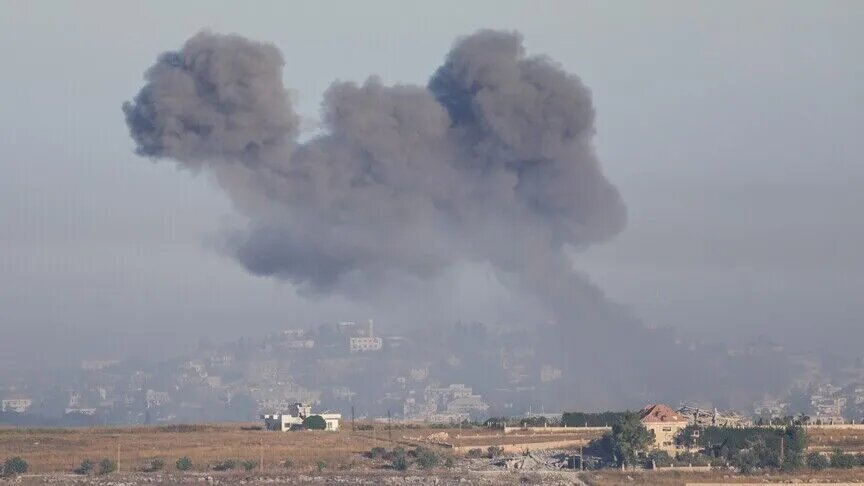
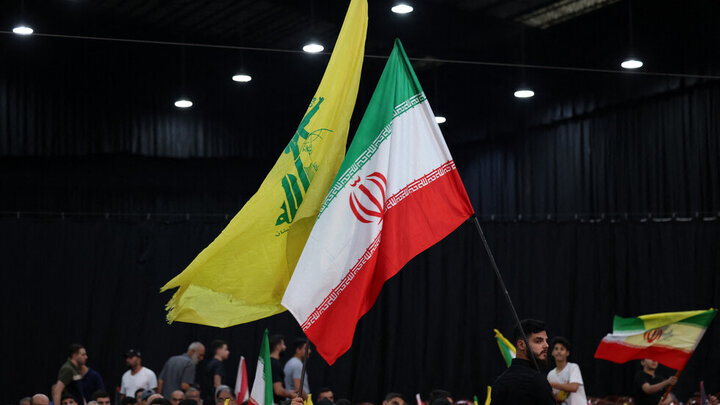
In recent years, Lebanon has become one of the most sensitive points of indirect confrontation between Iran and the United States and their regional allies. The country’s geopolitical position, the presence of multiple domestic and foreign actors, and the role of Resistance groups in its security equations mean that any tension in Lebanon rapidly impacts other regional dossiers.
From Iran’s standpoint, the continuation of tension or conflict in Lebanon is not merely a local issue; it forms part of a broader chain of instability in the region that can overshadow any diplomatic process. Accordingly, Tehran believes that without a complete halt to the fighting in Lebanon, the formation of a sustainable and reliable agreement with the United States will prove impossible.
The Logic of Linking Negotiations to Developments on the Ground
A defining feature of Iran’s foreign policy in recent years has been the direct linkage of diplomatic negotiations to field developments in the region. This approach is predicated on the analysis that any political agreement unaccompanied by changes in security and on-the-ground realities will lack the necessary durability. Within this framework, the emphasis on a ceasefire in Lebanon can be seen as part of Iran’s effort to establish a “simultaneous balance at the negotiating table and in the field.” In other words, from Tehran’s viewpoint, if negotiations proceed solely at the political level without regard to conditions on the ground, the likelihood of crisis reproduction in subsequent stages will be very high.
Clause One of the 14-Point Memorandum: Halting Conflict on All Fronts
The first clause of the 14-point memorandum of understanding between Iran and the United States explicitly emphasizes the “end of conflict on all regional fronts.” This clause is of fundamental importance because it defines the overall framework for the agreement’s other provisions. From Iran’s perspective, the clause signifies acceptance of the principle that regional peace and stability form an indivisible whole, and no single dossier can be decoupled from the region’s other crises.
In this equation, Lebanon occupies a special place, as it is—both politically and in security terms—one of the primary focal points of tension along the axes connecting Iran and the United States. Iran’s insistence on a full ceasefire in that country is therefore, in effect, an effort to implement precisely that first clause of the memorandum.
Iran’s Understanding of a “Full Ceasefire”
From Tehran’s vantage point, a “full ceasefire” does not merely mean a temporary halt to hostilities; it encompasses a set of sustainable security components. These include the cessation of both direct and indirect military operations, the prevention of cross-border attacks, the reduction of provocative security activities, and the establishment of monitoring mechanisms to prevent a resurgence of tension.
In this framework, Iran maintains that any political agreement without executive guarantees on the ground will only postpone the crisis rather than resolve it. For this reason, the issue of a ceasefire in Lebanon has been presented as a prerequisite for continuing the talks.
Iran’s Strategic Calculus
Iran’s emphasis on this issue can be analyzed on several levels:
First, at the level of national security: Iran believes that continued tension in Lebanon could lead to the spread of insecurity across the entire Axis of Resistance and ultimately affect Iran’s own national security.
Second, at the level of international negotiations: Tehran holds that any agreement with the United States will only prove sustainable if it is accompanied by de-escalation on regional fronts.
Third, at the level of deterrence: From Iran’s perspective, linking negotiations to the situation on the ground serves as a deterrent tool against potential actions by the other side on other fronts.
Conclusion
Taken together, Iran’s insistence on a full ceasefire in Lebanon as a precondition for continuing talks with the United States must be analyzed within the framework of a comprehensive approach to regional security. This approach rests on the principle that no sustainable agreement can be achieved without the simultaneity of political and field-level change. From Tehran’s perspective, an agreement that focuses solely on a specific dossier while ignoring the root causes of insecurity in the region will not only fail to create peace and stability but may also lay the groundwork for new crises in the future.
The first clause of the 14-point memorandum reflects precisely this logic: the end of conflict on all fronts, not selectively but as part of a comprehensive security package. From this angle, Lebanon is not a separate dossier but part of a larger regional security architecture that also shapes the future of Iran-US negotiations.
At the same time, Iran’s emphasis on a ceasefire in Lebanon carries an important strategic message: that the Islamic Republic of Iran, in its regional and international negotiations and agreements, does not disregard the security and interests of its allies and partners. The experience of the past four decades has shown that Tehran, unlike some powers, does not view its allies as temporary instruments of foreign policy but rather as components of enduring regional security equations. For this reason, any agreement intended to create a new order in the region must, from Iran’s viewpoint, also take into account the interests and security of all aligned actors.
Within this framework, the concept of the “unity of the arenas” also assumes special significance. This concept, which has become one of the primary components of regional equations in recent years, is based on the principle that security developments on any of the Resistance fronts have a direct impact on the other fronts, and their fates cannot be separated from one another. From Tehran’s viewpoint, Lebanon, Palestine, Iraq and the other regional theaters are parts of an interconnected security system, and durable stability will only be possible when all of these arenas are addressed simultaneously.
On this basis, Iran’s insistence on a full ceasefire in Lebanon should be seen as more than a tactical condition for the negotiations. This position, in reality, reflects a grand strategy that regards regional security as indivisible and holds that no sustainable agreement can take shape without accounting for on-the-ground realities, the interests of allies, and the principle of the unity of the arenas.
MNA