The Trinamool Congress faced fresh turbulence as former minister Jyoti Priya Mallick resigned from all organisational posts citing health reasons, while Siliguri mayor Goutam Deb stepped down. The developments come amid growing internal dissent following the party’s electoral setback
Published Date – 19 June 2026, 07:45 PM
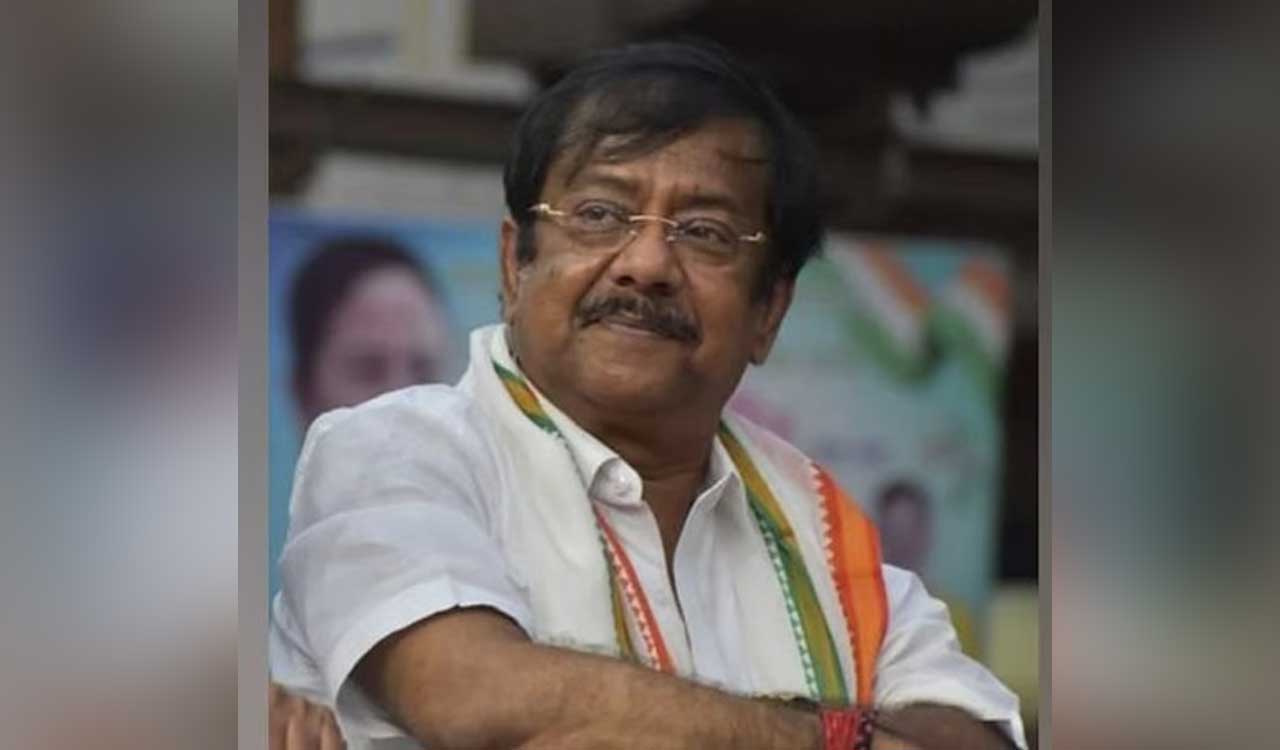
Kolkata: The leadership crisis in the Mamata Banerjee-led Trinamool Congress deepened on Friday as former West Bengal minister Jyoti Priya Mallick resigned from all party organisational posts citing health concerns, while senior North Bengal leader Goutam Deb stepped down as mayor of the Siliguri Municipal Corporation.
Mallick, a long-time associate of the TMC supremo, said he had already communicated his decision to the party leadership. Deb, on the other hand, sent his resignation to the commissioner of the Siliguri civic body, forgoing his official vehicle and security detail, officials said.
“I have resigned from all the posts in the TMC because of my extremely poor health condition, which has deteriorated severely during the past few months. My blood sugar levels have shot up abnormally, and I am suffering from major kidney ailments. Under the circumstances, it is becoming impossible to shoulder responsibilities in the party working committee and other positions. It makes no sense to hold on to a post when you can’t work,” Mallick said.
The development comes only days after Banerjee carried out a major organisational reshuffle and inducted Mallick into its reconstituted working committee.
Mallick — a five-time MLA, first from the Gaighata constituency and subsequently from the Habra Assembly constituency in North 24 Parganas district — had served as the state’s food and supplies minister from 2011 to 2021 and as the state forest minister for the following three years.
As one of the most influential leaders in the district, he also played a key role in strengthening the party organisation in the region over the past two decades.
In the 2026 Assembly polls, Mallick suffered a major defeat in his perceived Habra stronghold at the hands of BJP’s Debdas Mondal, who defeated him by a margin of over 31,000 votes.
Mallick’s political career suffered a major setback after he was arrested by the Enforcement Directorate in October 2023 in connection with the alleged ration distribution scam. He was released on bail in January 2025 after spending nearly 15 months in jail.
Following his arrest, Mallick repeatedly cited health complications and underwent medical examinations while in custody.
Mallick’s resignation came amid a widespread rift within the TMC marked by arrests, resignations and rebellions by a significant section of the party leadership ever since its electoral drubbing at the hands of the BJP, both in the state and in Parliament.
The leader, despite his arrest on allegations of corruption, had enjoyed Mamata Banerjee’s confidence and was awarded a poll ticket.
“Balu (Mallick’s nickname) is one of my best-performing ministers. He was framed jointly by the CPI(M) and BJP out of political vendetta and jealousy because he exposed the illegal municipal appointments of the erstwhile Left government,” Banerjee had said during a poll rally in support of Mallick.
Asked about the fissures currently affecting the party, Mallick said he could not comment.
“I have no disillusionment with Mamata Banerjee. Those who have revolted against her are experienced leaders, and they must have their reasons for doing it,” he said.
The rebellion within the TMC has emerged as one of the most significant political developments in West Bengal after the 2026 Assembly elections.
In the state Assembly, a group of 58 dissident TMC MLAs, led by Ritabrata Banerjee, broke away from the party leadership and secured recognition from the Speaker as the dominant legislature group, electing Banerjee as Leader of the Opposition.
The split extended to Parliament, where 20 rebel TMC MPs, including Sudip Bandyopadhyay and Kakoli Ghosh Dastidar, moved away from the party’s central leadership and sought a merger with the Nationalist Citizens Party of India (NCPI), claiming the support of more than two-thirds of the TMC’s Lok Sabha members.
The developments have triggered legal and political battles over legitimacy, anti-defection provisions and control of the party’s legislative wings, marking the deepest internal crisis in the TMC’s 28-year-old history.
Responding to Mallick’s resignation, BJP spokesperson Debjit Sarkar said that for a party “which has ceased to exist”, such moves carried little significance.
“He may quit party positions, but that won’t exonerate him from the crimes he committed. He will be judged according to the law of the land,” Sarkar said.
Meanwhile, Deb’s resignation as Siliguri mayor in the wake of the change of guard in the state’s power corridors followed similar moves made earlier by former Kolkata mayor Firhad Hakim and his counterpart in Bidhannagar, Krishna Chakraborty.
On June 17, the chief executive of the Gorkha Territorial Administration in the Darjeeling hills, Anit Thapa, an ally of Mamata Banerjee, also put in his papers.
Chairpersons and pradhans of multiple urban and rural bodies across Bengal, including in districts such as Murshidabad and Alipurduar, have quit in recent times.
BJP’s Siliguri leader and state tourism minister Shankar Ghosh called Deb’s move, which has also raised questions over the fate of the civic body board whose tenure extends till February next year, a “reflection of incompetence” on the part of TMC leaders running the show.
“The failure of the board was apparent to the people of Siliguri, which is an important urban centre of the state, for a long time. I am hopeful that the new set of administrators will do a better job,” he said.
“Ever since I was elected as MLA and subsequently named minister, I have always extended my hand of cooperation to the municipal body. They cannot blame the BJP government for non-cooperation,” he added.