Once a staple of childhood across India, gilli danda has largely disappeared amid changing lifestyles and digital entertainment. However, the growing popularity of Spain’s Billarda and social media interest have sparked renewed curiosity, leading to a modest revival of the traditional game.
Published Date – 17 June 2026, 06:33 PM
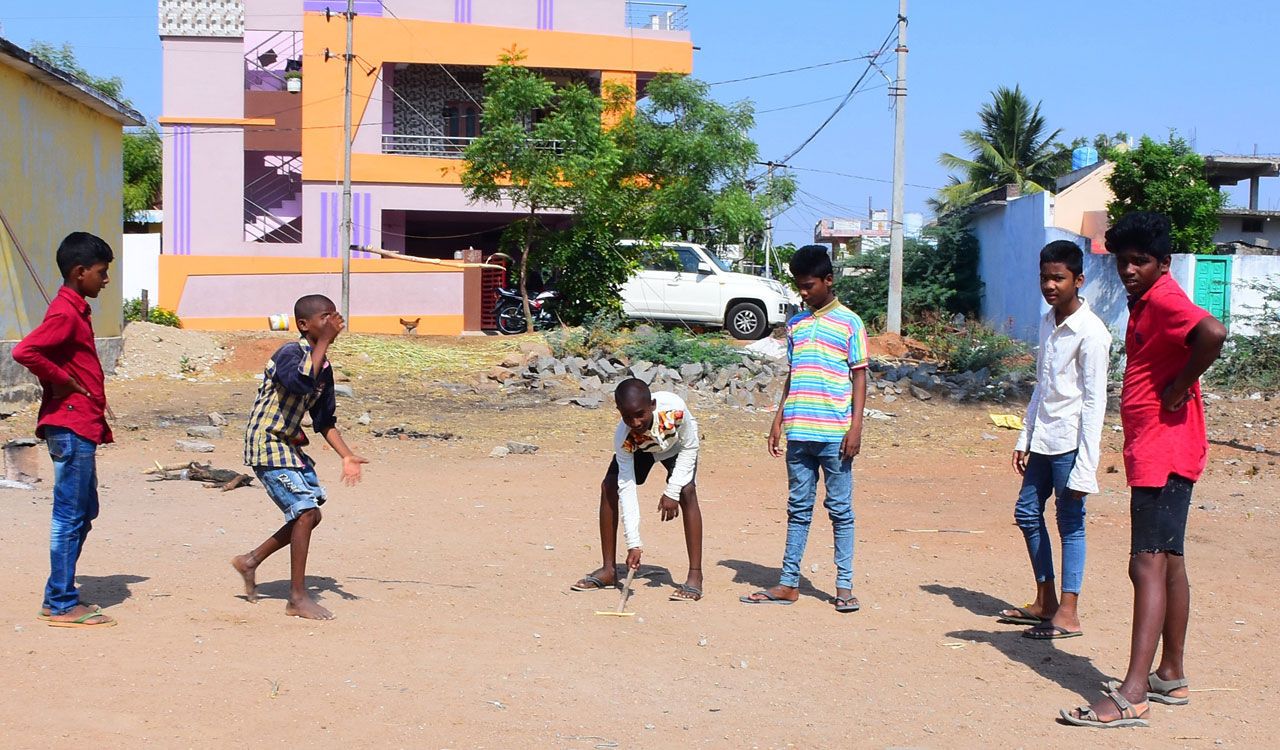
Hyderabad: Until two decades ago, ‘gilli danda’ was a familiar sight in playgrounds and open spaces. However, the traditional game gradually faded from popularity as children turned to smartphones, computers and other digital forms of entertainment.
Ironically, while the indigenous sport struggles for survival in its homeland, a remarkably similar game known as Billarda is witnessing a resurgence in Spain, drawing attention globally.
The game involves striking a small wooden piece, known as the ‘gilli’, with a larger stick called the ‘danda’, and has been played across the Indian subcontinent for generations.
“Due to changing lifestyles and the shifting interests of children, the game has gradually disappeared, even from villages,” said Mohd Younus, who recently conducted ‘Back to Bachpan’ weekly events, aimed at bringing people closer to traditional games.
People who are now above 40 years of age fondly recall regularly playing gilli danda during their childhood. “We gathered at a small ground in the colony and played the game. One of us would get a gilli and a danda from a nearby firewood depot for Rs 2 or Rs 3, and we would play for an hour or two. It was great excitement, and people gathered around, unmindful of the injuries that the flying gilli could cause to players,” recalled Khairuddin Baig Jaani, a popular Hyderabad-based comedian.
A few stores in Begum Bazaar, Hussaini Alam and Yakutpura once sold gilli danda sets, although the finished product was comparatively expensive at the time. “After the 1990’s, we stopped selling it at our shop,” said Syed Akbar, a store owner in Hussaini Alam.
The recent circulation of Billarda videos on social media has rekindled interest in indigenous games and their role in preserving cultural identity. A few stores in Hyderabad’s IT corridor, including Gachibowli and Nanakramguda, have begun selling gilli danda kits.
“The kits are sourced from manufacturers and suppliers in Maharashtra, Uttar Pradesh and Bihar. The price is around Rs 400 per kit,” said a store owner. Several online retailers are also selling ‘gilli danda’ kits and delivering them to customers who place orders through websites and mobile applications.
The Danda: A longer, thicker wooden stick, usually measuring about 18 to 24 inches long. It is used as a bat to strike the gilli.
The Gilli: A much smaller, lightweight piece of wood, usually 3 to 6 inches long. Both of its ends are tapered so that when struck on one end, it pops up into the air.
Traditional Materials: Historically, players simply crafted the equipment themselves from whatever sturdy, readily available twigs or branches they could find. Commonly used native Indian woods included Bamboo, Ivory wood, and teak.