In international politics, there is always a gap between what happens on battlefield and “what is narrated in media, but sometimes the gap becomes so great that narrative itself becomes a crisis.
The forty-day war against Iran is also of this kind. Today, when the emotional atmosphere of the first days has subsided and the dust of American-Zionist aggression has cleared to some extent, we can ask with more calm: Did Donald Trump really win this war, or is he only trying to present defeat in the frame of victory?
From the very beginning of the war, Washington’s official and media rhetoric revolved around the same theme: “Iran must surrender.” Trump and his associates repeatedly spoke of a fundamental change in the Islamic Republic’s behavior, and at times even used the language of “unconditional surrender,” “the imminent collapse of the regime,” and “changing Iran’s internal equations.” At the same time, sending extensive military aid to Israel, openly supporting offensive operations, and provocative messages about supporting internal unrest all served the same image: Iran was on the verge of collapse and only had to wait a few more weeks.
But foreign policy cannot be run by wishful thinking. The reality on the ground took a different path. Neither did the Iranian political system collapse, nor did an unconditional surrender occur, nor did the strategic shift desired by Washington materialize. Even at the height of the pressures, Iran’s political and security structure remained intact and was able to change the equation of the war in such a way that the other side was forced to accept a ceasefire and then move towards an agreement to end the war.
This is where Trump’s narrative falls into crisis. If the goal was Iran’s complete surrender, then why is there talk of an agreement and an end to the war now? If the regional balance of power was supposed to shift in favor of the United States and Israel, then why is Iran still an active and decisive player in the regional equations after forty days of war? And if Iran’s deterrence was supposed to be destroyed, then why is Washington now more than ever afraid of the spread of a regional war?
In strategic literature, victory is not defined by newspaper headlines; it is defined by the achievement of objectives. The United States and its allies entered a war that was supposed to force Iran into a fundamental retreat. But what happened in practice was something different: instead of leading to the collapse of Iran, the war led to increased internal cohesion in Iran. Despite serious differences, political currents converged around the axis of “defending the homeland,” and Iranian society reacted to the external threat differently from Washington’s calculations.
In addition, Iran was able to use new tools of pressure. The issue of the Strait of Hormuz and the threat to global energy security once again showed that war with Iran is not just a limited military operation; it could have global consequences for the economy and international security. It was this concern that led many Western actors to contain the crisis and prevent the continuation of the war.
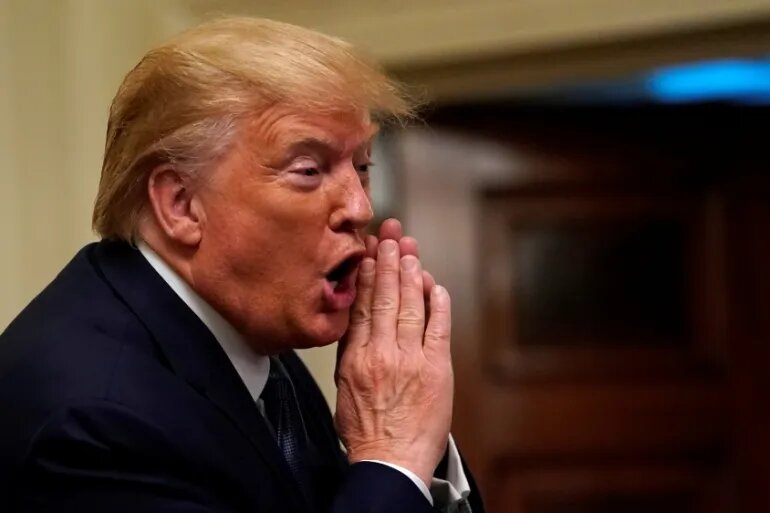
However, Trump is now trying to present the end of the war as the result of the success of the maximum pressure policy. This approach is not new to him, of course. Trump has for years distinguished between “reality on the ground” and “media narrative,” and in many cases prefers to replace operational failures with propaganda victories. For him, controlling the narrative is sometimes more important than controlling the outcome.
Examples of this behavior have been seen in the past. From America’s hasty withdrawal from some foreign crises to the downing of an American drone in the Persian Gulf, Trump has always tried to impose his desired narrative on reality. The same pattern was repeated in the recent war: wherever a goal was not achieved, with a wave of interviews, speeches and media claims, an attempt was made to direct public opinion towards a “sense of victory”.
But the problem with this approach is that narrative does not replace reality. It may influence public opinion for a while, but in the long run, it is the objective results that will be judged. If the goal was regime change and that did not happen, if the goal was complete surrender and that did not happen, and if the goal was to destroy Iran’s ability to resist and the other side continues to have an effective presence in regional equations, then claiming victory is nothing more than an attempt to cover up the consequences of defeat.
More importantly, the recent war has once again exposed the limits of American power in asymmetric warfare. The United States remains the world’s greatest military power, but the experiences of the past two decades—from Afghanistan and Iraq to the present—have shown that military superiority does not necessarily translate into political achievement. Infrastructure can be targeted, damage can be done, but you cannot destroy a country’s political will simply by bombing it.
In contrast, Iran demonstrated a precise understanding of the logic of asymmetric warfare: a combination of military power, regional capacity, economic means, and a war of wills. It was this combination that prevented the war from becoming Washington’s preferred scenario. Even some Western analysts have acknowledged in recent days that the United States failed to achieve its maximum goals in this war and is now seeking to manage a dignified exit from the crisis rather than talk about “complete victory.”
In such circumstances, confronting Trump’s narrative should not be emotional or rhetorical. The best response is to keep returning to the same simple and fundamental question: “What exactly did America aim for, and which of those aims were achieved?” This question cuts through all the propaganda hype and brings the debate down to the ground of reality.
Trump may be able to celebrate defeat for a while, but history usually doesn’t judge by speeches; it judges by results. The forty-day war against Iran exposed, more than anything else, the gap between the “narrative of power” and the “reality of power.” And perhaps that is why today, more than Iran needs to prove victory, it is Trump who has to parade defeat in the garb of victory.
MNA