Reopening of the Strait of Hormuz after the US withdrawal
Mohsen Pak Aein
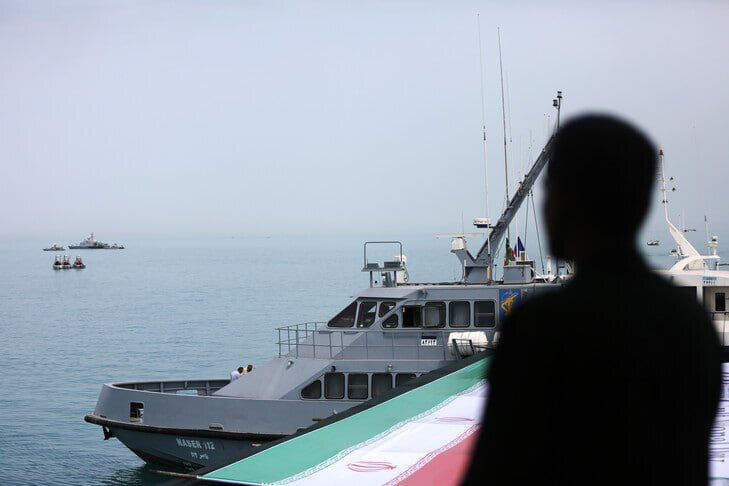
The new US invasion of the Islamic Republic of Iran, which led to the insecurity of the Strait of Hormuz and ultimately its blockage, occurred while the strait was open to non-belligerent countries due to the intelligent management of the Islamic Revolutionary Guards Corps Navy.
Under this management, about 30 to 40 oil and commercial ships passed through the Strait of Hormuz safely every day, and economic interactions between countries were carried out normally and safely.
The new invasion of the terrorist army of CENTCOM, under the pretext of the downing of an Apache helicopter, became an excuse to violate Iran’s territorial sovereignty and make the Strait of Hormuz insecure and completely block it. Regardless of why and how the US spy helicopter crashed, the question remains: with what authorization did this helicopter fly within Iran’s territorial sovereignty and which international law permits this action?
The presence of this helicopter in Iranian territorial airspace is considered a violation of the territorial integrity of an independent country from the perspective of international laws and standards, and the US military should have been punished for this illegal act. At the same time, the CENTCOM command has not yet provided evidence of Iran’s attack on the Apache helicopter and has said that the investigation in this regard is ongoing.
The statements of US Secretary of War Pete Hegsett clearly show that the new US attack on Iran was not carried out because of the downing of the American helicopter, but to obtain diplomatic concessions and secure US interests. Before the start of this attack, he claimed that “tonight’s attacks will strengthen the diplomatic position and secure the interests of the US military.” These statements make it clear that the US intends to divert world public opinion from its role in destabilizing the Strait of Hormuz by making false claims.
Today, the world knows very well that the Strait of Hormuz was open and ships passed through it normally before the start of the 40-day war. In fact, the US aggression on Iran caused insecurity in this waterway and its blockage.
However, until the insecurity factor in the Strait of Hormuz, namely the US, is completely eliminated, the blockage of this strait should continue, and after the withdrawal of US military forces, which are the main cause of insecurity, ships should continue to pass through this strait.
Naturally, this decision by Iran, if made, will have a strong logic and deterrent nature and will be implemented in response to Washington’s attacks and pressures. If America wants to know the reason for the blockage of the Strait of Hormuz, it must look at its own performance and, by withdrawing from the region, pave the way for creating security and opening the Strait of Hormuz.
There is no doubt that the Iranian Armed Forces, in support of the demands of the nation, will always be on the Iranian stage, vigorously defend national interests and will not allow traffic in the Strait of Hormuz to return to normal under American military and media pressure.
MNA