Farmers’ organisations say monkey and wild animal attacks remain a major obstacle to crop diversification in Telangana. While commercial and horticultural crops offer opportunities, recurring crop damage and the high cost of solar fencing continue to push cultivators towards paddy cultivation.
Published Date – 10 June 2026, 03:28 PM
Hyderabad: Even as the Congress government is stepping up efforts to promote crop diversification in Telangana, farmers’ oragnisaitons say damage caused by monkeys and wild animals remains one of the major obstacles in shifting away from paddy cultivation.
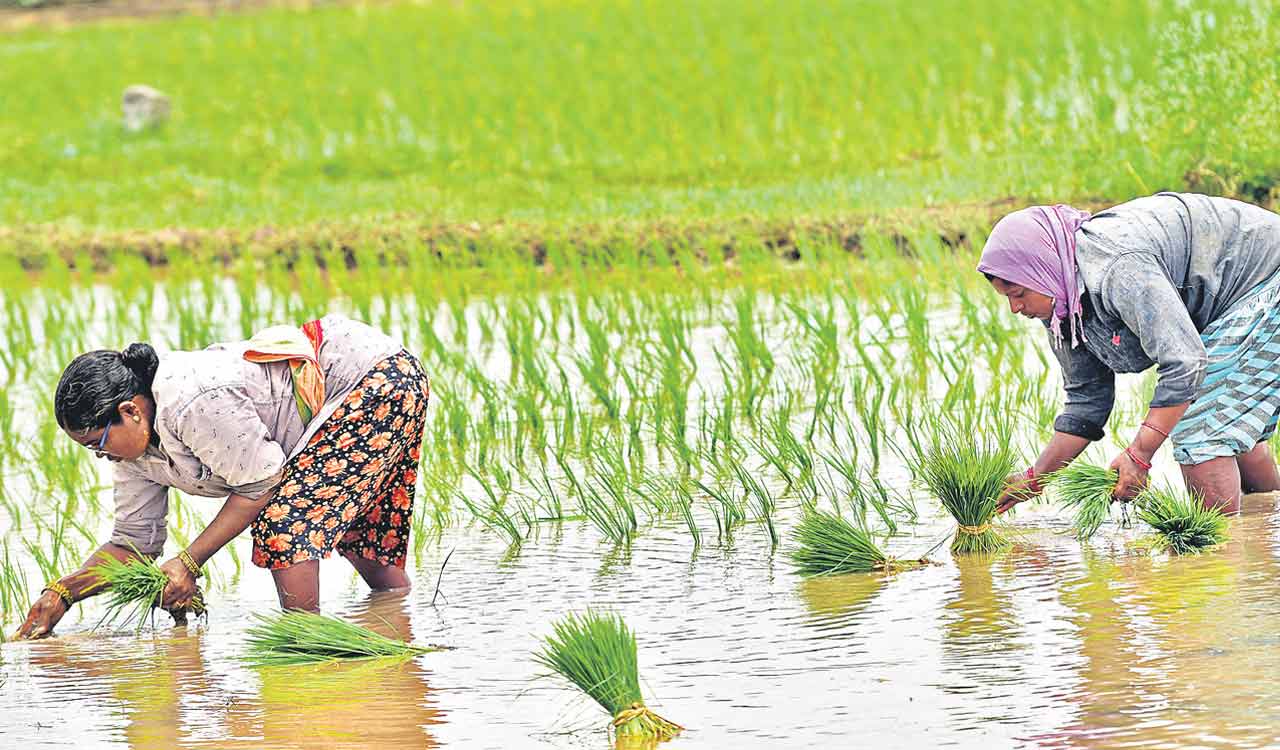
Farmers continue to prefer paddy because of its relatively lower input costs, lesser labour, assured procurement, Minimum Support Price (MSP) and the bonus announced by the State government.
Cultivation of commercial, horticultural and vegetable crops presents several challenges. Among the biggest concerns is the threat posed by monkeys and wild animals.
Farmers growing groundnut, vegetables, fruits and other crops often suffer losses due to raids by monkeys, wild boars, peacocks and spotted deer, which damage standing crops, said Rythu Swarajya Vedika leader Kanneganti Ravi.
Some farmers have installed solar fencing to protect their fields and reported positive results. However, the high installation cost remains a deterrent. Setting up solar fencing costs around Rs.35,000 per acre, making it unaffordable for many farmers.
Rythu Swarajya Vedika and several NGOs approached companies to support farmers through Corporate Social Responsibility (CSR) initiatives.
As part of these efforts, around 10 to 15 farmers in Turkapally of Yadadri Bhuvanagiri district installed solar fencing with financial assistance.
“If the government is serious about crop diversification, it should help farmers install solar fencing through subsidies to protect their fields,” Ravi said. He suggested that the government launch a pilot project in selected areas before expanding the initiative.
The financial burden is even greater for tenant farmers. Apart from cultivation expenses, they have to bear rising lease costs. According to the Tenant Farmers Recognition Struggle Committee, lease rates have increased sharply and have touched Rs.53,000 per acre in some cases. The average lease rate stands at Rs.14,936 per acre.
The report noted that shrinking returns have forced many small tenant farmers to lease larger extents of land to make farming economically viable.
Farmers also point out that unlike paddy, many commercial and horticultural crops are more vulnerable to heavy rainfall. Combined with crop damage caused by animals, these risks continue to push cultivators towards paddy.
Despite repeated complaints to gram panchayats and forest officials about the monkey menace and wild animal incursions, farmers say little action has been taken.
Forest officials charge between Rs.500 and Rs.1,000 to capture and relocate a monkey. However, many gram panchayats are unable to undertake such measures because of limited funds.