
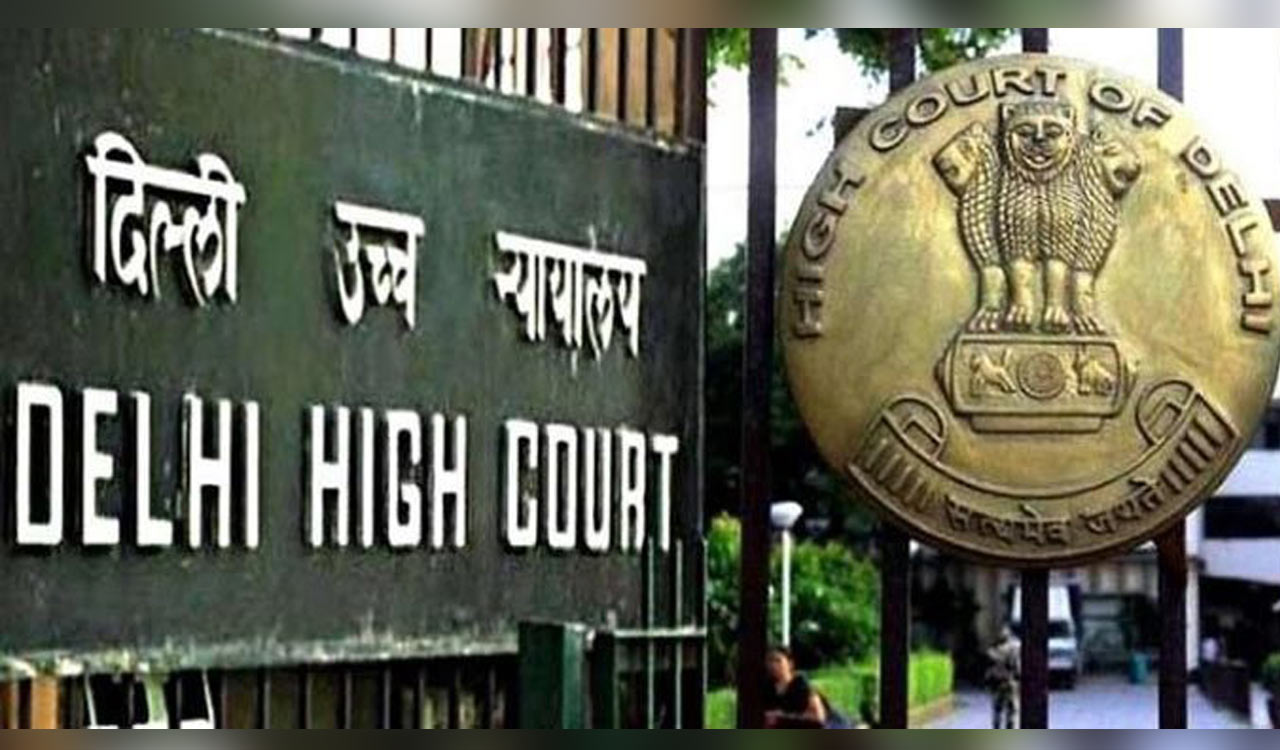
The Delhi High Court declined to order a re-poll in the Bar Council of Delhi elections despite ballot-tampering allegations. The court directed resumption of vote counting with enhanced transparency measures, including videography, live-streaming and scrutiny of doubtful ballots
Published Date – 6 June 2026, 07:48 PM
New Delhi: The Delhi High Court on Saturday refused to direct re-polling for the Bar Council of Delhi elections, stating that the electoral process was not vitiated by the alleged manipulation of ballot papers. Several lawyers had filed petitions seeking re-polling on the grounds that an admitted instance of ballot-tampering by a member of the counting staff on April 15 had invalidated the entire election.
Ordering the recommencement of vote counting, a bench of justices Anil Kshetarpal and Tejas Karia observed that a fresh poll was not warranted because the manipulated ballot papers had been identified during the counting process, which must now be dealt according to the BCD rules and the BCI guidelines.
The court stated that ballot papers bearing “erasures, overwriting, corrections, additions, or other suspicious variations” shall be segregated, kept in sealed bundles or packets marked as ‘doubtful ballots’, and be placed before the Additional Solicitor General in the special committee constituted to conduct the elections, who shall decide how they are to be counted and record brief reasons.
“This procedure shall ensure that effect is given to the voter’s intention without causing prejudice to any candidate. It also obviates the need for a repoll and avoids the substantial expense of conducting the BCD Election afresh, since the alleged manipulation does not go to the root of the electoral process, the manner of dealing with such an eventuality being already provided for in the BCD Rules read with the BCI Guidelines,” the court said.
“We, therefore, do not consider it appropriate to direct a re-poll for the BCD Election, as the incident of manipulation of ballot papers did not vitiate the electoral process in its entirety. We, accordingly, uphold the Impugned Order insofar as it declined the prayer for a re-poll or annulment of the BCD Election,” concluded the court.
The elections were held in the high court premises on February 21- 23, in which 221 candidates contested for 23 posts under the preferential voting system.
On April 15, a counting staff member was however allegedly found altering voter preferences on certain ballot papers, which led to the counting being halted and an FIR being registered.
In the judgement, the court rejected the petitioners’ contention that the counting of first-preference votes had also been vitiated, holding that there was no real possibility of tampering during the counting of first-preference votes.
It stated that although ballot paper manipulation was discovered, it did not affect the counting of first-preference votes because the returning officer and the election committee took immediate and appropriate action on April 15 itself.
To ensure the transparency, purity, and sanctity of the BCD election process, the court nonetheless directed the installation of a high-resolution camera above or at the top of the counting table to ensure that each ballot paper is captured in full and with clarity.
The court clarified that the entire counting process shall be continuously videographed and live-streamed to at the display provided on the sixth floor of the high court’s S block as well as through YouTube and the High Loop app.
It also directed that the returning officer will declare the date and time of counting recommencement at least 24 hours in advance, and all ballot papers kept in open baskets shall be transferred to lockable boxes or bags and be locked during every break and at the close of each counting day.
“The counting of the votes for BCD election shall recommence from the stage it has stopped pursuant to the interim order passed by the Hon’ble Supreme Court on 18.05.2026. Counting shall recommence as soon as the CCTV and Hi-resolution cameras, lockable boxes, and counting staff are in place and shall be endeavoured to be completed expeditiously,” the court ordered.
“A complete digital recording of the counting process shall be preserved in its original form on a backup storage device, and shall not be overwritten, altered, or destroyed until expiry of the limitation period for filing an election petition before the election tribunal,” it added.