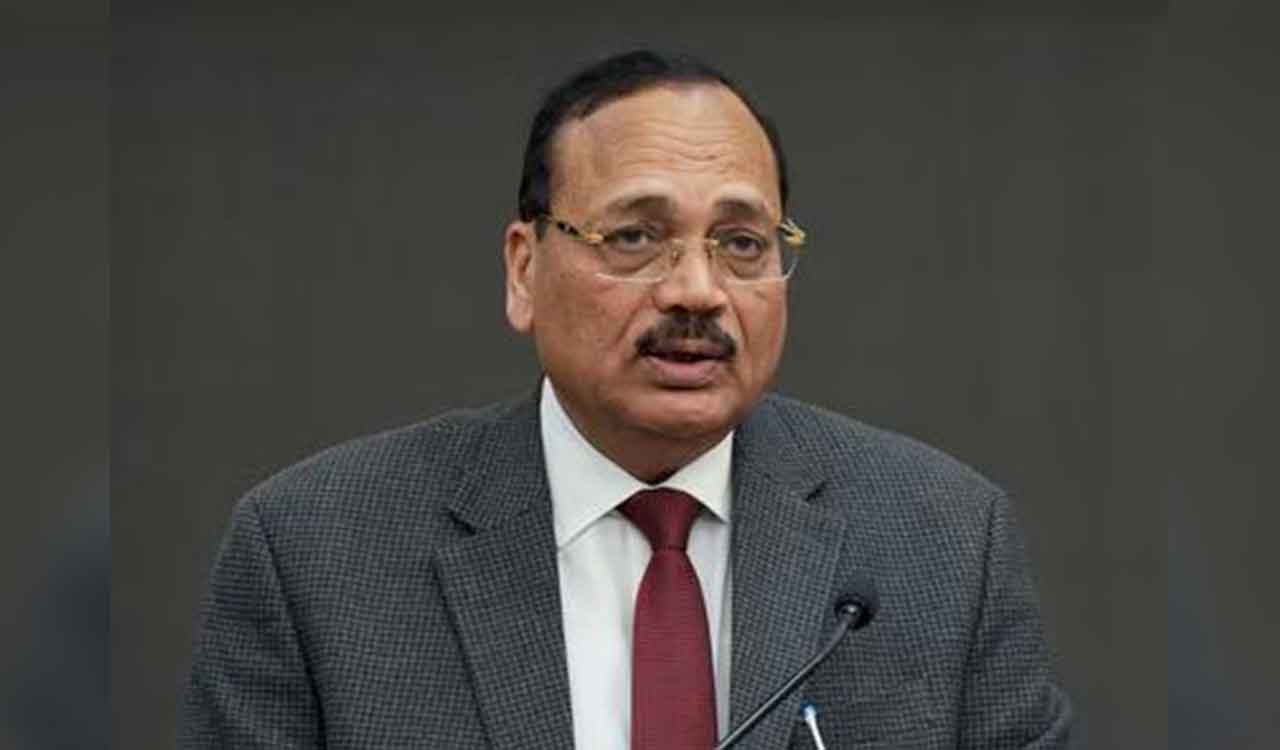
Chief Justice of India Surya Kant said the India-UK Free Trade Agreement marks a historic milestone, urging both nations to jointly strengthen arbitration and mediation systems. He stressed accessible, efficient dispute resolution mechanisms to boost investor confidence, trade growth, and deeper economic cooperation
Published Date – 5 June 2026, 09:01 PM
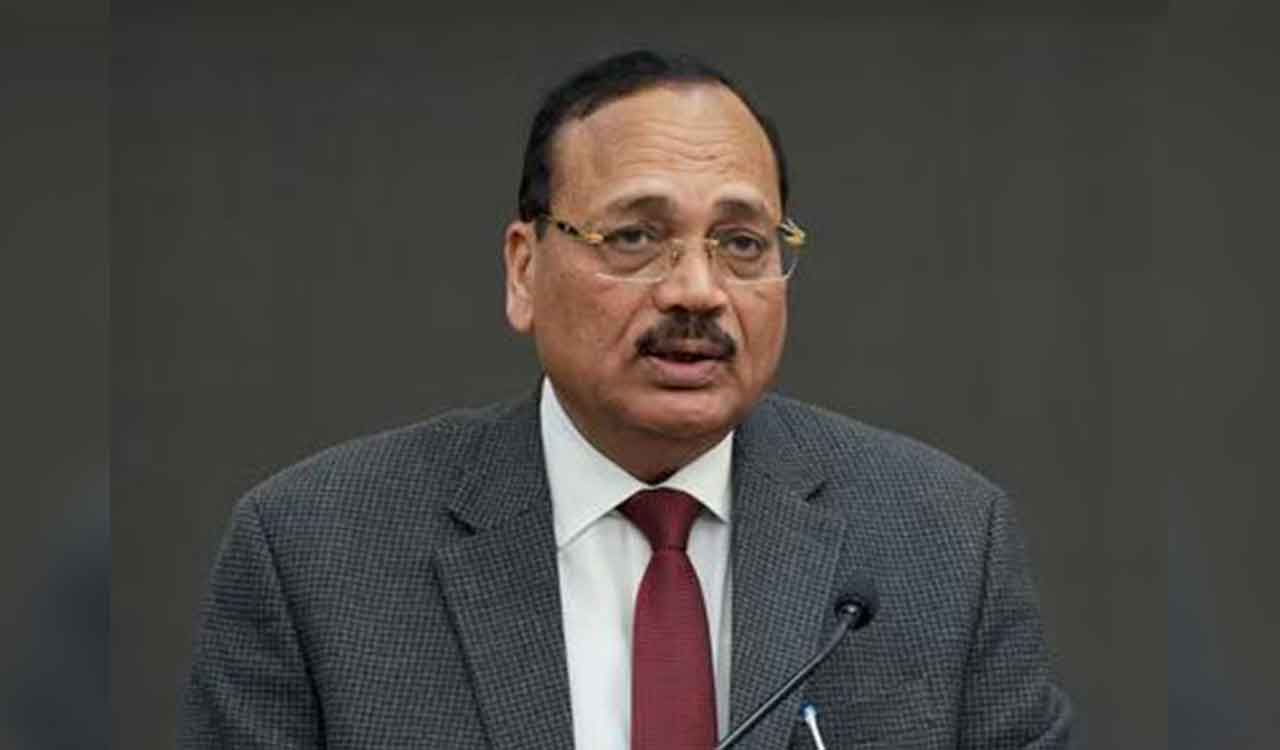
London: The India-UK Free Trade Agreement (FTA) is a “historic moment” for both nations that provides the commercial impetus for co-creation in the arena of mediation and arbitration, Chief Justice of India (CJI) Surya Kant said in London on Friday.
Delivering the inaugural address at the Indian Council of Arbitration’s (ICA) international conference on ‘Alternative Dispute Resolution (ADR) as a Catalyst for Strengthening India-UK Economic Partnership’, CJI Kant called for ensuring a level playing field and procedures proportionate to the value and urgency of disputes.
He highlighted that as both economies work towards a deeper commercial partnership, confidence in dispute resolution mechanisms is equally important.
“Just last year, the India-UK Free Trade Agreement was concluded, which was an unquestionable historic moment for both nations, because at a time when international trade discourse is marked by strain and uncertainty, India and the UK showed the world a better way forward,” said CJI Kant.
“We meet at a very significant moment in the relationship between India and the United Kingdom. Ours are two common law descriptions with a long legal conversation between them. They are also two economies seeking to give fuller meaning to a deeper commercial partnership.” “This significant endeavour requires confidence that when disagreements arise, they will be resolved fairly, efficiently and with respect for commercial realities,” he said.
The CJI noted that the FTA, which is in the process of being implemented in the coming months, has created the “commercial impetus” for developments across two sophisticated common law jurisdictions to cohere.
“What is needed now is not comparison, but co-creation. The task is to design together an ADR corridor in which both systems lend each other credibility, talent and standards, ultimately building something neither could build alone,” he said.
Kant drew parallels between modern arbitration mechanisms and India’s ancient panchayat system, which placed trust in elders to resolve commercial disputes.
“In principle, I would say, justice is most legitimate when it is chosen freely, delivered by someone who understands your world and proportionate to what is actually at stake. Arbitration is simply what happens when you take this instinct and give it a framework,” he said.
The CJI said the commercial reality of the FTA demands an arbitration mediation protocol that preserves commercial relationships, a joint institutional framework that builds shared arbitration panels, and digital platforms that make these mechanisms accessible to businesses of every scale.
“This is where co-creation must begin,” he said, flagging concrete steps towards achieving that goal. He suggested a joint India-UK arbitrator accreditation and training programme to build a shared pool of practitioners, an affordable institutional arbitration framework platform, and connecting arbitration with mediation through openly designed hiring protocols.
“We must ensure that arbitration is not a privilege of scale, but an instrument of justice,” he said. The fourth edition of the ICA international conference in London brought together jurists from across India and the UK over sessions that explored hybrid ADR ecosystems for complex Indo-UK disputes beyond silos and the role of ADR in cross-border trade and investment.
While India’s Deputy High Commissioner to the UK, Kartik Pande, highlighted the “strength, maturity, and growing strategic importance” of the India-UK partnership, ICA Director General Arun Chawla highlighted efforts across both nations towards “certainty in rules, certainty in institutions, certainty in enforcement, and above all certainty in dispute resolution”.