The impunity enjoyed by great powers is one of the gravest crises facing the contemporary international order. It is a crisis that not only sacrifices justice but actively clears the path for the repetition of wars, aggressions, and new human catastrophes. Every time a powerful state wages war, carries out an occupation, or kills civilians without paying any political or legal price, the message sent to the world is that international rules were written only for weak countries, while powerful actors are free to operate above the law. The result of such a condition is nothing other than the weakening of the global order, the spread of instability, and the perpetuation of human tragedy.
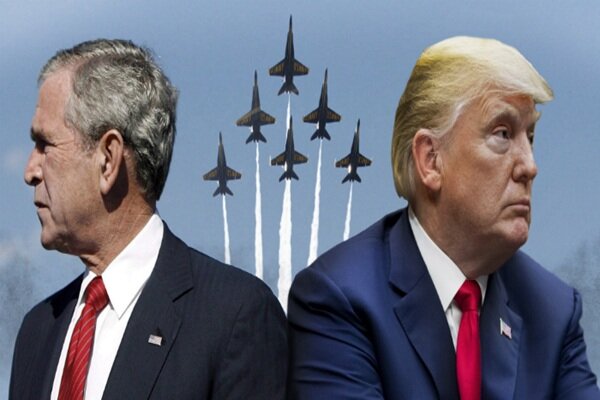
Within this framework, the American publication Current Affairs has drawn, in a rare and sharply critical report, a direct connection between the impunity of American leaders and the subsequent occurrence of human catastrophes. The report’s author, citing the deadly strike on a school in Minab and the deaths of innocent students, argues that had the architects of the Iraq War, including George W. Bush and other American officials, faced prosecution for violations of international law and war crimes, we might not be witnessing the repetition of such tragedies today.
At first glance, this argument may appear hypothetical, but it rests on one of the most well-established principles in political science and international law: deterrence. Just as punishing criminals at the domestic level can prevent others from committing crimes, holding political leaders and wartime decision-makers accountable can reduce the likelihood of future wars and atrocities. When a political official knows that, after leaving power, they may have to answer before international tribunals, they will exercise far greater caution in making costly and high-risk military decisions.
The experience of the past two decades, however, shows that this principle has rarely been applied to great powers. The 2003 invasion of Iraq by the United States and its allies stands as one of the clearest illustrations of this failure. The war was launched on the pretext of weapons of mass destruction, a claim that was later shown to have had no basis in fact. The war resulted in the deaths of hundreds of thousands of people, the destruction of a country’s infrastructure, the rise of extremist groups, and the beginning of a prolonged period of regional instability. Despite these catastrophic consequences, none of the principal architects of the Iraq War ever faced accountability before an international court.
This absence of accountability has gradually produced a culture of impunity. In such an environment, political leaders reach the conclusion that even if their decisions lead to the deaths of thousands of civilians, the likelihood of facing legal consequences is negligible. In other words, the cost of war for decision-makers is far lower than the cost borne by ordinary people and victims.
Drawing on exactly this logic, the Current Affairs report calls for the prosecution of officials in Donald Trump’s administration for their role in military operations against Iran. The author argues that if the international legal system wishes to preserve its credibility, it cannot apply different standards to different countries and leaders. In his view, international law has meaning only when it is enforced uniformly for all actors, regardless of their political or military power.
This points to one of the great contradictions of today’s international order. Many Western countries present themselves as defenders of human rights and the rule of law, and have repeatedly called for the prosecution of leaders from other nations. Yet when their own conduct comes under scrutiny, legal and political mechanisms operate in ways that preclude genuine accountability. This double standard has eroded global trust in international institutions and led many countries to view those institutions as political tools for pressuring rivals rather than impartial arbiters of justice.
The core problem, in fact, is not merely the occurrence of any single war or strike. It is the long-term consequences of leaving such actions unpunished. When a war ends without accountability, the assumption takes hold that the use of force can be a legitimate and low-cost instrument for advancing political objectives. Over time, this mindset lays the groundwork for new crises and perpetuates the cycle of violence.
Numerous historical examples confirm this reality. After World War Two, the Nuremberg and Tokyo trials were conducted not only to punish those responsible for war crimes, but to pursue an equally important goal: sending the message that no political or military official stands above the law. While those trials were not without their critics, they at least established the principle of accountability as one of the pillars of the international order.
In subsequent decades, however, the application of that principle was heavily distorted by power considerations. In many cases, leaders of weak or defeated states were prosecuted while the leaders of great powers remained entirely shielded from judicial accountability. This double standard has called into question the very rationale for international justice.
The attack on the school in Minab and the subsequent deaths of its students are not simply a tragic incident in one particular location. It is a symbol of the global consequences of a system in which power has prevailed over law. When legal rules fail to protect civilians, and those who carry out massacres act with confidence in their own impunity, the primary victims will always be children, women, and ordinary people who played no part whatsoever in the political and military decisions made on their behalf.
From this perspective, the phrase “the girls of Minab would be alive if Bush had been tried” points to a bitter truth. Had the international community acted with greater resolve in response to past wars, had the perpetrators of aggressions and war crimes been prosecuted regardless of their nationality and power, had international law become a genuine instrument for delivering justice, many of today’s catastrophes might never have occurred.
Accountability alone cannot eliminate war from the world, but it is without doubt one of the most important tools for preventing its recurrence. Justice has meaning only when it applies equally to all. If the leaders of powerful states know they will be held accountable for their actions in the same way as the leaders of smaller countries, their political calculations will change, and the likelihood of resorting to military options will diminish.
Today more than ever, the credibility of the international legal order is bound up with a single question: will the law be applied equally to all, or will it not? If the answer is no, the world will face the continued risk of an unbroken cycle of wars, crises, and new massacres. But if the principle of accountability is enforced without discrimination, there may be grounds to hope that tragedies like the one that unfolded in Minab will not be repeated.
MNA