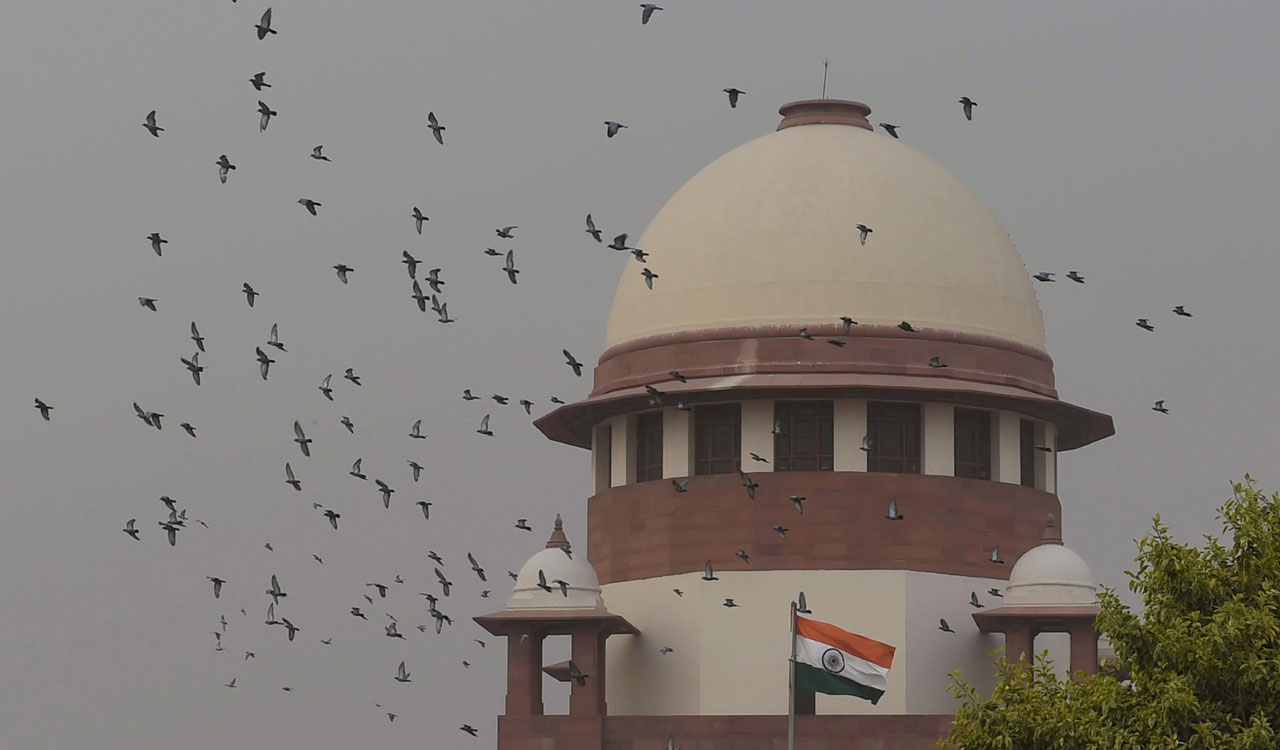
The Supreme Court said it will wait for a nine-judge Constitution Bench ruling on gender discrimination in religious practices before deciding a Parsi woman’s plea challenging a rule that bars women marrying outside the community from accessing religious institutions
Published Date – 30 May 2026, 03:42 PM
New Delhi: The Supreme Court has said that it will await outcome of a nine-judge constitution bench judgement to decide a plea seeking a direction to Nagpur Parsi Panchayat that it must treat a Parsi woman equally with her male counterparts even after she marries a person of another faith.
A bench comprising Chief Justice Surya Kant and Justices Joymalya Bagchi and Vipul M Pancholi made the observation while hearing a plea by Dina Budhraja, a Parsi woman who married a Hindu man without changing her faith, sought a direction that she be allowed to attend the prayers at the Nagpur agiary on demise of her near and dear ones.
Budhraja was denied entry to an agiary (Zoroastrian fire temple) for her grandmother’s funeral in 2024. A nine-judge bench had recently reserved its verdict on a larger question related to alleged discrimination against women across religions, including Sabarimala temple, and asked Divan to wait for the outcome.
On March 23, the bench had decided to examine a significant constitutional challenge involving gender discrimination within religious personal laws, questioning whether a Parsi woman can be stripped of her religious identity following the inter-faith marriage.
The top court issued notices to the Centre, Nagpur Parsi Panchayat, the Ministry of Minority Affairs, the Maharashtra government, and the Charity Commissioner on the plea filed by Budhraja. The plea, filed through lawyer Rohit Anil Rathi, had sought “a direction to strike down Rule 5(2) of the constitution of the Nagpur Parsi Panchayat being violative of the Constitution of India” as it discriminates against women.
It also sought a declaration from Nagpur Parsi Panchayat that it “must treat Parsi men and Parsi women equally and that a Parsi woman continues to be a Parsi even after she marries a man of another faith”. It also sought a declaration that the petitioner and other Parsi women like her are entitled to the same treatment as is given to Parsi men who marry a woman of another faith.
“During pendency of the instant petition, kindly permit the petitioner to regularly enter the Nagpur Agiary and offer her prayers and also permit the petitioner to attend the prayers at the Nagpur Agiary on demise of her near and dear ones as well as the periodic Muktad prayers of her near and dear ones,” it said.
The petition, filed under Article 32, said that the rule is discriminatory and violates Article 14 (equality before law), Article 21 (right to life and dignity), and Article 25 (freedom of religion) of the Constitution.
The Rule 5(2) of the constitution of the Nagpur Parsi Panchayat allegedly strips Parsi women of their religious identity and access to religious institutions such as the agiary (fire temple) upon marrying a non-Parsi. The rule, though, does not apply the same sanctions to Parsi men who marry outside the community.