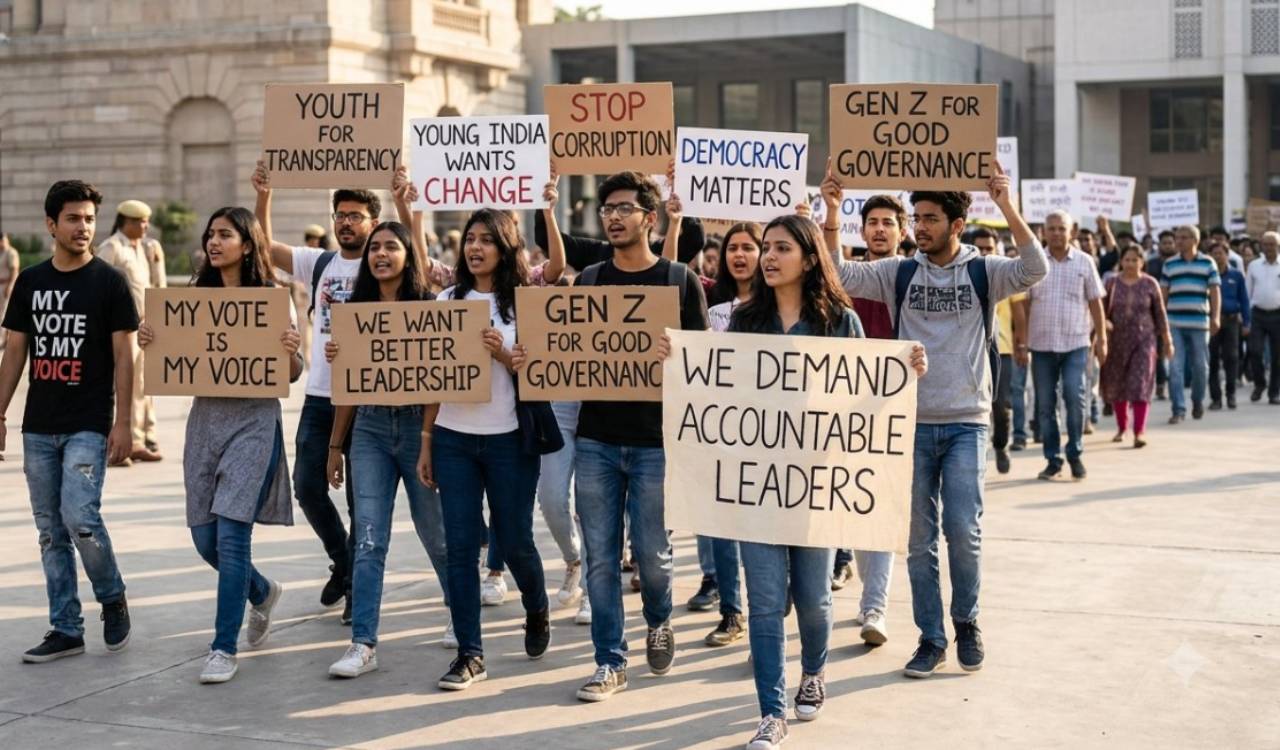
The viral Cockroach Janata Party movement is emerging as a satirical yet sharp commentary on unemployment, burnout and youth frustration in India. Through memes, slogans and humour, the online trend reflects the emotional exhaustion faced by educated youngsters struggling with job insecurity and endless competition
Published Date – 24 May 2026, 08:24 PM
Hyderabad: While most women scream at the very sight of it, even the bravest men recoil in disgust. Now, this tiny harmless insect seems to be giving creeps to the government. The crackdown on cockroaches says it all.
Why is the government so unnerved by this insect uprising? The coming together of unemployed youth, in this case cockroaches, is sending shivers down the spines of the powers-that-be.
The political class may laugh it off as another social media fad. Serious commentators may dismiss it as peak internet absurdity. But somewhere between memes, mockery and mass frustration, a strange digital uprising has crawled out of the woodwork. Its mascot is neither the lion, cycle, lotus, hand nor broom. It is the humble cockroach.
India’s newest online phenomenon, the Cockroach Janata Party (CJP), is multiplying faster than election-time WhatsApp forwards. What began as satire has now evolved into sharp social commentary on unemployment, burnout and the growing despair among educated youth.
The movement reportedly gathered momentum after a controversial judicial remark on unemployment triggered heated debates online. Thousands of youngsters, already exhausted by competitive exams, job rejections and uncertainty, responded not with anger alone but with sarcasm, India’s most effective coping mechanism.
Soon, memes flooded social media. One compared unemployed youth to cockroaches: unwanted, underestimated, yet impossible to eliminate. Another showed cockroaches surviving layoffs, inflation, entrance exams and relentless family pressure.
Enter Abhijeet Dipke, CJP founder, proudly describing it as “the voice of the lazy and unemployed.” Whether satire, performance art or accidental political genius, the idea struck a nerve.
The party’s anthem quickly went viral:
“Cockroach kabhi marta nahin,
Cockroach ki jeet hogi!”
The slogan resonated because the cockroach symbolises survival. It survives slippers, sprays, kitchen assaults and even nuclear jokes. Much like India’s unemployed graduates preparing endlessly for competitive exams while relatives continue asking, “Beta, settled kab ho rahe ho?”
Social media soon exploded with AI-generated campaign posters, parody speeches and motivational reels featuring triumphant cockroaches marching over rejected job applications. The movement’s unofficial slogan summed up an entire generation’s frustration:
“We have degrees, no jobs, only dreams.”
Unlike traditional parties promising bullet trains, trillion-dollar economies and superpower status, CJP offers something refreshingly honest: recognition of exhaustion. Its supporters include students trapped in endless exam cycles, corporate employees surviving toxic workplaces and hostel residents who jokingly claim cockroaches were always their most loyal roommates.
The party’s five-point manifesto may sound ridiculous, but the underlying humour is unmistakable. And this is precisely why the movement is gaining traction.
For decades, politics glorified hustle culture, ambition and nonstop productivity. CJP celebrates burnout, procrastination and simple survival. It reassures exhausted youngsters that surviving another failed interview or awkward family gathering is itself an achievement.
One viral slogan reads:
“Rozgaar nahin mila? Tension nahin lena. Cockroach bano. Zinda raho.”
Another says:
“Neither left nor right. We only crawl forward.”
Critics accuse the movement of glorifying laziness. Supporters argue that after filling hundreds of application forms, writing multiple exams and hearing “position already filled,” exhaustion is not laziness but a national condition.
Even marketing experts are fascinated. DJs are remixing the anthem. Meme pages are flooded with cockroach imagery. Some supporters have even designed mock “CJP survival kits” containing coffee sachets, phone chargers and rejection letters.
The CJP may never contest elections. It may never hold rallies or open district offices. Yet it has already achieved something remarkable: transforming online despair into collective humour and turning joblessness into a shared social identity.
Political parties would do well not to dismiss this insect revolution lightly. History has repeatedly shown that satire often emerges where frustration finds no proper outlet.
Because once memes become movements, they stop being harmless jokes.
Just ask the cockroach. It survives everything.