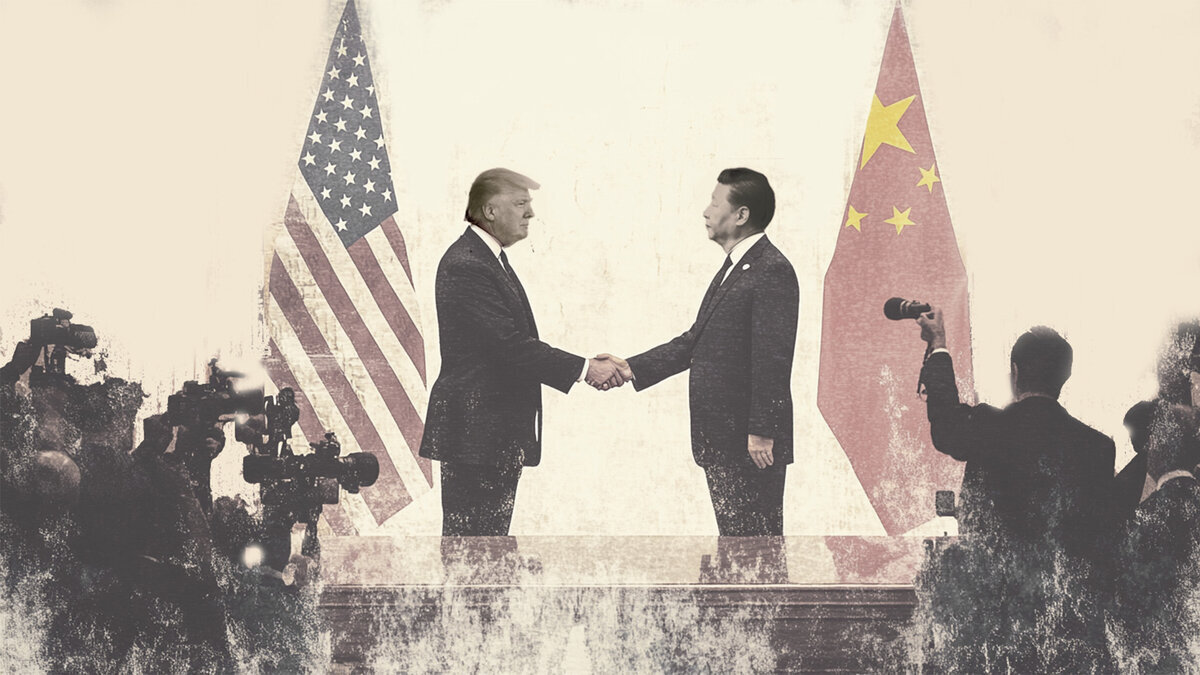
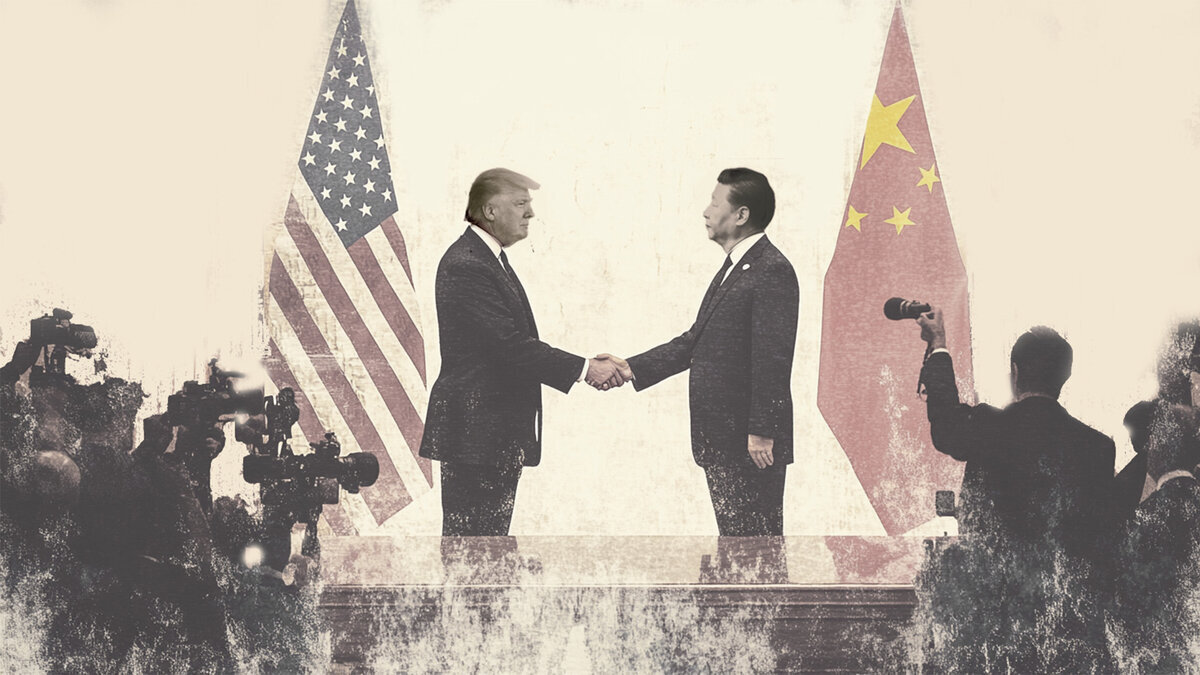
As Donald Trump travels to Beijing for a high-stakes meeting with Chinese President Xi Jinping, the war with Iran appears to be casting the longest shadow over the encounter. While the official agenda centers on trade, technology, investment, and tariffs, analyses published by the Wall Street Journal and the Guardian suggest that escalating tensions in the Middle East have permeated virtually every dimension of the U.S.-China relationship.
In a detailed report by Wall Street Journal writers and international affairs analysts Annie Linskey, Alexander Ward, and Gavin Bade, Trump is described as entering the summit from a position of political weakness — a weakness largely attributed to the war with Iran. According to the report, the conflict has disrupted global energy markets, contributed to the closure of the Strait of Hormuz, and strained Washington’s regional alliances.
The Journal reports that the U.S. administration is hoping China will use its leverage over Iran to push for an agreement that ends the war and restores stability to global oil flows. Trump is expected to ask Beijing to deploy its influence over Tehran — leverage that is considerable, given China’s deep economic ties with Iran and its heavy dependence on Iranian oil.
Diverging Calculations — and a Crisis of Trust
China’s calculations, however, differ markedly from Washington’s. Xi Jinping also wants the conflict to end, but his primary motivation is protecting China’s energy security and preserving the stability of its export-driven economy. Analysts cited in the Journal reveal that Xi views the crisis as an opportunity to present himself as a global statesman capable of de-escalating international tensions — at a moment when the United States appears exhausted and diplomatically isolated.
The paper notes that the summit is taking place against a backdrop of profound strategic mistrust between the two sides. Trump is expected to raise the issue of China’s alleged support for Iran and Russia — including accusations that Chinese companies provided satellite imagery that aided Iranian military operations. The U.S. State Department recently sanctioned four Chinese firms over these activities.
Beijing, for its part, has visibly deepened its ties with Tehran in the lead-up to the summit. China hosted Iranian Foreign Minister Abbas Araghchi just before the meeting — a move widely read as a signal that Beijing intends to maintain its relationship with Tehran regardless of American pressure.
In a separate editorial, the Wall Street Journal’s board warned that the summit’s greatest strategic risk may not concern Iran at all, but rather the possibility that Trump — in pursuit of a diplomatic win — could offer concessions on other fronts, most notably Taiwan. The paper cautioned that Xi may seek to press Washington into softening its traditional position on Taiwanese independence, or weakening its commitments to Taipei, in exchange for Chinese cooperation on Iran and trade.
The WSJ further warned that any diplomatic opening with Beijing risks strengthening a long-term strategic rival, and pointed to growing concerns in Washington over China’s efforts to access advanced artificial intelligence technologies and rare earth materials.
The central question the article poses is whether Trump’s reliance on personal diplomacy and direct deal-making risks undermining decades of US strategic policy in Asia. Its conclusion: Xi Jinping is playing a long game — one aimed at gradually displacing the United States from its position as the world’s dominant power.
The Limits of American Power
The Guardian offers a sharper assessment. In a column by international affairs writer Simon Tisdall, the war with Iran is framed as having exposed the limits of American power while simultaneously strengthening China’s international standing.
Tisdall argues bluntly that Trump needs Xi more than Xi needs Trump. China, he writes, holds significant leverage over any future settlement — both through its influence over Iran and its role as Tehran’s largest oil importer. The war has also forced the United States to redirect military resources from Asia to the Middle East, weakening American deterrence capacity across the Indo-Pacific.
Tisdall suggests Xi may use Trump’s political vulnerabilities to press for a reduction in US support for Taiwan. He frames the summit as part of a broader geopolitical shift in which American credibility is declining while China positions itself as a guarantor of international stability and order.
The Guardian piece also underscores the economic dimension of the conflict. Elevated oil prices, disruptions to global shipping lanes, and inflationary pressures are weighing on economies worldwide — China’s included. Beijing, therefore, seeks stability in the Persian Gulf region, but without direct military entanglement.
All three analyses converge on a single conclusion: the war against Iran has transformed the U.S.-China summit into a broader test of global power and influence. Trump will arrive in Beijing seeking a way out of a costly conflict that has weakened him at home and destabilized the international economy. Xi Jinping, by contrast, enters the meeting from a position of relative strength — positioned to leverage Washington’s difficulties to expand China’s diplomatic influence, while preserving its strategic partnership with Iran.
MNA