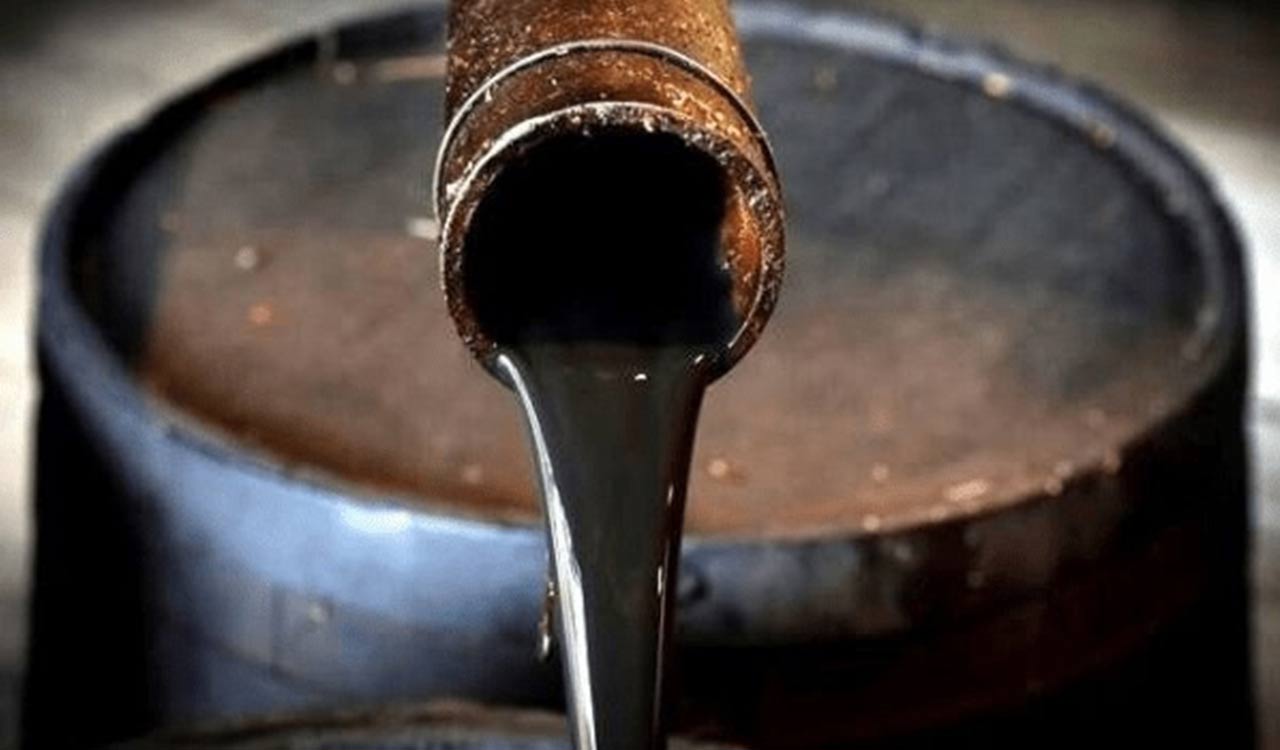
Crude oil futures rose nearly 2 per cent to Rs 9,821 per barrel on MCX amid ongoing geopolitical tensions and supply concerns linked to US-Iran developments. Analysts said uncertainty around the Strait of Hormuz continues to keep global oil prices volatile
Published Date – 4 May 2026, 05:04 PM
New Delhi: Crude oil prices rose nearly 2 per cent to Rs 9,821 in futures trade on Monday, tracking firm global benchmarks as traders weighed supply risks tied to US-Iran tensions and their impact on global supply.
On the Multi Commodity Exchange, crude oil for May delivery increased by Rs 156, or 1.61 per cent, to Rs 9,821 per barrel in a business turnover of 16,361 lots.
Gaurav Garg said crude oil prices hovered around Rs 9,800 per barrel on Monday as traders assessed developments in US-Iran tensions and potential supply stability, though prices remained elevated overall.
In the international market, Brent oil for the July contract gained 1.53 per cent to USD 109.82 per barrel, while West Texas Intermediate (WTI) rose 1 per cent to USD 102.89 a barrel in New York.
Kaynat Chainwala said WTI and Brent crude edged higher on Monday towards USD 105 and USD 111 per barrel respectively, as markets balanced tentative diplomatic progress against ongoing operational tensions in the Strait of Hormuz.
Both benchmarks remained below last week’s four-year highs, with the pullback reflecting cautious optimism around Iran’s revised 14-point proposal and remarks from US President Donald Trump indicating talks are progressing, albeit with key disagreements unresolved, she added.
Tehran is pushing for sanctions relief, US withdrawal and security guarantees ahead of any nuclear commitments, while Washington continues to insist on a nuclear-first framework.
At the same time, “Project Freedom”, a US Central Command-led initiative involving naval escorts and expanded deployment, has added to tensions, with Iran warning of ceasefire violations.
Analysts said reports of a tanker-related incident highlight that the Strait of Hormuz remains a critical risk zone for global oil flows.
Despite OPEC+ announcing a June output increase of 1.88 lakh barrels per day, logistical constraints through the Strait are likely to limit its near-term impact, making the move largely symbolic.
“Oil is likely to remain volatile as a credible diplomatic breakthrough could trigger a sharp downside correction, while further escalation may quickly drive prices back higher. Until clearer signals emerge, elevated and reactive price action looks set to continue,” Chainwala said.