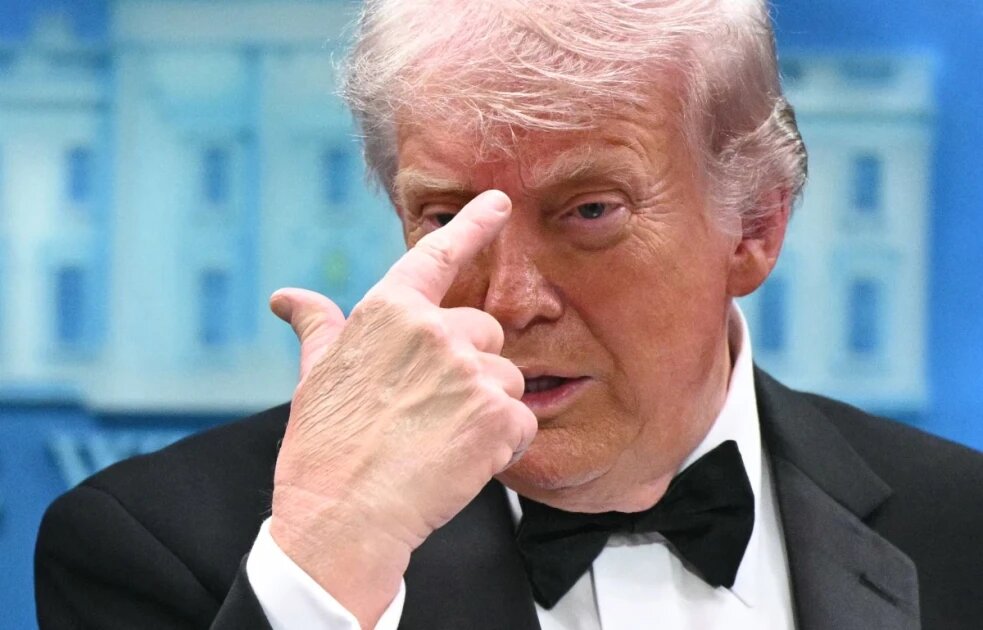
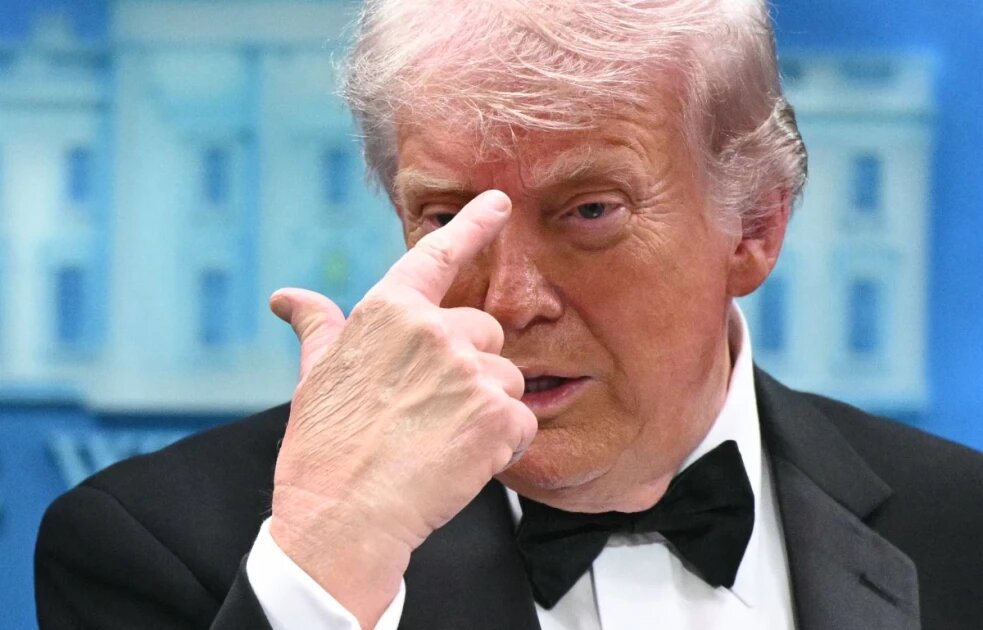
In his second term (2025–2026), Donald Trump’s ceasefire policies are often described as incoherent due to a combination of rapid, contradictory public statements, high-stakes brinkmanship followed by sudden de-escalation, and a “negotiation-by-tweet” style that leaves diplomats and allies confused. His approach often shifts between threats of “total obliteration” and abrupt announcements of peace deals.
Trump’s double speak
From early April 2026, President Trump’s foreign policy approach regarding Iran has been characterized by rapidly shifting, highly contradictory statements and threats. Trump frequently issues statements that contradict his own administration’s officials or his previous positions. For instance, in April 2026, he moved from threatening to “kill an entire civilization” in Iran to announcing a ceasefire hours later, leaving observers with a sense of “whiplash”.
Trump often uses extreme military threats or blockades as leverage just before negotiating, creating a fragile environment where both sides mistrust his intentions. His “20-point plan” for Gaza was framed as a final ultimatum, yet it was followed by shifting demands.
While announcing a “total and complete victory” or a “final” ceasefire, actual conditions on the ground often remain volatile, with continued attacks from both sides, as seen in the 2025–2026 Iran and Gaza scenarios.
By relying on personal social media posts and direct, often impromptu, announcements on platforms like Truth Social, he bypasses traditional diplomatic channels, making it difficult for foreign counterparts to determine the official U.S. position.
Take the Iran-US Conflict (2026), Trump announced an extension of a ceasefire with Iran after threatening military action, citing a request by Pakistan, but the deal lacked clear terms and was described as “strategic incoherence”. As of April 2026, President Donald Trump has announced an indefinite extension of the ceasefire with Iran, following a period of intense volatility and wavering support for the truce, which began on April 8, 2026. This move was made at the request of Pakistan, which is acting as a mediator in the conflict.
Despite initial suggestions that he would not extend the temporary two-week truce, Trump announced a surprise extension on April 21 to give Iran time to submit a proposal to end the war, which began on Feb 28, 2026.
While extending the ceasefire, Trump confirmed that the U.S. Navy will continue to blockade Iranian ports, a move Iran has termed an act of war and a violation of the truce, resulting in a “dual blockade” situation. The talks have been marked by erratic messaging, with Trump alternating between threatening to destroy Iranian infrastructure and expressing optimism about a “great deal”.
The ceasefire was extended amid doubts that Iran would participate in a second round of talks in Islamabad. Iran’s leadership has accused the US of sending “contradictory messages”. The conflict has seen significant casualties and disruption to the global economy due to the instability in the Strait of Hormuz.
The truce has not stopped actions at sea, coupled with ongoing maritime conflict with Iran seizing ships and the US maintaining its naval blockade, adding to the uncertainty of the situation.
Some of Trump’s own allies, including Republican hawks, have expressed scepticism about the negotiations, while Democrats have raised concerns regarding the nature of the conflict.
It is, in fact, the USA that is dithering over the cease-fire knowing it has lost the plot and and is seeking an off-ramp solution.
Whiplash diplomacy doesn’t frighten Iran
Conflicting Statements and “Whiplash” Diplomacy have done nothing to deter Iran’s courageous push-back. On April 7, 2026, President Trump used his Truth Social platform to threaten that “a whole civilization will die tonight, never to be brought back again” if Iran did not meet his deadline to reopen the Strait of Hormuz. He further outlined plans to decimate Iranian bridges and power plants. Hours after these severe threats—and while the U.S. and Israel were actively bombing Iranian infrastructure—Trump announced a two-week ceasefire on April 7, 2026, following mediation efforts by Pakistan.
This quick reversal from threats of near-genocidal action to a ceasefire left observers and even some of his own allies stunned. Observers described the shift as “surreal” and a “whiplash” of messaging, noting that the president appeared to be conducting diplomacy “by the seat of his pants”.
The pattern continued with Trump alternating between threatening to destroy Iranian infrastructure and stating that negotiations were moving forward, causing confusion over whether the U.S. was committed to a negotiated settlement or aiming for the continuation of the war.
The impact of the rhetoric has had a domestic fallout. The threatening rhetoric led to bipartisan criticism, with some calling the comments “evil and madness” and even suggesting the use of the 25th Amendment.
Added to this fallout, there is diplomatic disarray. The constant shifts in policy created a challenging environment for mediators, such as Pakistan, attempting to broker a long-term peace agreement.
Iran’s leadership frequently rejected the ultimatums, calling them “delusional” and “baseless.”
Public Trust and Perception in Trump’s leadership team have faced disenchantment. Critics and some analysts described the 2025 cabinet as prioritizing personal loyalty over traditional qualifications, noting it was one of the wealthiest in history, with several billionaires. While 2024 voters maintained high approval of his team (86% approval among his voters), a broader 2026 survey showed 63% of adults disapproved of his performance, particularly regarding economic management and the cost of living.
Several members faced scrutiny, such as allegations of “spoils system” hiring due to donor roles, and the use of “Project 2025” personnel, which was generally unpopular, to staff the administration. The team is deliberately constructed to challenge conventional Washington structures (“the swamp”), which strengthens trust among his core base but diminishes it among moderates.
As of April 2026, the administration faced a 36%-37% approval rating, with critics citing rising fuel prices and conflict in Iran as factors eroding public confidence, while his base remained solid.
Donald Trump has indicated a desire to end the US military operations in Iran, framed by declarations of victory and “getting very close” to meeting his objectives, despite a continued, high-cost conflict.
Following a period of heavy U.S. and Israeli airstrikes (“Operation Epic Fury”) that began in late February 2026, Trump has repeatedly claimed “complete victory,” arguing that Iran’s anti-aircraft and naval capabilities have been destroyed. Trump has said he is considering “winding down” the war because the U.S. has met its objectives, even while acknowledging continued attacks and US troop deaths.
Despite his calls for “shock and awe,” Trump has shown willingness to engage in “wait and see” diplomacy, including extending a ceasefire to allow for potential, though difficult, negotiations.
Observers suggest this strategy is driven by rising US gasoline prices, a volatile global energy market, and the need for a “mission accomplished” moment before the US midterm elections, rather than a clear strategic victory on the ground.
While the US asserts control, threats to US aircraft and personnel remain significant. Iran has rejected having reached a deal, and the Strait of Hormuz remains a central, unresolved bottleneck, with Iran re-imposing restrictions at times.
Reports suggest Trump is manoeuvring for a swift exit, aiming to frame the operation as a win – even if the long-term strategic goals are not fully met – to avoid becoming trapped in another “forever war” in the Middle East.
Iran’s 10-point plan
Iran has proposed a 10-point plan for a ceasefire, which was conveyed via Pakistani intermediaries, demanding a permanent end to hostilities rather than a temporary pause. Iran has maintained a hardline position, with officials stating that any deal must be on their terms, even as they engage in indirect talks in Islamabad. Their terms stay non-negotiable and include:
- Removal of all primary and secondary sanctions on Iran, as well as an end to punitive UN and International Atomic Energy Agency (IAEA) resolutions.
- Recognition of Iran’s sovereign right to nuclear enrichment.
- A formal commitment from the US of non-aggression and recognition of Iran’s control over the Strait of Hormuz.
- A full withdrawal of US forces from all bases in the region.
- Compensation for damages suffered from US and Israeli airstrikes.
- Protections for allied groups.
Iran has indicated it will allow safe passage through the Strait of Hormuz but only under its own military management. Iran has laid out strict demands, including a complete halt to assassinations, guarantees against future conflict, payment of war damages, an end to fighting on all fronts, and recognition of its sovereignty over the Strait of Hormuz.
Iran demonstrates some openness to negotiations but it will not accept a temporary pause in fighting, because it would may allow the US and Israel to regroup. Iran has expressed that its goal is to navigate the conflict without capitulating to Washington’s demands that will permit Trump to announce to the world as a victory. Iranian officials conclude that the U.S. plan (often cited as a 15-point proposal) was too demanding.
While the White House indicated ongoing efforts toward a second round of talks in Pakistan involving negotiators like Steve Witkoff and Jared Kushner, Iranian foreign ministry spokesperson Esmaeil Baqaei rejected any planned direct meetings, opting for indirect communication via Pakistan. Iran has rejected U.S. peace proposals mediated by Pakistan, labelling them “excessive” and demanding an end to aggression rather than a ceasefire.
This rejection follows an ongoing conflict that escalated after the assassination of Iranian officials. Iran says the U.S. is seeking a “face-saving” exit from a “war quagmire”.
Iran has consistently rejected it would engage in direct negotiations with the U.S. under pressure, insisting on maintaining its own conditions for peace.
US does not have a credible negotiating meeting
Jared Kushner and Steve Witkoff have faced significant criticism regarding their roles in US negotiations with Iran and other Middle East matters, with critics citing a lack of diplomatic experience, conflicts of interest, and failed negotiations.
Former diplomats have described the team’s efforts as failures, with one expert, Aaron David Miller, giving them an “F in diplomacy”. Critics note that both are real estate developers without traditional diplomatic or, in the case of Iran talks, technical nuclear expertise.
The collapse of U.S.-Iran negotiations in Pakistan in April 2026 led to accusations that they lacked the skill to secure a deal. Reports suggested Iranian officials were confused by the lack of technical knowledge regarding nuclear facilities during talks, with reports that Iranian officials had to explain basic nuclear concepts to Witkoff.
Kushner’s private equity firm, Affinity Partners, has raised billions from Persian Gulf sovereign wealth funds—including Saudi Arabia, Qatar, and the UAE – while he negotiates with those same countries. Critics argue this merges personal business interests with foreign policy.
Kushner has argued that peace negotiations are similar to business, stating he prefers to “focus on interests over values” and that he does not “need a history lesson” regarding Middle Eastern conflicts. Critics argue this approach downplays the historical context and deep-seated conflicts that make traditional diplomacy necessary.
Witkoff was criticized for allegedly mischaracterizing Iranian positions to the media, specifically regarding the state of Iran’s uranium enrichment.
Reports in March and April 2026 indicated that Iranian officials became reluctant to engage directly with Kushner and Witkoff, preferring other negotiators.
Kushner has been criticized for promoting the redevelopment of Gaza as prime real estate, a proposal critics accused of bordering on advocating for ethnic cleansing.
White House spokeswoman Anna Kelly defended the team, stating they have successfully “ended the war between Israel and Hamas” and that their results “speak for themselves”. Observers view this claim as dubious because the entire Hamas-Israel conflict has remained unresolved. In the case of Gaza, Kushner was seeking to benefit as Real Estate operator, and clearly mediators with vested interests fail to qualify as mediators.
Conclusion
In the end, what is presented as strategy is little more than improvisation dressed as power—an erratic choreography of threats and retreats that seeks not peace, but applause. Trump’s ceasefires do not end wars; they repackage them, leaving behind a trail of instability while declaring triumph. And in that contradiction lies the truth: this was never diplomacy – it was always theatre.
MNA