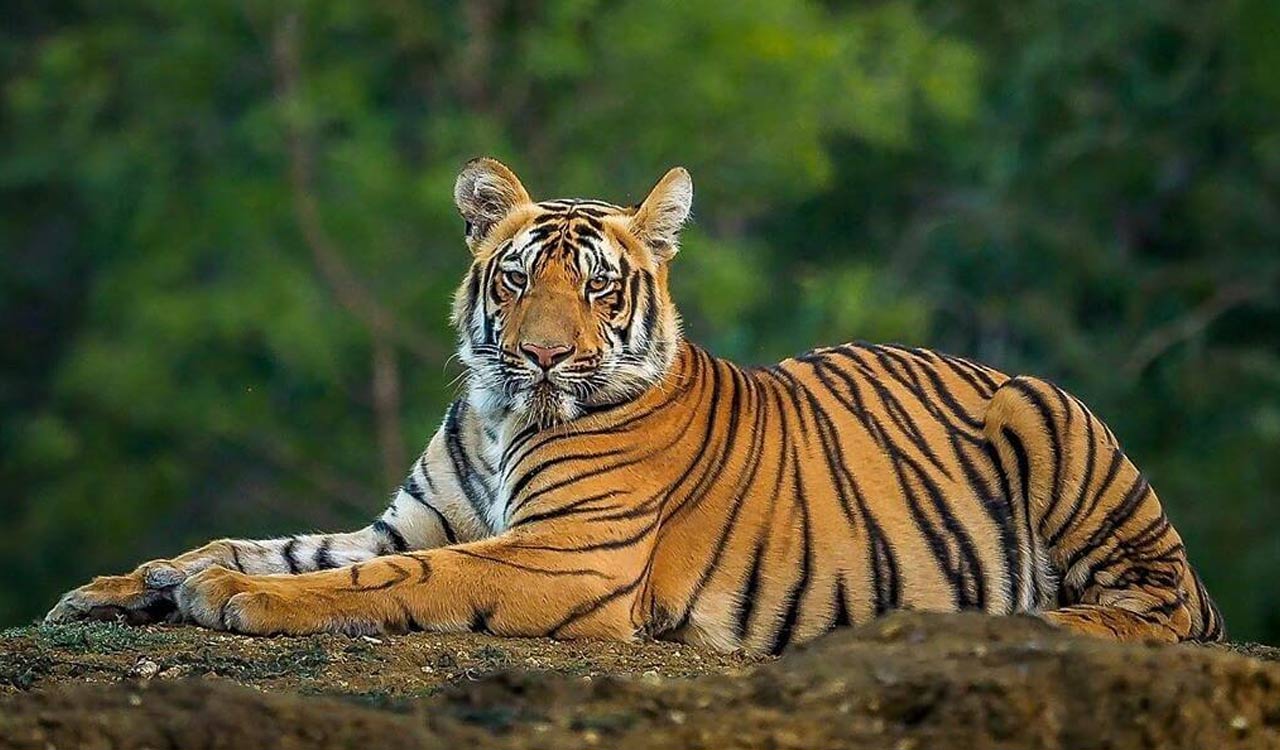
A tigress and her cub died in Kanha Tiger Reserve, pushing Madhya Pradesh’s tiger deaths to 27 this year. Officials cite treatment issues, while activists point to infection risks, poor monitoring, and disease spread concerns
Published Date – 30 April 2026, 11:18 AM
Mandla/Bhopal: A tigress and her cub have died in Madhya Pradesh’s Kanha Tiger Reserve (KTR), officials said on Thursday, as the number of big cat deaths in the state rose to 27 so far this year.
The tigress, in the age group of 8 to 10 years, and her cub, about 18 months old, had been kept at a quarantine room in the KTR for treatment. Both died during treatment on Wednesday, wildlife veterinarian Dr Sandeep Agarwal said.
Three other cubs of the tigress died between April 21 and 25 from natural causes, drowning, and lung infection. The big cat and her fourth cub were rescued from the Sarhi range last week and shifted to the quarantine facility, where they also died.
The autopsy was later conducted and the carcasses were disposed of as per the protocol.
As per the 2022 census, Madhya Pradesh had 785 tigers, the highest in the country. The state is home to nine tiger reserves.
The first tiger death this year was reported on January 7 in the Bandhavgarh Tiger Reserve, and since then, 26 more big cats, including cubs, have died, as per officials.
Among them, 12 tigers, including four cubs, have died since April 2, when a big cat was found dead in the forested area of Burhanpur, according to officials.
With the latest deaths of a tigress and a cub, the toll in the state has gone up to 27, Kanha-based wildlife activist Ajay Dubey said.
“The rangers and lower staff of Madhya Pradesh’s tiger reserves mostly live in faraway big cities, hence there is no strict monitoring in the field,” he claimed.
Villagers take their dogs to the tiger reserves illegally to collect Mahua, Chironji and Tendu leaves, which increases the risk of infection in tigers, the activist pointed out.
“Despite instructions of the National Tiger Conservation Authority (NTCA), vaccination of dogs, cows, bulls and goats within a 5-km radius of the tiger reserve is not done seriously, and big cats die due to canine distemper virus (CDV),” he further claimed.