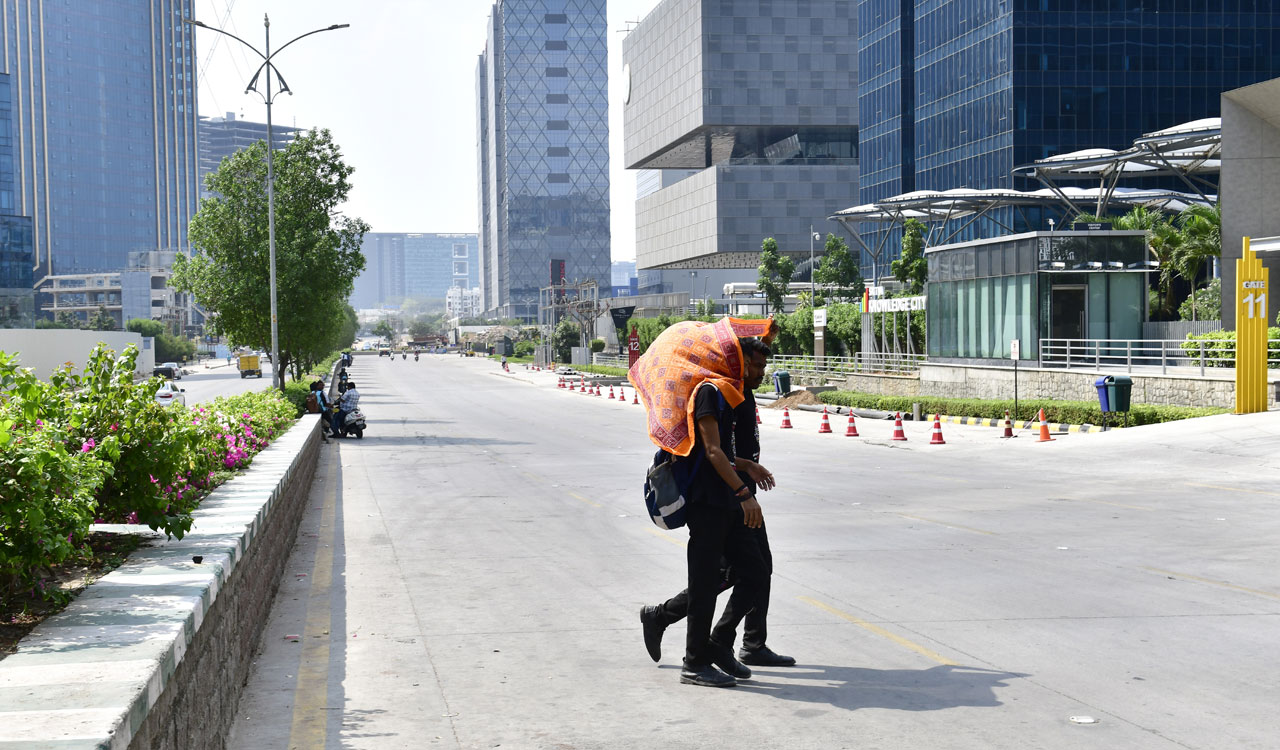
Hyderabad has entered a dangerous wet-bulb heat zone, where high humidity and temperatures reduce the body’s ability to cool itself. Experts warn that even 41 degrees Celsius can be more dangerous than dry heat, posing serious health risks.
Published Date – 28 April 2026, 03:10 PM
Hyderabad: Hyderabad’s weather has entered a dangerous wet-bulb territory, a condition where the body loses its ability to regulate internal temperature. In these conditions, sweat no longer evaporates, causing core heat to rise uncontrollably, leading to rapid organ strain, heatstroke and potential collapse.
The weather stations installed by IMD and TSDPS across Hyderabad are not telling the full story, as they treat rising mercury levels and humidity in isolation. The human body, however, does not have that luxury.
When humidity levels surge alongside high temperatures, it pushes the city’s wet-bulb temperature into a hazardous zone, endangering not only the vulnerable but even the most fit and healthy individuals.
In the last 24 hours, Hyderabad recorded a maximum temperature of 41.4 degrees Celsius. Simultaneously, a relative humidity of 51 per cent has pushed the city into the wet-bulb zone, a phenomenon where the air becomes so saturated with moisture that the human body’s primary cooling mechanism, the evaporation of sweat, effectively shuts down.
Unlike the dry heat typical of April, where sweat evaporates and cools the skin, the humid conditions in the last 24 hours trap heat against the body. As a result, even brief outdoor exposure can lead to rapid heat exhaustion.
The combination of heat and humidity is much more taxing on the cardiovascular system of individuals than a dry 45 degree Celsius day, as the body struggles to maintain its internal temperature against an environment that refuses to let it cool down.
Director of Public Health (DPH), Dr Ravinder Nayak, urged people, especially the vulnerable population, to avoid venturing out during daytime as far as possible.
The IMD, Hyderabad, also warned that oppressive weather conditions can lead to heat strokes if individuals do not take proper precautions. Until rains arrive, residents were advised to treat the 41 degree Celsius peak with caution, stay hydrated with electrolytes and seek shaded or cooled indoor environments.
Vulnerable population:
For the elderly, young children, pregnant women and those with underlying heart or kidney conditions, wet-bulb conditions are life-threatening. Senior doctors advise that these groups should remain in the coolest part of the home, preferably with cross-ventilation or air conditioning, as fans alone cannot cool the body when humidity is high.
Caregivers should monitor for silent signs of heat stress such as confusion, sudden fatigue or a cessation of sweating despite the heat.
To assist the body’s failing cooling system, doctors advise using active cooling methods like applying cool, damp cloths to the neck and armpits and ensuring hydration includes salt-based ORS to replace lost electrolytes.