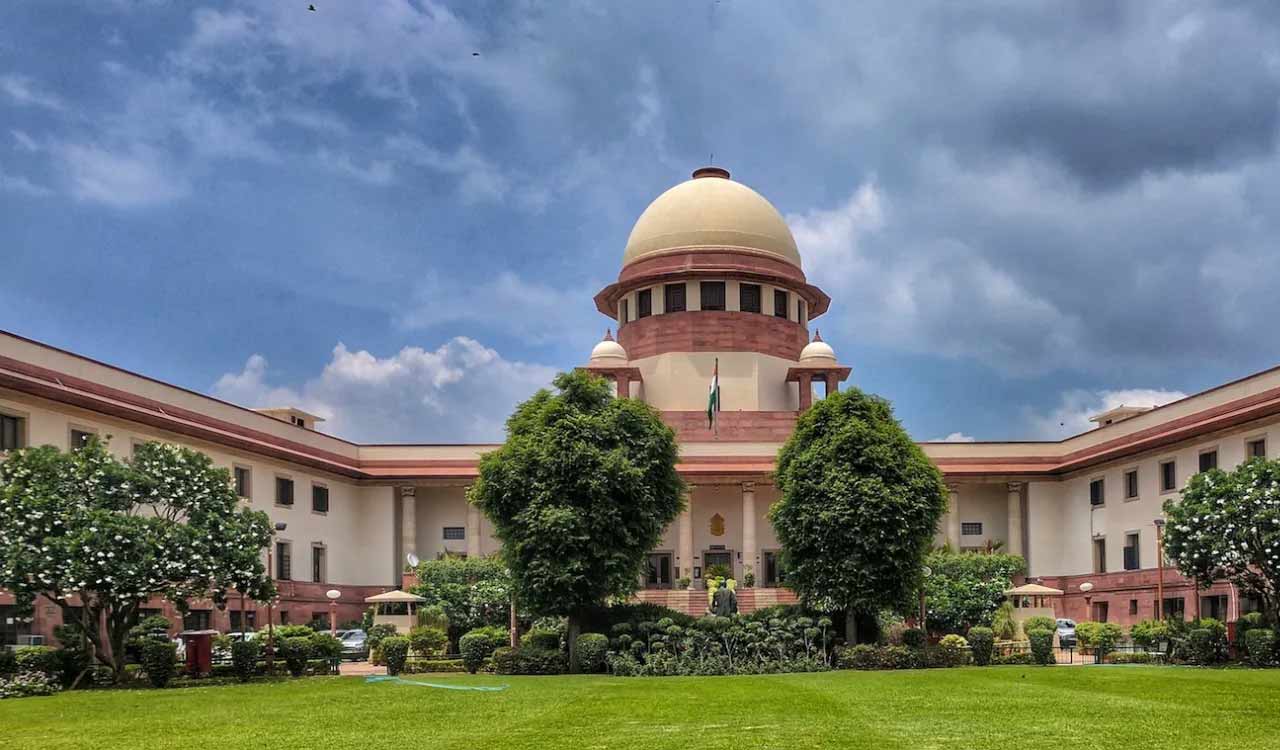
Supreme Court dismissed Antony Raju’s plea to suspend his conviction in the 1990 evidence tampering case. His conviction stands, keeping his MLA disqualification intact, while courts earlier upheld findings of conspiracy, destruction and fabrication of crucial evidence
Published Date – 27 April 2026, 02:42 PM
New Delhi: The Supreme Court on Monday dismissed a petition filed by former Kerala Minister Antony Raju seeking suspension of his conviction in the sensational 1990 underwear evidence tampering case.
A Bench of Justices Dipankar Datta and Satish Chandra Sharma declined to grant relief to Raju, who had challenged the Kerala High Court’s order refusing to stay his conviction in the decades-old sensational case.
With the dismissal of his plea, the conviction recorded by the trial court and affirmed in appeal continues to operate, leaving his disqualification as a Member of the Kerala Legislative Assembly under the Representation of the People Act, 1951 intact.
Raju, a former Transport Minister and the lone legislator of the Janadhipathya Kerala Congress within the ruling Left Democratic Front (LDF), had ceased to be an MLA from January 3, 2026, after the Nedumangad Judicial First Class Magistrate Court convicted and sentenced him to three years imprisonment in the long-pending case involving tampering of crucial court evidence.
Earlier, in March, the Kerala High Court declined to stay the conviction despite suspending the sentence, rendering Raju ineligible to contest the ongoing Assembly elections from Thiruvananthapuram Central, a seat he previously represented.
The case dates back to 1990 when Australian national Andrew Salvatore Cervelli was arrested at Thiruvananthapuram airport for allegedly smuggling 61.5 grams of narcotic substances concealed in his underwear.
Raju, then a young lawyer, had represented Cervelli. While the trial court convicted Cervelli, the Kerala High Court later acquitted him after finding that the undergarment produced as material evidence was too small to belong to him, casting serious doubt on the prosecution’s case.
Subsequent investigations, triggered by information from Australian authorities, led to allegations that the material evidence had been tampered with while in court custody. A criminal case was eventually registered against Raju and a court clerk in 1994, followed by a chargesheet in 2006 after prolonged investigation.
In November 2024, the Supreme Court revived the prosecution by setting aside a Kerala High Court order that had quashed the criminal proceedings on technical grounds, directing that the trial be completed within one year.
Following trial, Raju was convicted on charges including criminal conspiracy, destruction of evidence, fabrication of false evidence and related offences. While the Sessions Court refused to interfere with the finding of guilt, it temporarily suspended the sentence of imprisonment and fine pending a detailed hearing of the appeal.