According to international standards, a ceasefire between warring parties means a temporary or permanent cessation of military operations, and in the event of a ceasefire violation by one party, the other party reserves the right to retaliate. Following the illegal aggression of the United States and Israel against Iran and the powerful response of the Iranian armed forces, with the mediation of Pakistan on April 8, 2026, Iran and the United States agreed to a 12-day ceasefire, and the parties pledged to halt all military operations in order to begin negotiations. However, after the first round of negotiations, the United States continued its aggression in a different form, violating the ceasefire by imposing a naval blockade on Iran. Although the United States and its propaganda apparatus pretend that a naval blockade is not a violation of the ceasefire, international laws and regulations consider a blockade, whether by sea, land, or air, to be a military action and contrary to the ceasefire. In this regard, the following points will help clarify the matter.
1. Resolution 3314, adopted by the United Nations General Assembly, entitled “Definition of an Act of Aggression,” considers a naval blockade to be one of the principal examples of an act of aggression. This resolution states that a naval blockade is an act of war, and in other words, it can be considered a military operation, since it involves the use of military forces against the ports of the opposing party.
2. The Declaration on the Law of the Sea, adopted in Paris on April 16, 1856, as well as the Declaration on the Law of Naval War, adopted in London on February 26, 1909, define naval blockade as a type of military operation and set out, under Articles 1 to 21, the necessary guidelines for the conduct of naval blockades as a military operation.
3. The International Institute for Humanitarian Law, San Remo-1994, was established in 1970 in San Remo, Italy, with the aim of promoting international humanitarian law. This international institution, in its manual entitled “Law Applicable to Military Conflicts at Sea (SRM)”, adopted on 12 June 1994, considers (in paragraphs 67, 93, 104, 146, and 153) naval blockade to be a military measure. In addition to the above-mentioned cases, in most legal instruments in international institutions, blockade is defined as a military operation used by belligerents to control the other party. This type of blockade may encompass all maritime traffic into ports and along the coast.
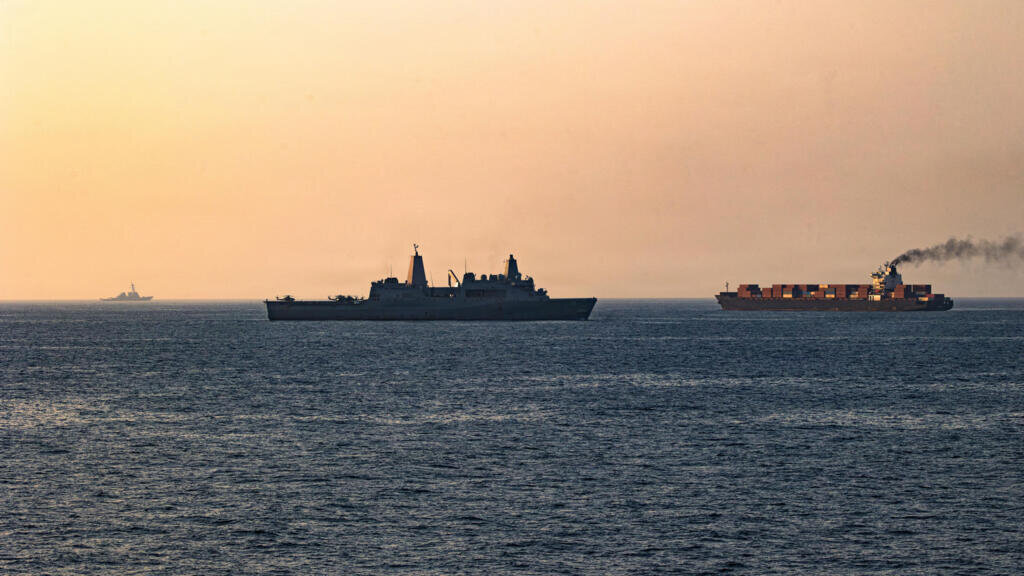
4. In practical terms, based on statements by US officials and media reports, the United States is using 15 military ships in the region to impose a naval blockade against Iran. These same documents confirm that the US has activated its military fleets, along with submarines and warplanes, to impose a naval blockade on Iran, and has adopted an entirely hostile approach.
5. Given these circumstances, the naval blockade is a clear violation of the ceasefire agreement and gives Iran the right to retaliate within the framework of self-defense under Article 51 of the United Nations Charter. In this regard, Article 40 of the 1907 Hague Regulations on the Laws and Customs of Land War also states that any serious violation of the ceasefire by one of the parties gives the other party the right to terminate the ceasefire and, in cases of necessity, to take immediate action.
Naturally, the manner and timing of the retaliatory action will be at the discretion of the Islamic Republic of Iran.
6. In addition to violating the ceasefire, the US naval blockade violates the rules of naval warfare because it exposes civilians to threats and hardship. The US is using the naval blockade to exert political pressure on Iran and gain unfair advantages in negotiations. Even if the US goal, as it claims, is to open the Strait of Hormuz, it has no legal justification because Iran did not block the Strait of Hormuz, but rather controls it within the framework of legitimate defense.
Overall, the Islamic Republic of Iran’s decision not to negotiate under conditions of naval blockade and ceasefire violation is correct and rational, and if the US armed forces continue the naval blockade of Iran, any response by the Iranian armed forces will be legally justified and defensible in international forums.
MNA