US President Donald Trump extended the Iran ceasefire indefinitely at Pakistan’s request to allow more time for talks, even as Tehran escalated tensions by firing on ships and seizing two vessels in the Strait of Hormuz
Published Date – 22 April 2026, 09:39 PM
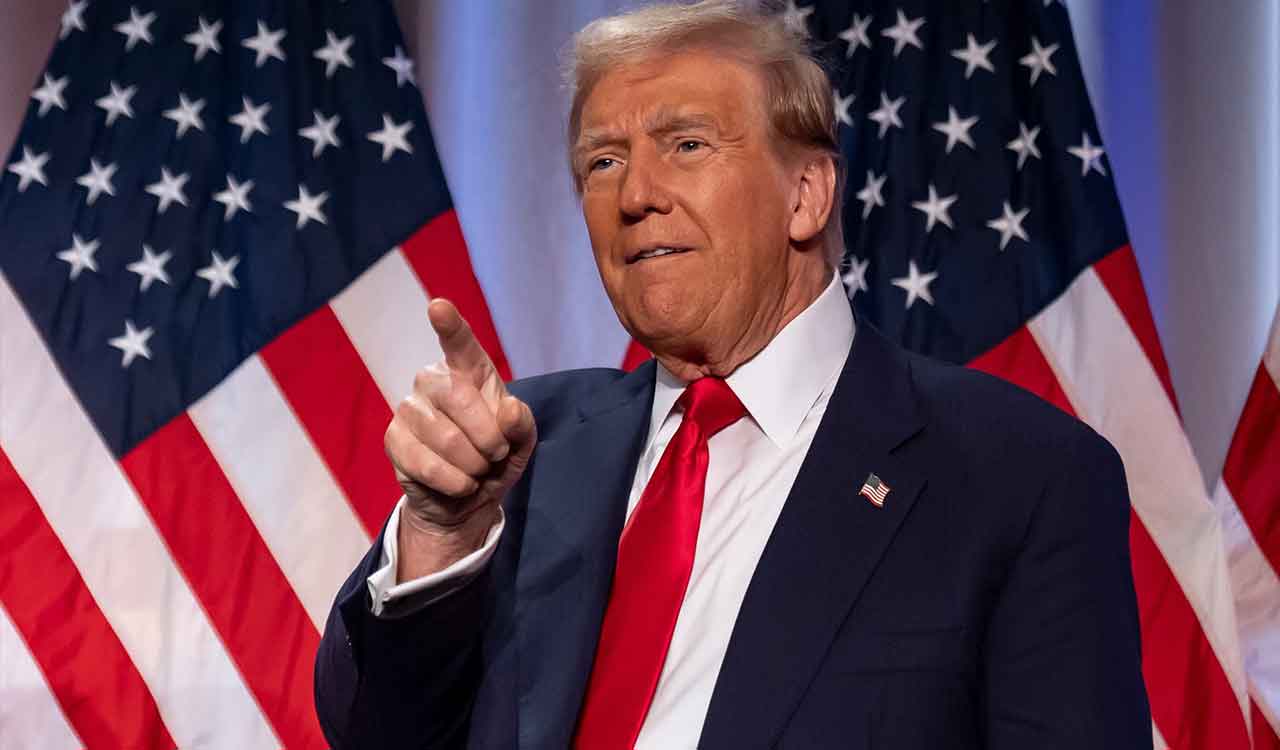
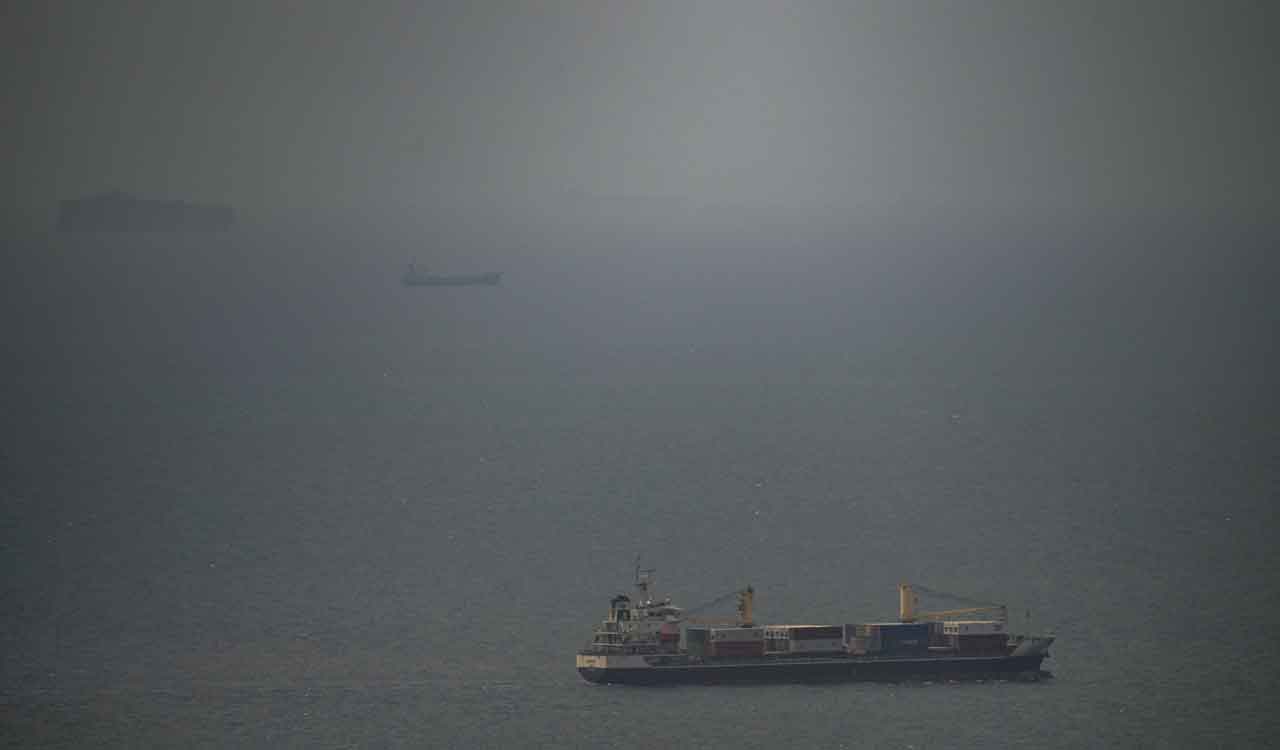
Washington/Islamabad: US President Donald Trump extended the ceasefire with Iran indefinitely at the request of Pakistan to give Tehran’s leadership more time to prepare a unified proposal to end the war, even as Iranian forces fired on three ships and seized two of them in the Strait of Hormuz on Wednesday.
Trump’s dramatic announcement, welcomed by Pakistan’s top leadership, came just hours before the two-week ceasefire was set to expire.
Iran’s semi-official Tasnim news agency reported that Tehran has not issued any official statement confirming its agreement to extend the ceasefire.
Pakistan had urged an extension of the truce due to uncertainty surrounding the second round of talks. There was still no clarity on the date of the next round of talks.
On Wednesday, The New York Post quoted President Trump as saying that the second round of the US-Iran talks could take place as early as Friday.
Such development was “possible” within the next 36 to 72 hours, the paper reported, quoting Trump.
However, Iranian Foreign Ministry spokesman Esmaeil Baqaei said Tehran has not yet decided whether to attend a new round of Pakistani-mediated talks in Islamabad.
“We have made it clear that if we conclude that going to Islamabad is in our national interest, we would go there. But for the time being, the decision has not yet been made,” Baqaei told the BBC on Wednesday.
Baqaei said Iran’s delegation had travelled to Pakistan for the first round of talks “with good faith and sense of seriousness, but you have a negotiating party that has shown its lack of seriousness, lack of good faith”.
The extension of the truce effectively delayed the planned visit of a US delegation led by Vice President JD Vance to Islamabad for talks with Iranian interlocutors.
Meanwhile, the Revolutionary Guards intercepted and transferred two vessels – identified as the “MSC-FRANCESCA” and the “EPAMINODES” – to Iranian territorial waters for inspection of their cargo, documents, and related records, Tasnim news agency reported.
Citing a statement by the Guards, it said the ships were “attempting to exit” the Strait of Hormuz when they were intercepted.
Another ship, Euphoria, was stopped after being “fired upon”, according to BBC.
The development came as Trump announced the extension of the ceasefire with Iran indefinitely.
“Based on the fact that the Government of Iran is seriously fractured, not unexpectedly so and, upon the request of Field Marshal Asim Munir, and Prime Minister Shehbaz Sharif, of Pakistan, we have been asked to hold our attack on the country of Iran until such time as their leaders and representatives can come up with a unified proposal,” Trump said on Tuesday.
However, Trump made it clear that the US will refrain from attacking Iran only until its leadership presents a unified proposal for negotiations. He said the economic blockade of Iran’s ports will remain in place.
The US President said he has therefore “directed the military to continue the blockade”.
The decision to extend the ceasefire marked a significant shift in Trump’s tone. Earlier on Tuesday, he said that if a deal was not reached by Wednesday, he expected to “be bombing, because that is a better attitude to go in with.” Trump did not refer to the conflict or the negotiations with Iran during his only public appearance of the day, when he addressed NCAA collegiate national champions at the White House on Tuesday afternoon.
Pakistan Prime Minister Shehbaz Sharif expressed hope that both Iran and the US would be able to “conclude a comprehensive peace deal” to end the conflict.
“On my personal behalf and on behalf of Field Marshal Syed Asim Munir, I sincerely thank President Trump for graciously accepting our request to extend the ceasefire to allow ongoing diplomatic efforts to take their course,” he said in a social media post.
Sharif said with the “trust and confidence reposed in (it), Pakistan shall continue its earnest efforts for a negotiated settlement of the conflict.” “I sincerely hope that both sides will continue to observe the ceasefire and be able to conclude a comprehensive ‘Peace Deal’ during the second round of talks scheduled at Islamabad for a permanent end to the conflict,” he added.
The Iranian envoy to Pakistan, Reza Amiri Moghadam, called on PM Sharif and discussed the “ongoing regional situation and peace efforts,” the PM’s Office said.
Earlier, Iranian Foreign Minister Abbas Araghchi slammed the US, saying blockading Iranian ports is an “act of war and thus a violation of the ceasefire”.
“Striking a commercial vessel and taking its crew hostage is an even greater violation. Iran knows how to neutralise restrictions, how to defend its interests, and how to resist bullying,” he said in a social media post.
On Tuesday, the US said its forces boarded an oil tanker previously sanctioned for smuggling Iranian crude in Asia. The US military did not disclose the location of the boarding, though ship-tracking data showed the vessel in the Indian Ocean between Sri Lanka and Indonesia on Tuesday.
Meanwhile, Treasury Secretary Scott Bessent announced sanctions on 14 individuals, entities and aircraft based in Iran, Turkiye and the United Arab Emirates for their alleged involvement in procuring or transporting weapons or weapons components on behalf of Iran.
He warned that Iran’s Kharg Island storage facilities could reach capacity within days, potentially forcing fragile oil wells to shut down. “Constraining Iran’s maritime trade directly targets the regime’s primary revenue lifelines,” he said.
The US imposed the blockade to pressure Tehran into ending its stranglehold on the Strait of Hormuz, a key shipping lane through which about 20 per cent of the world’s natural gas and crude oil transits in peacetime. Iran’s grip on the strait has pushed oil prices sharply higher.
Meanwhile, Islamabad’s Red Zone, where government buildings and offices are located, was under strict security. The area remained sealed to the general public on Wednesday, but other routes, sealed earlier, were opened. The army was patrolling the area.
Pakistan has taken elaborate security measures, including deploying more than 10,000 security personnel, in preparation for the proposed talks.
The first round of US-Iran talks held on April 11 and 12 failed to produce a breakthrough, prompting a flurry of diplomatic efforts by host Pakistan to cool tensions and revive hopes for another round of dialogue.
The Iran war began on February 28 with US-Israeli strikes.