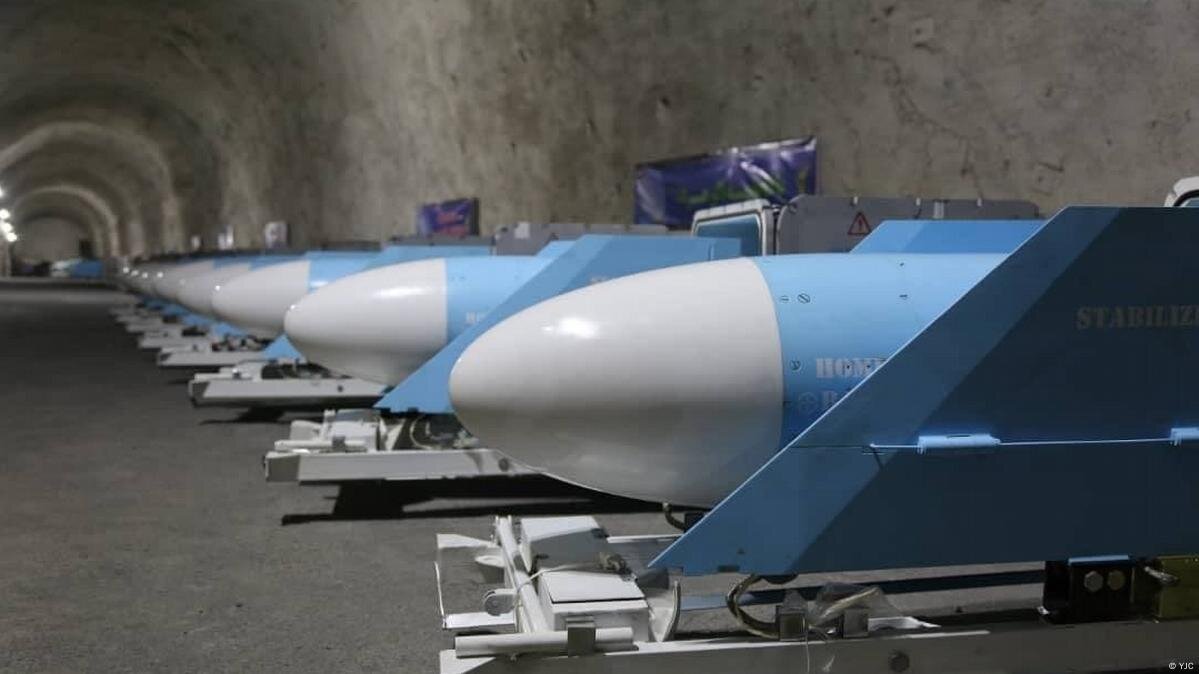
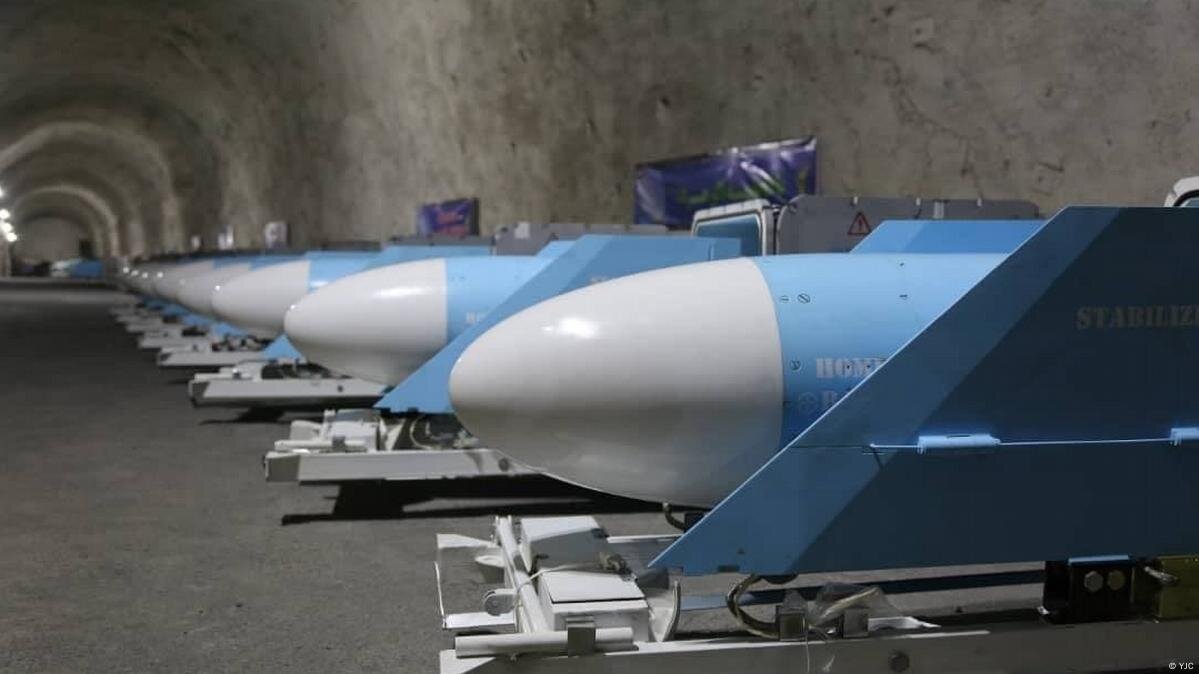
Major General Seyed Majid Mousavi, Commander of the IRGC Aerospace Force, posted a video on social media showing the overhaul and rebuilding of missile and drone stockpiles, emphasizing, “During the ceasefire period, our speed in updating and filling missile and drone launch platforms is even greater than before the war. We are aware that the enemy is incapable of creating these conditions for itself and is forced to bring ammunition little by little from the other side of the world. They have lost this phase of the war as well! They have lost the Strait [of Hormuz]; they have lost Lebanon and the region.”
If we consider the rebuilding of Iran’s capability merely at the level of images of equipment overhaul or an increase in the number of launch platforms, we have missed the essence of the matter. What is occurring today is a profound shift in the logic of power and the manner of waging war; a shift that has moved beyond the tactical level and reached the strategic layer. Within this framework, superiority is no longer defined by the initial accumulation of weapons or even technological advantage, but is tied to the ability for “continuity of power” and “rapid regeneration of that power in the midst of crisis.”
Modern wars, particularly in complex and multilayered regional environments, are less a contest for the first strike and more a competition to sustain power over time. Recent experiences have shown that many armies can deliver heavy initial blows, but what proves decisive is the capacity to move beyond the shock phase and enter the attritional phase. In this phase, the initial excitement of operations subsides, and the hard realities of logistics, supply, repair, and rebuilding reveal themselves. This is where the gap between “display power” and “sustainable power” becomes apparent.
Iran, over the years—especially under conditions of pressure and constraint—has been compelled to redefine this equation. The outcome of this process is the formation of a kind of capability that can be termed “operational resilience”; a capacity that allows not only withstanding the initial blow without collapse but also recovering within a short interval and even returning to the field with a different quality. This is the point at which rebuilding transforms from a defensive process into an offensive tool.
In such a model, temporary pauses in the conflict—such as the current ceasefire period—are no longer understood as retreat, but become opportunities for a leap forward. Each pause, rather than signaling a reduction in pressure, becomes a platform for increasing capacity. This shift in meaning is crucial because if the opposing side continues to view the field through the classical logic of war, it will interpret these pauses as a sign of diminishing threat, when in reality, the next wave of power is taking shape.
One of the important dimensions of this transformation is relative independence in the supply chain. Protracted wars are heavily dependent on logistics, and any disruption in this chain can ground even the most powerful armies. A side that relies on long, complex, and vulnerable routes to meet its needs faces a structural limitation in practice. Even if these routes function efficiently under normal conditions, they quickly become points of weakness in a crisis. In contrast, structures that rely on domestic production and distributed, flexible networks enjoy a significant advantage: they can react faster, replace assets more quickly, and adapt to new conditions more rapidly.
This difference is decisive, especially in wars of attrition. In such wars, the central question is not who is stronger on the first day, but who is still capable of continuing on the hundredth day. This is where the concept of “speed of rebuilding” becomes one of the primary indicators of power. If one side can replace its resources faster than it consumes them, it effectively enters an upward cycle; a cycle in which each round of engagement leads to a relative increase in its power.
Conversely, a side whose rate of consumption outstrips its rate of replacement, even if it holds the upper hand in the short term, will suffer attrition in the long term. This attrition does not necessarily manifest suddenly; rather, it reveals itself gradually, in the shrinking of options, increased caution in decision-making, and ultimately, the acceptance of unwanted limitations.
In this context, the psychological dimension of war also assumes special importance. Rapid—and even accelerated—rebuilding of capabilities is not merely a technical reality; it is a message. A message was conveyed both to the opposing side and to public opinion. This message indicates that the blows have not achieved their final effect and that the power structure remains capable of self-repair. Such a message can seriously influence the calculations of the opposing side. If the perception takes hold that every strike only leads to a faster rebuild, the incentive to continue the same pattern of attack diminishes, and doubt takes its place.
Furthermore, this situation can lead to a shift at the strategic level. When an actor demonstrates that it is not weakened under pressure but rather gradually grows stronger, the opposing side is compelled to reassess its objectives. Goals initially designed based on a swift victory or a severe weakening become progressively more realistic over time and are sometimes even reduced to mere crisis management. This is the point at which the war transforms from an offensive project into a managerial problem.
Another important point is the connection between the visible battlefield and the unseen backstage. Rapid rebuilding is impossible without an extensive and coordinated infrastructure spanning industrial, scientific, and managerial domains. This means that what is observed in the field is only a small portion of a much larger network operating behind the scenes. This network includes production chains, repair centers, technical teams, distribution systems, and even decision-making mechanisms. The more cohesive and flexible this network, the greater the capacity for rebuilding.
Within such a framework, the very concept of “power” undergoes a fundamental change. It can no longer be measured solely by the quantity of equipment or the level of technology. Power, more than anything, becomes a process; a process in which production, consumption, and reproduction flow continuously. An actor who can sustainably manage this process can, even when faced with heavy blows, hold the upper hand in the long run.
This shift in understanding carries important implications for the future. If the current trend continues, we will witness the emergence of a model of warfare in which flexibility and resilience are more decisive than any other factor. In such a model, the winner is not necessarily the one who possesses the most resources, but the one who makes the best use of their resources and possesses the fastest cycle of rebuilding.
Ultimately, the rebuilding of Iran’s capability during the recent two-week ceasefire period must be seen as part of a larger picture; a picture in which the balance of power shifts not through a single blow, but through a gradual and multilayered process. This shift may not be fully visible in the short term, but over time, it reveals itself in changes to behaviors, decisions, and even narratives. A point where the discourse is no longer about decisive superiority, but about the ability to endure, manage pressure, and shape the future of the field.
In such circumstances, what matters is not merely what is possessed today, but what can be rebuilt tomorrow. This is where rebuilding transforms from a reaction into an advantage; an advantage that, if properly managed, can completely alter the course of a conflict.
MNA