A controversy erupted after remarks targeting the Bhattaraju community, sparking calls for dignity and respectful political discourse. The caste slur has reignited debate on caste sensitivity, social justice, and declining standards of public language in Telangana politics
Published Date – 13 April 2026, 09:49 AM
By Dr. Kanchanapalli Govardhan Raju
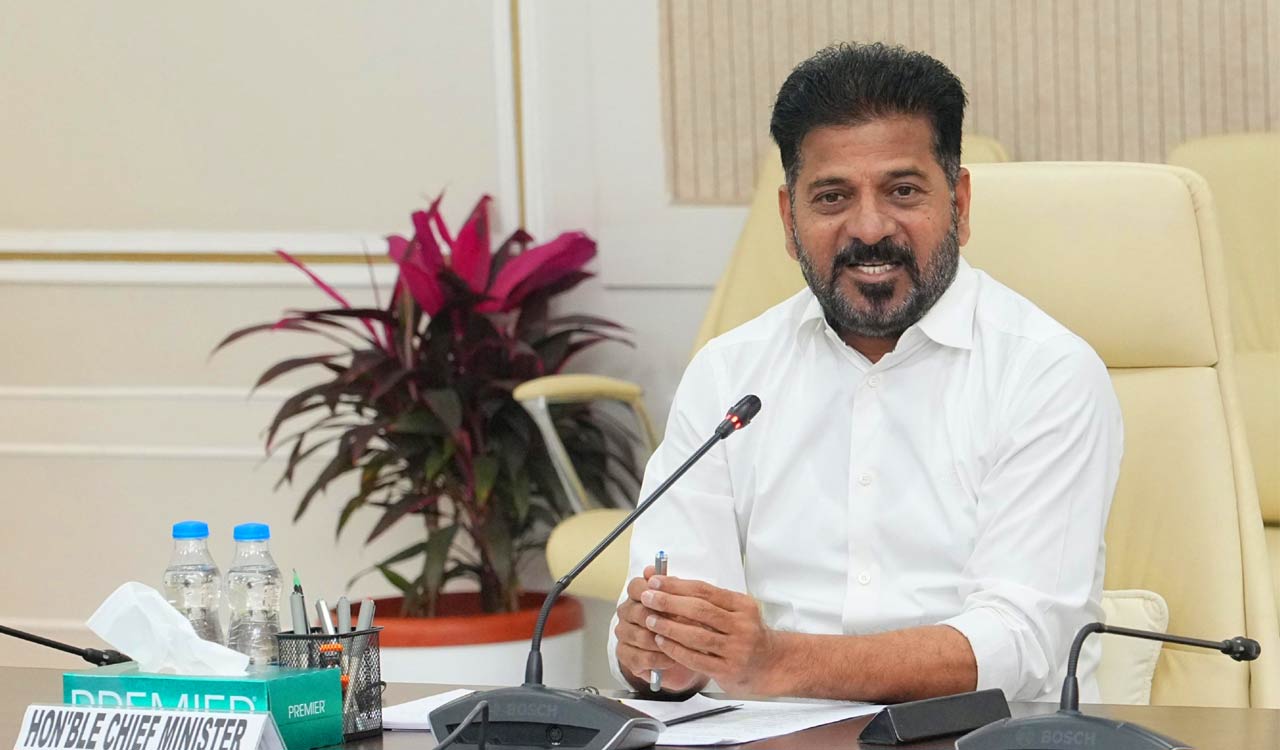
The remarks of Chief Minister Revanth Reddy, made while attacking BRS leader K.T. Rama Rao in the recent Assembly session, did not merely target a political opponent. They humiliated an entire community — the Bhattarajus.
Political criticism is natural in a democracy. Leaders may expose each other’s failures, contradictions, and hypocrisies. But when a caste is used as a metaphor for servility, flattery, or ridicule, the issue is no longer political rhetoric; it becomes social violence in language.
The Chief Minister frequently claims to be working for the upliftment of Backward Classes. That claim rings hollow when, in the same breath, he casually demeans one among those very communities. What exactly is the meaning of social justice if the dignity of a community can be sacrificed for a cheap political punchline?
The insult is not merely in the words themselves, but in the ease with which they are spoken — as though the Bhattaraju community is available for public mockery without consequence. That is precisely the problem. Some communities are seen as socially “safe” to insult, because society has not yet learned to treat their humiliation as a matter of public concern.
This is not just offensive; it is historical ignorance.
The Bhattarajus are not a community to be reduced to caricature. In the social and cultural history of Telangana, they have had a role in teaching, literary transmission and poetic culture. Long before institutional education spread into rural life, such communities contributed to the circulation of knowledge and language. Whether in the realm of pedagogy, performance, or literary expression, their place in history deserves research and recognition — not ridicule.
If political leaders wish to casually classify Bhattarajus as mere flatterers of power, then let them produce historical evidence instead of inherited prejudice. Let the state commission serious scholarship rather than recycle caste-based slurs from a feudal past.
The deeper issue here is the collapse of political language. Public speech in Telangana has steadily degenerated into mockery, abuse, innuendo, and theatrical insult. What may once have been tolerated during the emotional turbulence of the Telangana movement cannot be normalized forever. More than a decade after statehood, if our leaders still cannot speak with civility, then the crisis is no longer political style — it is democratic culture itself.
Dr. B.R. Ambedkar warned us that constitutional morality cannot survive without ethical responsibility in public life. That warning is painfully relevant today. Leaders who occupy constitutional office cannot behave like street-corner performers seeking applause through humiliation.
It is worth asking: would such language be used so casually against Dalits, minorities, or other politically sensitive communities? If not, why are Bhattarajus repeatedly treated as acceptable targets? Is their humiliation somehow less serious? Is their self-respect less worthy of protection?
Every caste in rural society has, at one time or another, been burdened with demeaning proverbs, stereotypes, and social labels. A civilized society is expected to outgrow them. Yet our political class seems determined to drag them back into public discourse and weaponize them for momentary laughter.
This is not a demand for special privilege.
It is not even a demand for political representation, though that too remains inadequate.
It is a far more basic plea:
Do not humiliate us to entertain your politics.
We are not asking for symbolic sympathy.
We are only asking for what every human being and every community deserves in a democracy:
The right to live with dignity.
(Author is a writer and a retired principal of Gurukul College Ghatkesar)