China signalled easing tensions with Taiwan by restoring limited ties, including direct flights and aquaculture imports, after talks involving Xi Jinping and Cheng Li-wun. Despite outreach, long-standing disputes persist since Tsai Ing-wen’s 2016 election
Published Date – 12 April 2026, 11:24 AM
Bangkok: China said on Sunday it would resume some ties it had suspended with Taiwan, such as direct flights to cities across China and imports of Taiwanese aquaculture products, as the island’s opposition party leader concludes her visit.
The Taiwan Work Office under China’s Communist Party issued a statement saying it would explore setting up a longstanding communication mechanism between the Communist Party and Taiwan’s Kuomingtang Party, and facilitate the import of Taiwan’s aquaculture products, after it banned them in recent years.
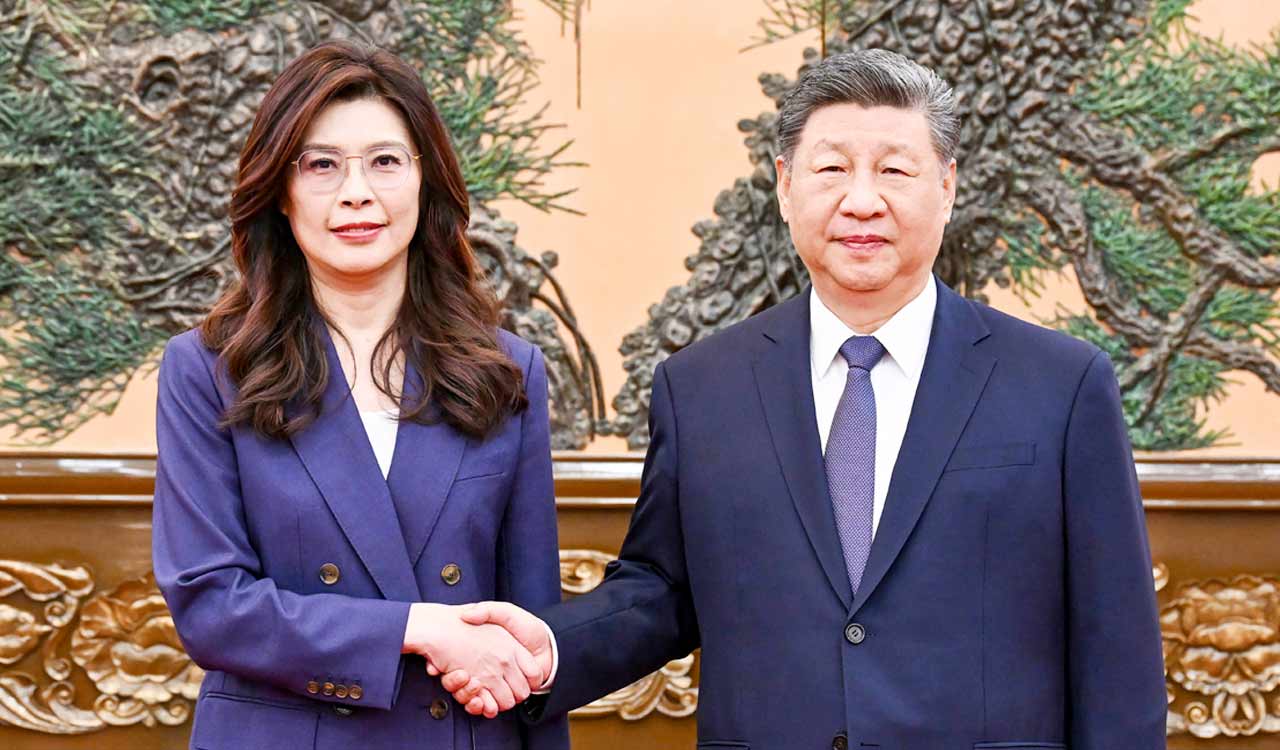
Cheng Li-wun, the head of the Kuomingtang, and China’s President Xi Jinping held a high-profile meeting Friday during which both called for peace without offering specifics. Taiwan is self-ruled, but China claims the island as part of its territory.
Relations between China and Taiwan have been tense since 2016, when the Taiwanese public elected Tsai Ing-wen from the Democratic Progressive Party as president. Since then, Beijing cut off most of its official dialogue with Taiwan’s government in the capital, Taipei and started sending military planes and vessels towards the island on a daily basis.
The list of measures in the statement touches on ties that China had suspended in recent years as tensions increased.
China plans to resume direct flights for other mainland cities like Xi’an or Urumqi to Taiwan, the statement said, although it remained unclear how the measures would be implemented.
China banned individual trips by Chinese people to Taiwan in 2019. Taiwan’s rules now require Chinese visitors to hold a valid resident visa from another country, like the U.S. or the European Union, to apply for a visitor visa.
China also said it would work toward the construction of a bridge that would connect to Matsu and Kinmen, Taiwanese islands that are closer geographically to China. The project is a longstanding proposal that Beijing has previously announced.
China banned the import of Taiwanese pineapples in 2021 and, since then, extended the import ban to products as varied as the grouper fish, squid, tuna and other fruits.
After the initial ban on grouper, Taiwan’s Ministry of Agriculture said it approached China about making adjustments to ensure it met import requirements. China replied with a limited list of individual companies that were allowed to sell to China, but without explanation.
Taiwan added it would “continuously assist farmers and businesses in expanding into overseas markets” in order to diversify risk, according to a statement it issued on Saturday.