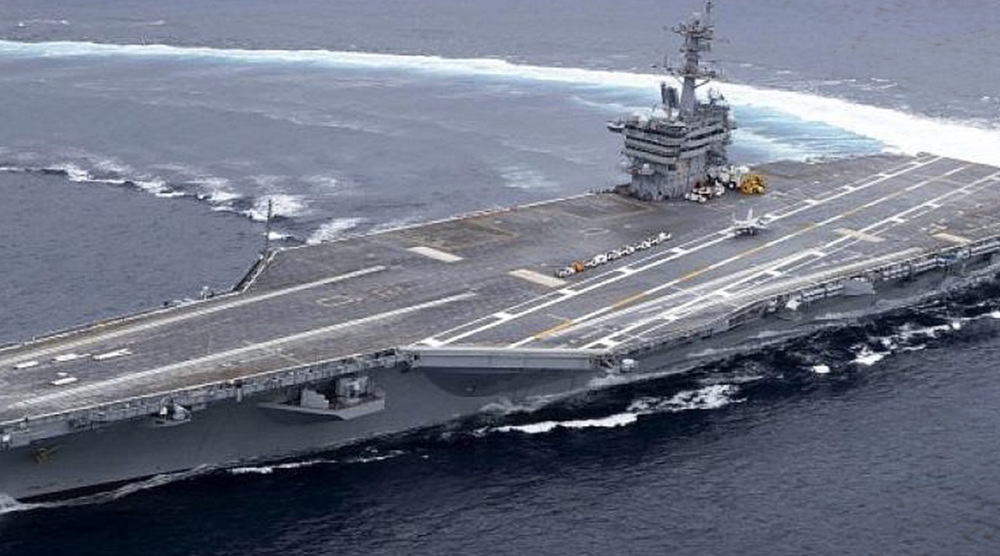
Approximately four weeks have passed since the American-Zionist aggression against Iran. In the course of this aggression, one regional actor that has adopted a stance both noteworthy and, indeed, concerning, is Bahrain. This small state on the edge of the Persian Gulf has not only positioned itself politically alongside the aggressor parties but has also done so operationally, explicitly placing its bases and airspace at their disposal, thereby effectively becoming a component of the attack mechanism against Iran. Such an approach, from the perspectives of international law and strategic considerations, transcends mere political alignment; it constitutes direct participation in a military action.
In analyzing Bahrain’s conduct, several key points must be considered. First, in recent years, due to its security and military ties with the United States, Bahrain has effectively fallen within Washington’s sphere of decision-making. The presence of American military bases on Bahraini soil has effectively transformed the country into an operational platform that, at critical junctures, acts in line with the objectives of extra-regional powers rather than playing a balanced role. However, what has transpired on this occasion goes beyond routine military cooperation; Bahrain, aware of the consequences of such a decision, has entered a level of engagement that could entail significant costs for it.
The second point is Bahrain’s exploitation of international mechanisms. Submitting draft resolutions against Iran to the UN Security Council demonstrates this country’s effort to legitimize the military actions of the opposing side. This action comes at a time when international observers consider the attacks against Iran a clear violation of the fundamental principles of the United Nations Charter. Under such circumstances, rather than adopting a neutral stance or calling for de-escalation, Bahrain has effectively taken steps along the path of exacerbating the crisis.
Yet perhaps the most critical dimension of this affair concerns the security implications for Bahrain itself. Iran, as a major regional power, has in recent years acquired formidable capabilities in the fields of missiles and drones. These capabilities have repeatedly drawn the attention of military analysts, not only in terms of deterrence but also operationally. In contrast, Bahrain is a small country with limited defensive capacities, having defined the bulk of its security on the basis of external support. This imbalance, should any direct conflict arise, could present Bahrain with a very significant problem.
The reality is that excessive reliance on external support has always carried serious risks. Historical experience in the region has shown that major powers, in times of crisis, prioritize their own interests over the protection of smaller allies. Even in this current instance, there is undeniable evidence indicating that the United States and Israel themselves face serious challenges in confronting Iran’s military capabilities. Under these conditions, the notion that these two actors can guarantee Bahrain’s security against a potential Iranian response seems less grounded in reality and more a form of perilous optimism. According to Haaretz, out of every 10 Iranian missiles, 8 hit their targets. This indicates the absence of effective defense against Iran’s offensive power and serves as a warning bell for all small Persian Gulf states should they continue participating in aggression against Iran.
On the other hand, Bahrain’s entry into this level of tension could also entail domestic consequences for the country. Bahraini society comprises diverse groups that have always been sensitive to regional developments. Adopting a harsh stance against Iran could lead to heightened internal divisions and social discontent—an issue that, in the region’s volatile conditions, could become a factor intensifying internal crises.
Within this framework, it appears that Bahrain requires a serious reassessment of its approach. Continuing on the current path not only exposes the country to security threats but also transforms it into a component of a wider crisis with unpredictable consequences. Changing this approach could be pursued through several avenues: first, ceasing operational cooperation that has turned Bahrain’s territory and airspace into a platform for military actions against Iran. Second, adopting a balanced stance in the diplomatic arena and refraining from provocative measures in international institutions. And third, striving to play a neutral or de-escalatory role instead of an escalatory one.
Finally, it must be emphasized that the Persian Gulf region needs stability and dialogue more than ever. Countries like Bahrain, due to their geographical location and structural limitations, stand to suffer more than others from instability. Engaging in the high-risk games of major powers could impose far heavier costs on this state.
If Bahrain seeks to maintain its security and stability, it must inevitably accept the reality that neighboring a country like Iran necessitates a form of interaction based on mutual respect and an understanding of geopolitical realities. Continuing on a path of confrontation, especially when the balance of power clearly favors Iran, not only seems illogical but could also place the country in a position where, should a crisis erupt, it would face dangerous isolation.
In other words, Bahrain now stands at a strategic crossroads: either continue its full alignment with aggressive policies, which could turn it into a vulnerable target, or return to a balanced approach wherein national interests are prioritized over short-term political considerations. The choice between these paths will shape the country’s future in the years to come.
MNA